Water Heater Replacement Cost
Water heater replacement cost, the number is five line items, and the internet prices one of them
Every page that answers “how much does it cost to replace a water heater” answers it with an average of the whole country, then a table by tank size, then a sentence admitting it depends. We publish no averages, on principle. What we publish instead is what the number is made of: the unit, the labor, the items the inspector will ask for, the permit and the haul-away, and the conversion extras that turn a swap into a project. Alongside that, the only cost figures on this subject that are actually public, the federal wage data for the trade, the federal rule that changes what is on the shelf in 2029, and the federal money that ended on December 31, 2025 while most of the pages ranking above this one still promise it.
Every number you have seen was averaged across a country you do not live in
A national average for water heater replacement cost is built from jobs in cities where a permit costs a morning and in counties where nobody pulls one; from garages where the old tank rolls out on a dolly and from attics where it comes down a ladder in pieces; from houses that already have an expansion tank and a pan and from houses that have neither. The figure that comes out is true of nobody. It is also, usefully for the sites that publish it, wide enough that any quote you get will fall inside it and look reasonable. A range that contains every answer is not information.
The honest version of “how much to replace a water heater” is a list. A water heater quote is five things added together, each moved by something you can identify from your own utility closet, and a quote is either the five things written down or a single number that will become five things later. This page walks the five, then the two conversions that change the arithmetic, then the timing, then the decision about whether to replace at all, and it ends with a table for laying two quotes side by side. Where a real figure exists in public, the Bureau of Labor Statistics, the Department of Energy, the IRS, we quote it and link it. Where one does not, we say what moves it and stop there.
- Why we do not publish a number. We are paid a fixed fee for an introduction, identical for a small tank and a large conversion. A national average would neither help you nor us; a list of what moves the number does both.
- What we do publish. The structure of the quote, the public wage of the trade, the federal rule and the federal money, and a tool that writes out the line items a quote for your particular situation has to contain.
- What to do with it. Get two quotes written as line items, not totals. The table near the end of this page is built for reading them.
The Structure
The five line items on every honest water heater quote
A new water heater cost is not a water heater installation cost. The first is a box on a shelf; the second is the box plus four other things, and the four are where quotes diverge.
| Line | What it is | What moves it | Who decides |
|---|---|---|---|
| 1. The unit | The heater itself, by fuel, capacity, venting and warranty term. | Gas or electric; gallons and first-hour rating; atmospheric, power or direct vent; the warranty tier; whether it is a tank, a heat pump unit or a tankless unit. | You, within what the house allows. |
| 2. Labor | The visit, the drain-down, the disconnection, the set, the connections, the test. | Like-for-like or conversion; access; after hours; how slowly the old tank drains. | The house and the calendar. |
| 3. Code items | What the inspector expects to see that the old install did not have. | Expansion tank, drain pan and line, seismic strapping, relief valve discharge, vent connector, sediment trap, bonding. | Your jurisdiction, not the plumber. |
| 4. Permit and haul-away | The permit and inspection, and removing and disposing of the old tank. | Whether your city requires a permit for a water heater (most do), and whether disposal is included or a separate fee. | Your city and the company's policy. |
| 5. Conversion extras | Everything a change of type or fuel adds. | Gas line upsizing, new venting, a 240-volt circuit, a condensate drain, a panel upgrade, a closet door. | The house, entirely. |
The pattern in every disputed water heater invoice is the same: a quote that named line one, guessed line two, and left lines three through five to be discovered on the day. A labor cost to install a water heater that looks low next to another quote is usually a quote that has not yet met the inspector. The rest of this page takes the five lines one at a time.
Line One
The unit: what actually moves the price of the heater itself
“How much is a water heater” has a shelf answer at any hardware store. The useful question is which of six things is putting that particular heater at that particular price.
Gas or electric
A conventional gas tank costs more to buy than an electric one of the same size, because it has a burner, a gas valve, a flue and a combustion chamber where the electric tank has two elements and two thermostats. It costs less to run in most of the country, because gas is usually the cheaper fuel per unit of heat. The gas water heater replacement cost as a whole is also higher because line three is longer: a gas heater has a vent, a gas connector and a sediment trap for the inspector to look at. Which fuel you have is not usually a choice at replacement time; changing it is a conversion, and conversions are line five.
Gallons, and the number that matters more
Tanks are sold by capacity in gallons, and a larger tank costs more. The number that decides whether a household runs out of hot water, though, is the first-hour rating: how much hot water the heater can deliver in an hour from full, which combines the tank size with how fast the burner or elements recover. Two tanks of the same capacity can have different first-hour ratings and different prices, and a smaller tank with a faster recovery can outperform a larger slow one. A company that asks how many bathrooms and how many people before naming a size is sizing; one that quotes the same capacity as the old tank is guessing that the old tank was right.
How it vents
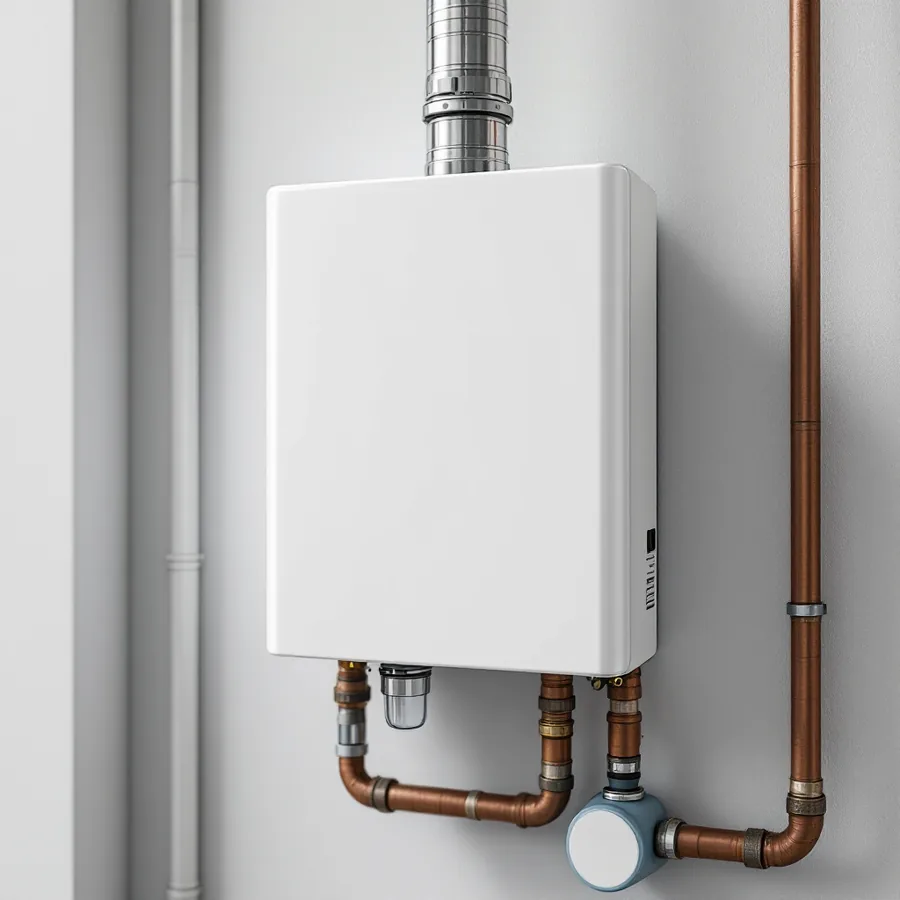
A gas heater that vents up a flue by natural draft is the cheapest to buy. A power-vent unit, which uses a fan to push exhaust through a plastic pipe out a side wall, costs meaningfully more and needs an electrical outlet; it is what a house with no usable chimney gets. A direct-vent unit draws its combustion air from outside as well, and sits higher again. Which one the house needs is set by where the heater sits and what the old one vented into, and it is the single largest reason two quotes for “a 50-gallon gas heater” can be far apart on line one alone.
Efficiency, and the rating on the yellow label
Water heaters carry a Uniform Energy Factor, a federal efficiency rating printed on the EnergyGuide label; a higher number means less fuel for the same hot water. Within conventional tanks the spread is modest and the price difference small. The large efficiency step is a change of technology: a heat pump water heater on the electric side, a condensing unit on the gas side, and each of those is its own section below because each changes lines two through five as well as line one.
The warranty tier
The same manufacturer sells what is essentially the same tank at several warranty lengths, and the longer warranty costs more. What you are buying with the longer term is usually a thicker or second anode rod, sometimes a better lining, and the manufacturer's willingness to replace the tank if it fails within the term, the tank, not the labor to swap it, which is worth reading in the fine print. On a tank that will sit in a hard-water area, the longer tier is often the better arithmetic; on a tank the household plans to replace with a different technology within a decade, it is not.
Shelf price and installed price
The price of the unit on a retail shelf and the price of the unit on a plumber's quote are rarely the same. Contractors buy through supply houses, sometimes at a discount and sometimes not; they mark the unit up to cover the warranty call-back they will make for free if it fails; and they may carry a brand the retail shelf does not. A quote whose unit line is above the shelf price is not automatically padded. A quote whose unit line has no model number on it cannot be checked at all, and that is the line to ask about.
Line Two
Labor: the plumber's wage is public and the billed rate is not
The most searched-for number on this subject after the total is the labor cost to install a water heater. There is exactly one public figure that bears on it, and it is not the one the quote shows.
What the federal government publishes
The Bureau of Labor Statistics, in its Occupational Outlook Handbook, reports that “The median annual wage for plumbers, pipefitters, and steamfitters was $63,800 in May 2025”, or $30.67 per hour. It also reports that employment in the trade is “projected to grow 7 percent from 2025 to 2035, much faster than the average for all occupations”, with “About 42,000 openings for plumbers, pipefitters, and steamfitters are projected each year, on average, over the decade”. That is the wage a licensed plumber is paid, at the median, nationally. It is the floor of the labor line and it is public. Nothing else on the labor line is.
What the billed rate has to cover
The rate on the quote is not the wage. Between the two sit the truck and its fuel, the liability and workers' compensation insurance a licensed company must carry, the license and its continuing education, the office that answered your call, the hours the technician spent driving to you and back and the hours spent quoting jobs that did not happen, the warranty call-backs done for free, and the margin that keeps the company open. That is why a billed hour is a multiple of a paid hour in every skilled trade, and why the multiple is larger for a small company in a spread-out area than for a large one in a dense city. Ask what the rate is; a company that quotes labor as a flat job price rather than by the hour is not hiding anything, provided the flat price is for a job that has been described.
Like for like, or a conversion
The labor line divides cleanly into two kinds of job. A like-for-like swap, same fuel, same type, same location, roughly the same size, is a routine of draining, disconnecting, setting, reconnecting and testing, and it is priced as a routine. A conversion, from tank to tankless or from electric resistance to heat pump, or from one fuel to another, is a construction job that happens to end with a water heater, and it is priced as construction: more hours, sometimes a second trade, sometimes a second visit for an inspection. If a quote for a conversion has a labor line that looks like a swap, one of them is wrong.
What multiplies the visit
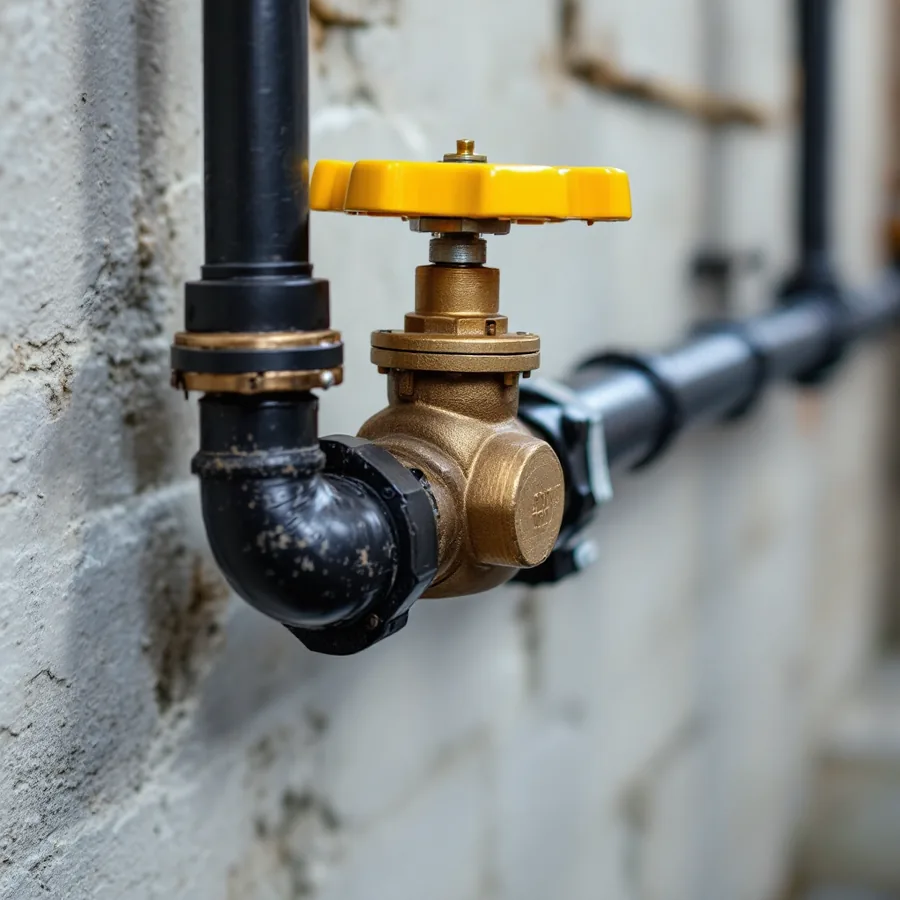
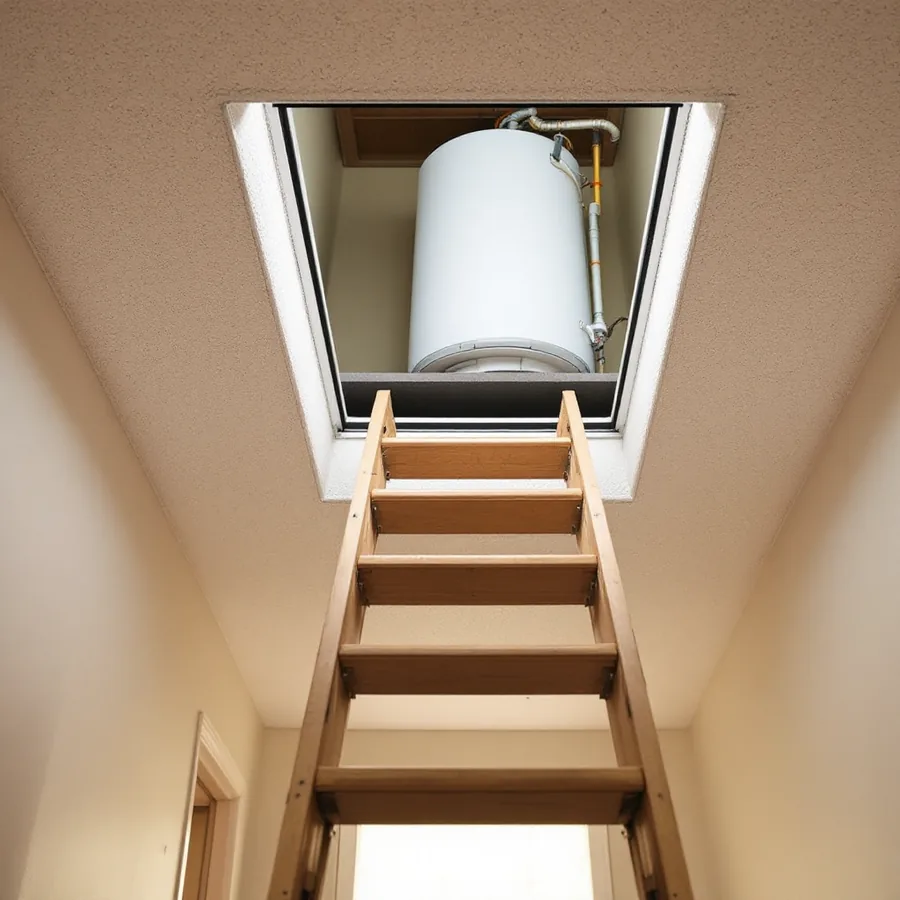
After hours and weekends multiply the labor line and nothing else; a tank does not cost more on a Sunday. An attic or a crawlspace multiplies it because the tank has to be carried. A tank that has never been drained multiplies it because sediment turns a twenty-minute drain into an hour, and sometimes into a tank that has to be cut open to be got out. A shut-off valve that will not shut off adds a valve replacement before the job can start. Every one of those is knowable before the visit, and a company that asks about them before quoting is a company whose quote will hold.
Line Three
The code items: the part of the quote that grows after the inspector
A house that had its last water heater installed fifteen years ago was inspected against a code fifteen years old. The new one is inspected against today's, and the difference is a list.
The expansion tank
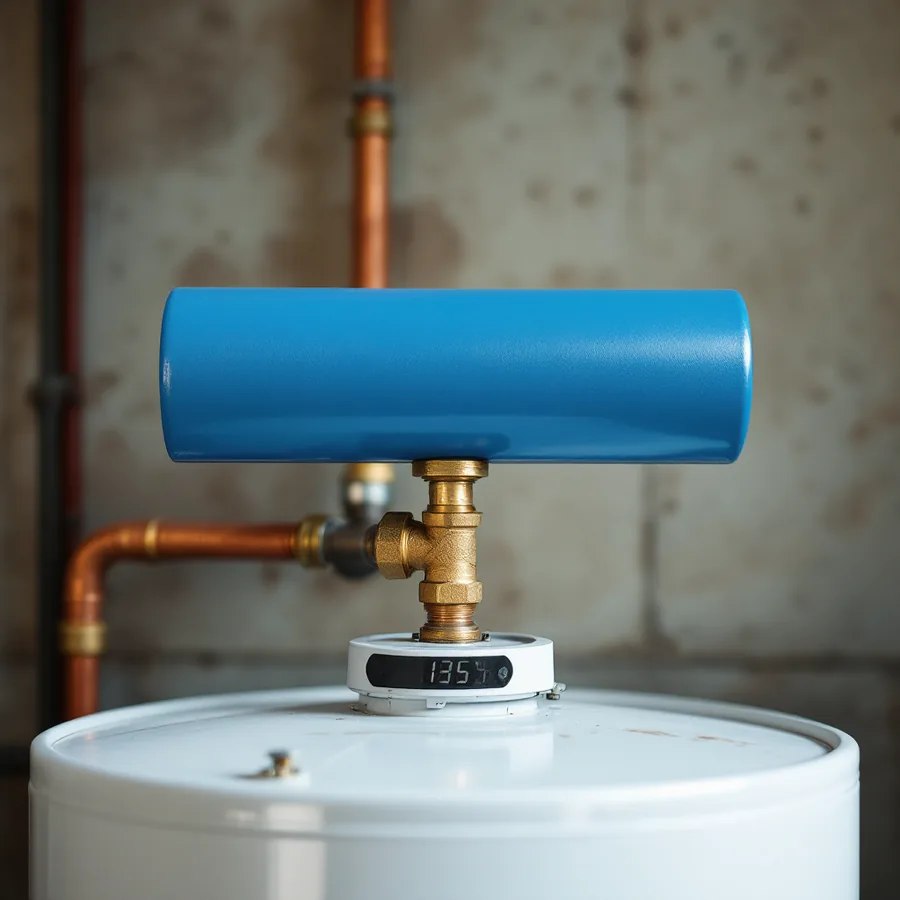
When water is heated it expands. In a house with a check valve or a pressure-reducing valve on the supply, a closed system, which most newer houses and most houses with a backflow device are, that expansion has nowhere to go, pressure rises with every heating cycle, and the relief valve on the heater weeps. The fix is a small tank on the cold line with an air bladder that takes up the expansion. Most jurisdictions now require one on a closed system at replacement, and it is the code item most often missing from a low quote. It is also the reason a new heater's relief valve drips, which is covered in full on the leaking water heater page.
The drain pan and where it drains
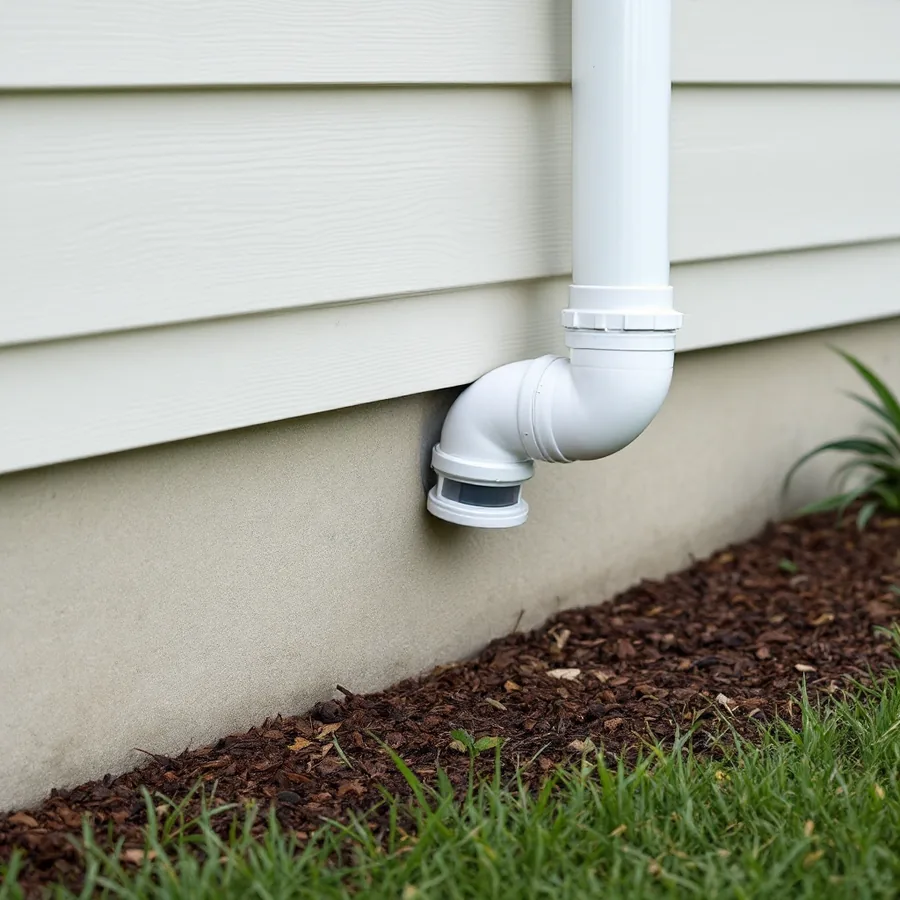
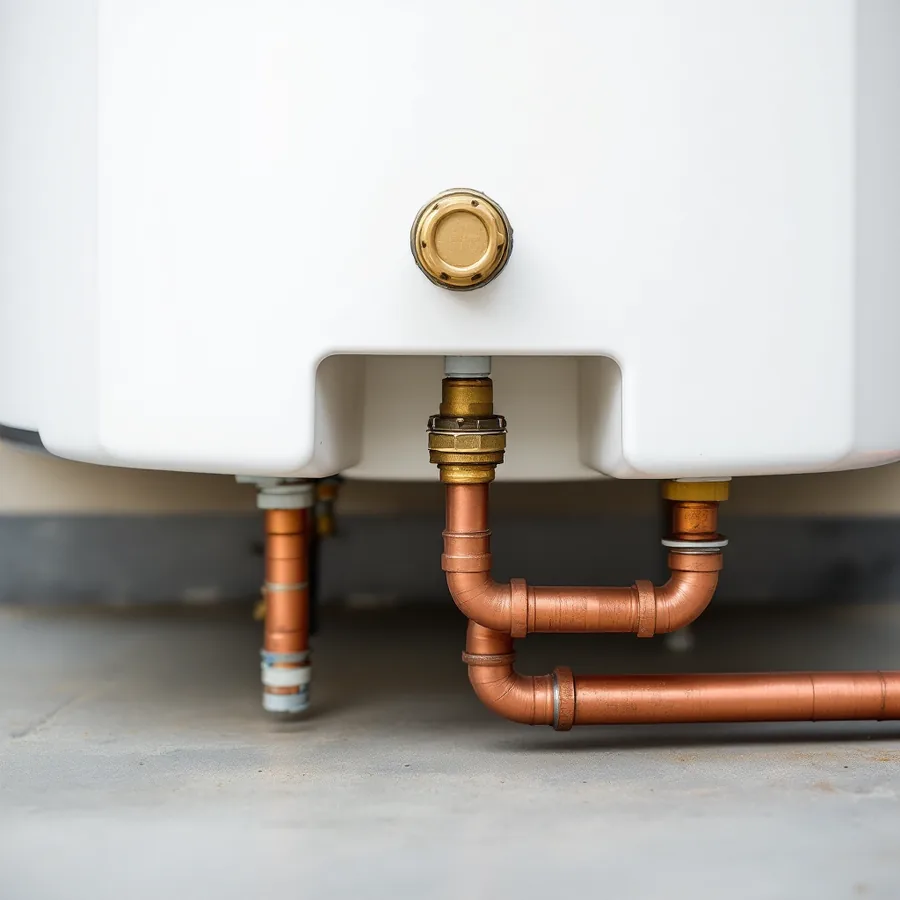
A pan under the heater with a drain line to a floor drain, to the outside, or to somewhere it will be seen. Required in most places where a leaking tank would damage the building, an attic, a closet over living space, an interior utility room, and cheap on the quote. A pan with no drain line is a bowl that will overflow; a drain line that runs to nowhere visible will run unseen. Ask where it drains to and whether you would notice.
Seismic strapping
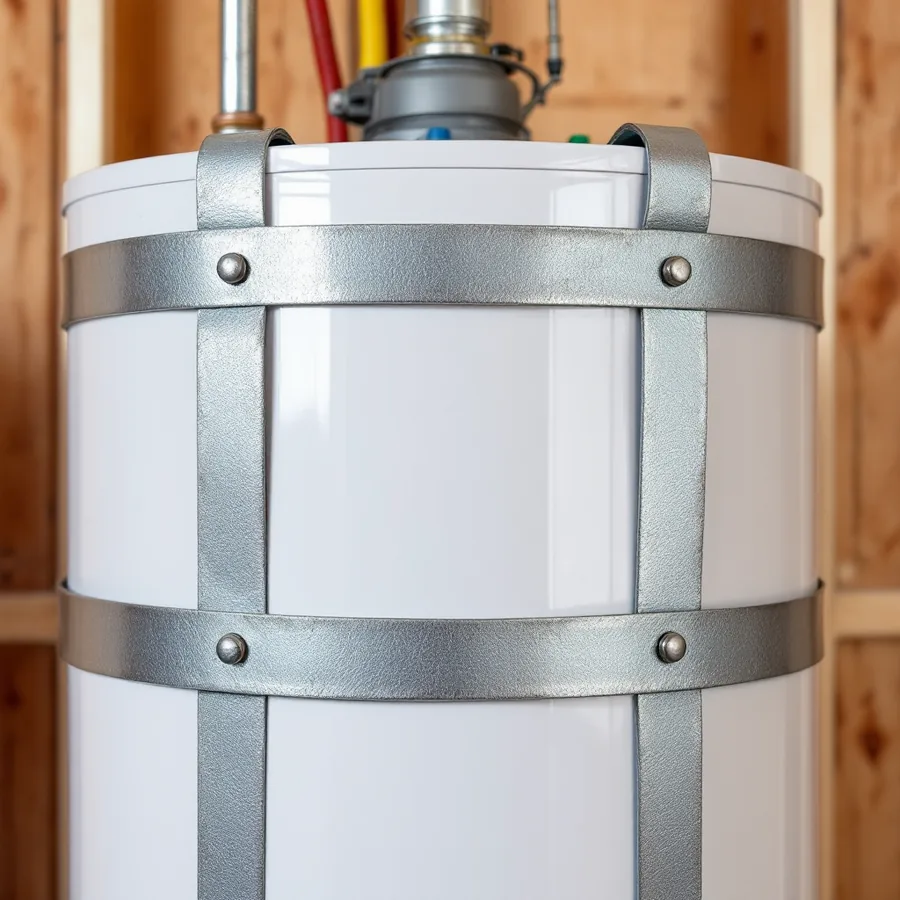
In earthquake states, two straps around the tank anchored to the wall framing, at set heights. California requires them; several other Western states and some cities do as well. They cost little and they are the difference between a tank that stays standing and a tank that shears its gas line in a tremor. A quote in a seismic jurisdiction without a strapping line is missing one.
The relief valve discharge line
The temperature and pressure relief valve on every tank has to discharge through a pipe of the right material, running downward, to a place where scalding water will not hit anyone, and ending in the open where it can be seen. Old installs often have the pipe missing, capped, uphill, or plumbed into something it should not be. The inspector will look at it, and the new install has to be right whatever the old one was.
The vent, the sediment trap and the bonding
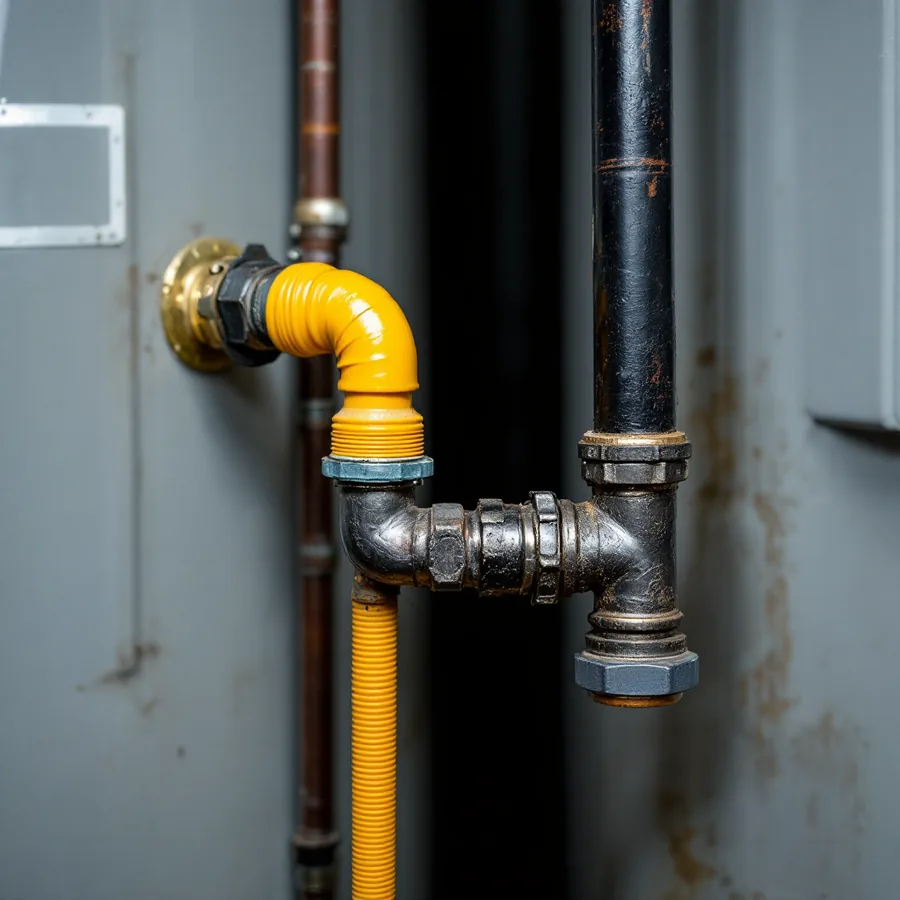
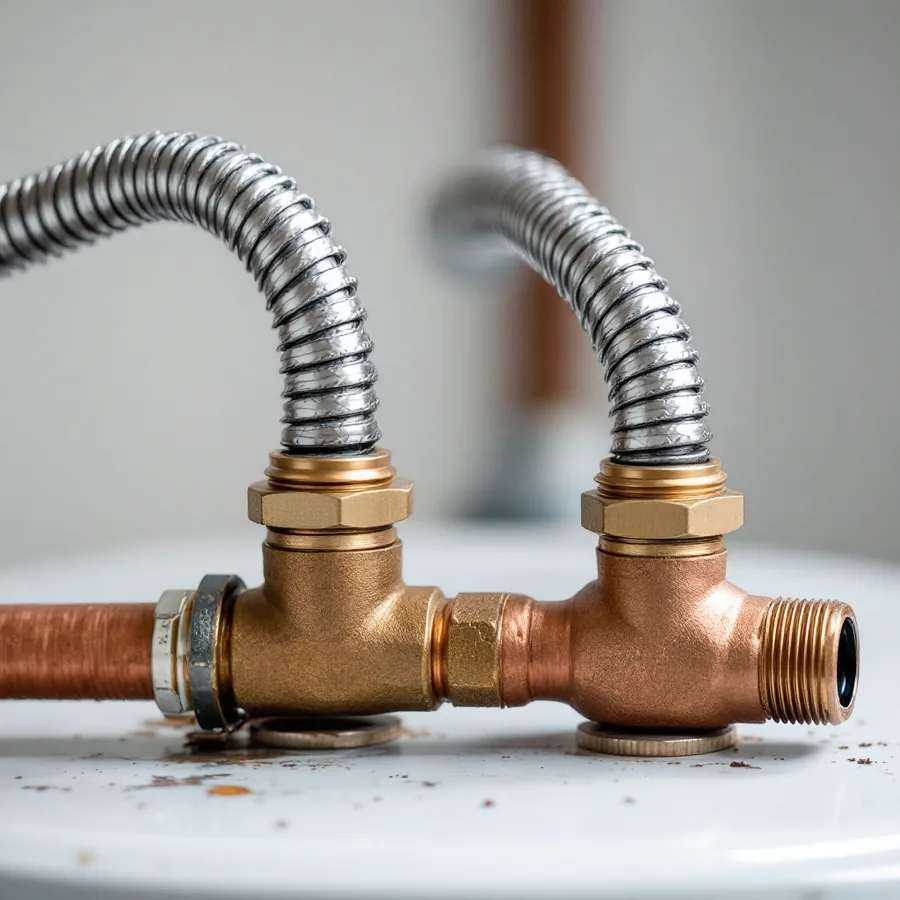
On gas: a vent connector in good condition with the right rise and the right clearances, a drip leg or sediment trap on the gas line just before the control, and a flexible gas connector rated for the appliance. On both fuels: in many jurisdictions a bonding jumper across the hot and cold pipes at the heater, so the plumbing stays electrically continuous when the heater is disconnected. Each is minutes and a few parts on the day, and each is a change order if it was not on the quote.
The permit and the inspection
Most cities and counties require a plumbing permit to replace a water heater, and an inspection afterward. A company that offers to skip it is offering you the savings of a fee in exchange for an install nobody checked and a problem at the next home sale, when the buyer's inspector asks for the permit. The permit is a line; whether it is on the quote or added later is the question to ask, and the answer says something about the rest of the quote.
Conversion One
Tankless water heater cost: why the unit is the smaller half
More people search for the tankless water heater cost than for the cost of replacing the tank they have. Most of them are pricing the wrong half of the job.
How a tankless unit is sized
A tank is sized by gallons stored. A tankless unit is sized by flow, gallons per minute it can heat, at a given temperature rise, which is the difference between the water coming in and the water you want out. In a northern winter the incoming water is far colder than in a southern one, so the same unit delivers fewer gallons a minute in Minnesota than in Georgia, and a unit that runs two showers at once in one state runs one and a half in the other. A quote that names a model without naming your winter inlet temperature and the fixtures you expect to run together has not sized anything.
The gas line
A gas tank heater sips gas over hours to heat its store. A gas tankless unit fires at several times that rate for as long as a tap runs, and it needs a gas line that can deliver it at full fire while the furnace, range and dryer are also running. Many houses were piped for the tank, and the line to the heater, sometimes the line from the meter, has to be upsized. That is trenchless in some houses and a wall-opening job in others, and it is the line that most often makes the tankless installation cost exceed the unit. A quote for a gas tankless conversion with no line for gas piping either belongs to a house that already has the capacity or will grow.
The venting
Tankless units do not use the old flue. A non-condensing unit vents through stainless steel that can take high exhaust temperatures; a condensing unit vents through plastic because its exhaust is cool, and it produces acidic condensate that has to be drained, usually through a neutralizer, to somewhere that can take it. Either way there is a new penetration through a wall or a roof, with clearances from windows and doors, and that is carpentry and roofing as well as plumbing. The vent run is the second line that decides a tankless quote, and it depends on where the unit hangs.
The electrical outlet, the valves and the descaling
A gas tankless unit needs a standard outlet for its controls and fan, which the tank never needed. It needs isolation valves with service ports so it can be flushed with a descaling solution, annually in hard water, less often in soft, and a quote without them is a quote for a unit that cannot be maintained. That maintenance is a running cost the tank did not have, and it belongs in the decision.
Electric tankless: a different quote entirely
A whole-house electric tankless unit heats water instantly with resistance elements, and to do that it draws far more current than a tank heater. It commonly needs several new double-pole breakers and heavy wiring, and in many houses a panel that cannot carry the load, which makes the water heater job into an electrical service upgrade with its own permit, its own trade and its own timeline. Before pricing anything else, ask how many amps the unit draws and how many your panel has to spare. If the second number is smaller, the water heater is the cheapest item on the quote.
What “how to install a tankless water heater” actually involves
Mounting the unit, running and pressure-testing the gas line, cutting the vent penetration and flashing it, running the condensate drain, wiring the outlet, setting the isolation valves, connecting the water, and commissioning the unit to the manufacturer's procedure so the warranty holds. Three of those are licensed work in most states, and one of them, the gas line, is inspected before the unit may be lit. The mechanics of the unit itself, and whether it is the right choice at all, are the subject of a separate page on this site; this section is about what it costs to put one in.
Conversion Two
Heat pump water heaters: the federal money changed on December 31, 2025
A heat pump water heater moves heat from the air around it into the tank instead of making heat with elements. Three federal facts about it are current; most pages on this subject carry only the old one.
The credit that ended
For three years, the section 25C credit, the Energy Efficient Home Improvement Credit, returned 30% of the cost of a qualifying heat pump water heater, up to “$2,000 per year for qualified heat pumps, water heaters, biomass stoves or biomass boilers”. The IRS page for the credit now says: “You can claim the credit for improvements made through December 31, 2025.” A heater installed in 2026 does not earn it. Pages that still promise a thirty-percent credit on a heat pump or tankless unit were written before that date and not updated since, and a quote that mentions the federal tax credit as a reason to sign is quoting a program that has closed.
The money that remains
The Department of Energy's Home Upgrades page lists, for an ENERGY STAR-certified electric heat pump water heater, that it “may be eligible for either: a High-Efficiency Electric Home Rebate of up to $1,750”, and it adds: “Your state, territory, or Tribe manages rebates.” That is the accurate description: a rebate whose ceiling is federal and whose existence, income rules and timing are decided by your state, which may have opened its program, closed it, or not yet launched it. The right question for an installer is not “is there a rebate” but “is my state's program open today, and who files it.”
The Department of Energy's own numbers
When DOE finalised new efficiency standards for water heaters in April 2024, its announcement said that replacing a common-sized electric resistance tank with a heat pump water heater meeting the new standard would “save consumers approximately $1,800 on their utility bills, on average, over the life of the appliance”, and that the rule as a whole would “save American households approximately $7.6 billion per year on their energy and water bills.” Those are federal estimates for an average household, and they are the only running-cost figures on this page, because they are the only ones with a federal source behind them. What they are not is your number: a house with cheap electricity and low hot water use saves less, a large household on expensive power saves more.
2029: the shelf changes
The same DOE announcement says: “Compliance will be required starting in 2029 for the new standards adopted today”, and that the standards would result in “over 50% of the newly manufactured electric storage water heaters to utilize heat pump technology, compared to 3% today.” Read plainly: the conventional electric resistance tank is the last generation of its kind, and a household replacing one in 2026 is choosing between the last of the old product and the first affordable years of the new one. That is not an argument to overpay for a heat pump unit; it is an argument to price one before signing for a tank, because the next replacement will very likely be one anyway.
Where a heat pump unit fits, and where it does not
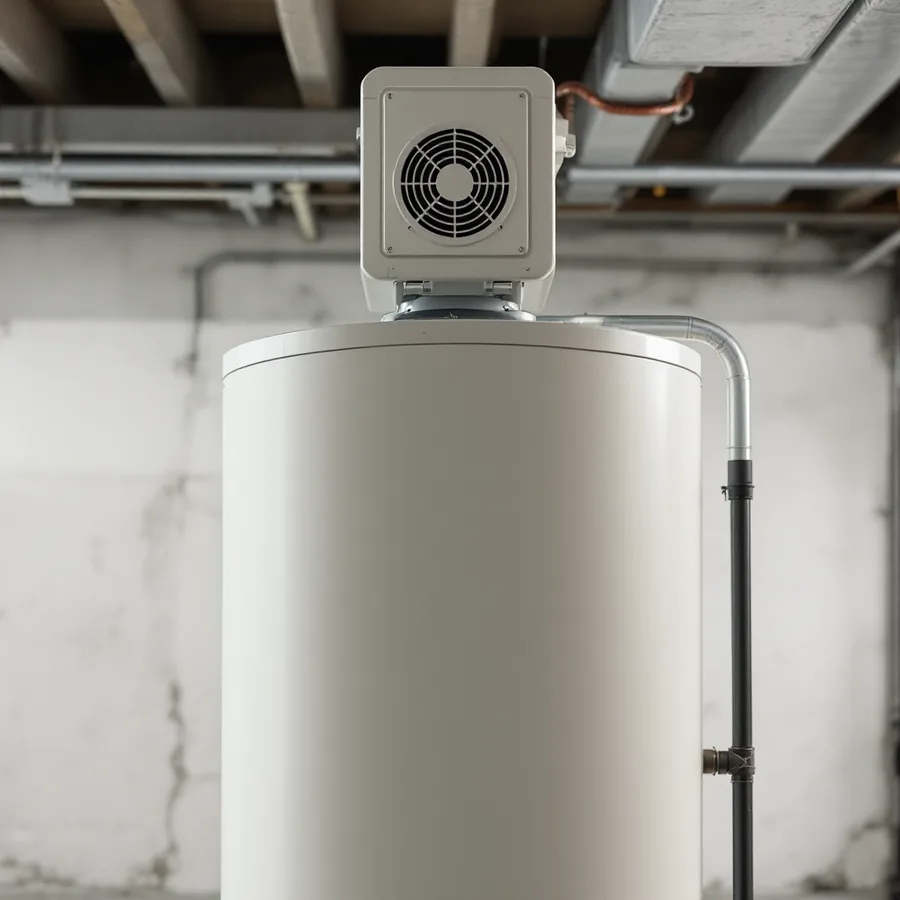
It needs height, most are taller than the tank they replace, and need clearance above. It needs air: it cools the room it sits in and needs a volume of air to draw from, so a small closed closet needs a louvered door or ducting. It makes condensate that has to drain. It makes noise, roughly a refrigerator's, which matters in a closet beside a bedroom and not at all in a garage. And it needs a 240-volt circuit, which an electric tank already has and a gas tank does not. Each of those is a line, and in a basement or a garage most of them are short lines; in a hall closet they can add up to a different decision.
Work It Out
Build the line-item list for your quote
Four questions, nothing sent anywhere, no prices. What comes out is the list of lines a quote for your situation has to contain, the conversion extras it is likely to carry, which federal or state money applies, roughly how long the job runs, and the one question to ask first.
We are paid the same fixed fee for an introduction whether the answer is a like-for-like tank or a conversion, which is why this tool has a row for the money that is no longer available.
The Clock
How long it takes, and what makes it take longer
“How long does it take to replace a water heater” is one of the most expensive clicks on this subject and the least answered, because the honest answer is a category and a list of what moves it out of the category.
A like-for-like swap: hours, on one visit
When the new tank is on the truck, the old one drains at a normal rate and the connections are where the new tank's connections are, the job is a matter of hours and the household has hot water again the same afternoon after the tank recovers. The slow part is the drain-down, which depends on how much sediment is in the bottom of the old tank and how well the drain valve opens; a tank that has never been drained can take an hour to empty and may need to be cut or siphoned. The next slow part is the recovery of the new tank once it is filled and lit.
A conversion: a day, and often two visits
A tankless conversion adds gas piping, a vent penetration and a condensate line; a heat pump conversion adds a circuit, a drain and sometimes a door; a fuel conversion adds all of one and some of the other. Each of those is hours on its own, some of them belong to a second trade, and gas piping is usually inspected before the appliance is lit, which means a day for the work and a return for the inspection and commissioning. A company that promises a same-day tankless conversion in a house that needs a new gas line is promising something the inspector controls.
What moves a swap out of the hours category
- Access. An attic through a scuttle, a crawlspace, a basement with a turn in the stair. The tank has to come out the way it went in, and a full one cannot be carried.
- A shut-off that will not shut. The main valve, or the cold valve on the heater, seized open. It is replaced before the job can start, and if it is the main, the water utility may be involved.
- The code list. An expansion tank, a pan, strapping and a discharge line on a house that had none add an hour or two, and on a good quote they were already there.
- The permit. Where a permit must be issued before work starts, the calendar is the city's. Ask how the company handles it and whether the install waits on it.
- The unit itself. A power-vent, a heat pump unit or an unusual size may be a supply-house order rather than a truck stock item, and the wait is the supplier's.
The Decision
When to replace: age, the leak rule and the repair-half rule
Before the cost of replacing is the question of whether to. Three rules answer it for most heaters, and none of them is a number of years alone.
The leak rule
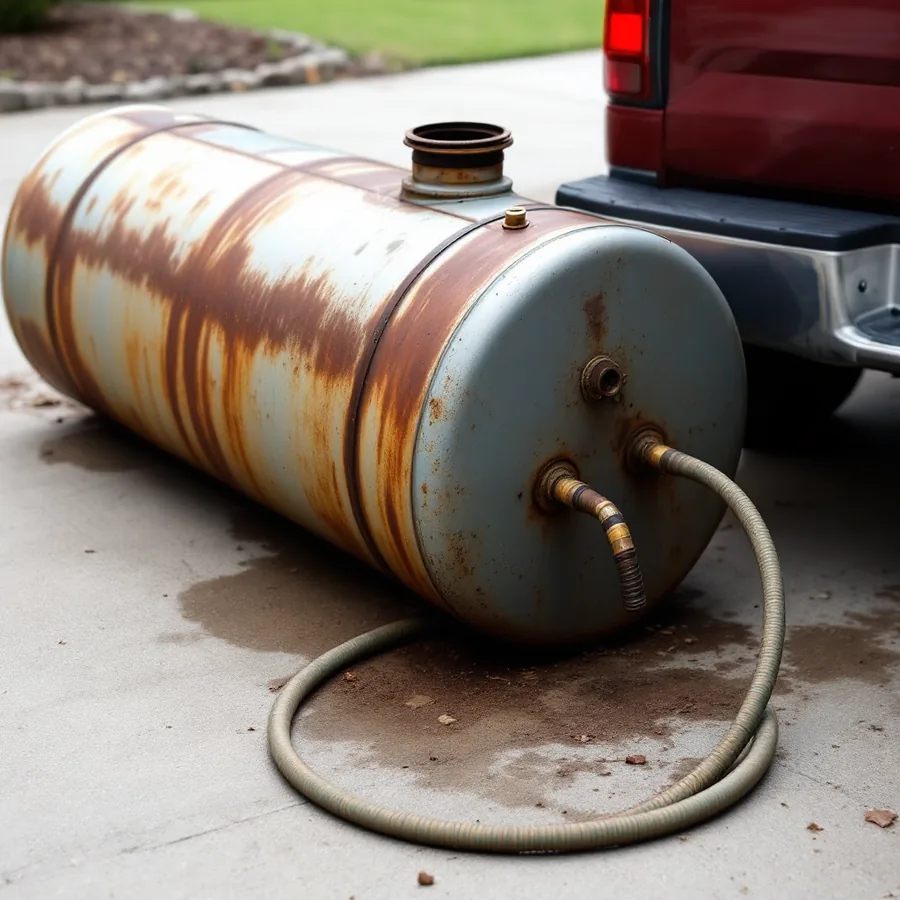
A tank leaking from its body, the steel shell, not a fitting, a valve or the drain tap on it, is replaced, at any age. The lining has failed and the shell has rusted through, and no product sold to seal it does more than delay a larger failure at a worse time. Telling a shell leak from a fitting leak is most of the diagnosis and is walked through, place by place, on the leaking water heater page. A fitting leak on a young tank is a repair; a shell leak on any tank is this page.
The repair-half rule
Small parts, a thermocouple, a relief valve, a drain valve, a dip tube, an element, are worth replacing on a tank with life left, and the water heater repair page explains which repairs are a technician and which are five minutes of your own. The line is the part that costs a large share of a new heater on a tank in its second decade: a gas valve, a pair of elements and thermostats, a tank flush on a unit that has never been flushed. When a repair quote approaches half of a replacement quote on an old tank, the arithmetic favours replacement, because the next fault is close and the repair does not reset the tank's age.
Age, and what the warranty term tells you
Manufacturers sell the same tank at several warranty terms, and the term is the manufacturer's own estimate of how long the anode and the lining protect the shell under ordinary water. A tank past its warranty term is not broken; it is unwarranted, which means the next failure is yours to pay for in full and at the moment it chooses. How often to replace a water heater is therefore less a fixed interval than a reading of three things: the warranty term, the water hardness where you live, and whether anyone has ever checked the anode. A soft-water house with a checked anode runs tanks far past their term; a hard-water house that never opened the tank does not.
The plan-ahead rule
ENERGY STAR's advice on the subject is the one sentence on this page that applies to every reader: “Plan ahead for your next water heater replacement and you will have time to research and select the best technology for your situation before it's an emergency.” A household that prices a replacement while the old heater still works gets to compare a tank, a heat pump unit and a tankless unit on cost and running cost, to find out whether its state's rebate program is open, and to have the gas line or the circuit run on a weekday at a normal rate. A household that prices one with no hot water gets whatever is on the truck. The difference between the two is most of what the conversions on this page cost.
Your Own Hands
Doing it yourself: what the instructions leave out
The searches for how to install a water heater outnumber the searches for what one costs to have installed. Here is what those instructions tend to omit, in the order it will stop you.
The weight
The question “how much does a water heater weigh” has two answers. Empty, a residential tank is a two-person carry. Full, it is not a carry at all: water at room temperature weighs 62.300 pounds per cubic foot at 70°F by the federal density table, which works out to about 8.3 pounds a gallon, so a 40-gallon tank holds roughly 330 pounds of water and a 50-gallon tank over 400 pounds before the steel is counted. Every instruction that begins “disconnect the old heater” is skipping the hour of draining that comes first, and a drain valve that will not open turns that hour into a siphon and a bucket.
The permit
Most jurisdictions require a permit for a water heater replacement whoever does the work, and some issue homeowner permits and some do not. An unpermitted install is a problem at sale, with insurance after a failure, and with the gas utility if it ever has cause to look. Find out before buying the tank, not after.
The gas
How to install a gas water heater is, in most states, a question with a licence attached. Gas connections are leak-tested, the vent has to be right or the appliance produces carbon monoxide into the house, and the sediment trap and the flexible connector have to be the right parts. This page draws the line here and does not describe the gas work, because a written procedure is not what stands between a homeowner and an error on a gas appliance.
The 240 volts
An electric tank runs on a 240-volt circuit that can kill. Replacing one like for like is two wires and a ground with the breaker off, and it is also the step at which a miswired thermostat overheats a tank until the relief valve opens. An electrician's hour is the cheapest insurance on that connection, and a heat pump or an electric tankless unit is not a like-for-like job at all.
The venting
A gas tank's flue has to rise, connect, and clear combustibles by the manufacturer's distances. A power-vent or a tankless unit has a penetration through the building. Getting the draft wrong on an atmospheric heater is silent; the appliance runs, and the exhaust comes into the room. A carbon monoxide alarm near any gas water heater is not a substitute for a correct vent, but it is the one thing on this page that costs almost nothing and should be there regardless of who does the work.
The anode, which is a job you can do
The one part of a water heater a careful homeowner can reasonably replace is the anode rod, and it is also the one that most affects how long the tank lasts. It unscrews from the top with a large socket, often needing a breaker bar to start; it needs headroom above the tank to withdraw, or a segmented rod where there is none; and it is checked and replaced every few years in hard water. How to replace the anode rod in a water heater, and why it is the only part that extends the tank's life, is on the repair page's anode section. Doing that is the single cheapest way to postpone everything else on this page.
Two Quotes
Reading two quotes side by side
Two totals cannot be compared. Two lists can. Ask both companies for line items, then lay them against this.
| Line | Optional? | A strong quote says | A weak quote says |
|---|---|---|---|
| The unit | No | Make, model, capacity, first-hour rating, vent type, warranty term. | “50-gallon gas heater.” |
| Labor | No | Like-for-like or conversion, named; after-hours rate if it applies. | “Installation.” |
| Expansion tank | Only if one exists and is sound | Included, or a written reason it is not needed. | Absent, then added on the day. |
| Pan and drain line | Only in a location where a leak harms nothing | Included, with where the line drains to. | “If the inspector asks.” |
| Strapping | Only outside seismic jurisdictions | Included where required. | Not mentioned in a state that requires it. |
| Relief discharge, vent connector, sediment trap, bonding | No, where required | Listed, even as a single “code items” line with contents. | Silent. |
| Permit and inspection | No, where required | Included, with who pulls it. | “We can do it without.” |
| Haul-away | No | Included, or a stated fee. | Discovered on the invoice. |
| Conversion extras | Only on a like-for-like swap | Gas line, vent, circuit, condensate, panel: each a line with a reason. | A conversion priced like a swap. |
| Rebate or credit | Only if it exists where you live | The state program named, its status today, and who files. | “You'll get the federal tax credit.” |
A quote that fills that table is a quote you can compare with another that fills it. A quote that is a single number is a quote whose lines three, four and five are still to be discovered, and the lower it is, the more likely they are to be discovered on the day.
Before You Sign
What to ask before you sign
Five questions that separate a company that priced your house from one that priced a water heater.
| Ask | What it tests | A weak answer |
|---|---|---|
| Is this a like-for-like swap or a conversion, and which lines are the conversion? | Whether the labor line describes the actual job. | “It’s all included.” |
| Which code items are on the quote, and which will the inspector ask for? | Whether line three was priced or deferred. | “We’ll see what they want.” |
| Does the number include the permit and taking the old tank away? | Whether the total is the total. | “Those are extra.” |
| What is the model number, and what does its warranty cover, the tank, or the labor too? | Whether line one can be checked, and what you are buying with the tier. | A capacity and a brand, nothing else. |
| If you are mentioning a rebate or credit, which program, is it open in my state today, and who files it? | Whether they know the federal credit ended and the state program is the one that remains. | “There’s a federal tax credit.” |
What we do, and what we do not
We are not a plumber and we do not sell water heaters. We are paid a fixed fee for an introduction, the same for a like-for-like tank and a conversion, which is why this page can afford to say that the federal credit has ended and that the cheapest thing you can do is check the anode on the heater you already have. When you want a quote written as line items, we connect you with independent licensed and insured plumbing companies. Who pays us and how is on our about page, and the rest of what we publish starts from the home page.
Straight Answers
Water heater replacement cost questions, answered
How much does it cost to replace a water heater?
It is five line items: the unit, the labor, the code items your inspector will expect, the permit and haul-away, and any conversion extras. We publish no national average because one describes nobody's house; the sections above explain what moves each line, and the tool writes out the lines a quote for your situation has to contain. Get two quotes as line items and compare them with the table on this page.
How much is the labor to install a water heater?
The only public figure is the wage: the Bureau of Labor Statistics reports a median of $63,800 a year, or $30.67 an hour, for plumbers, pipefitters and steamfitters in May 2025. The billed rate on a quote covers the truck, insurance, licensing, overhead and margin on top of that wage, and it is a flat price for a like-for-like swap or a longer figure for a conversion. Ask which of those the job is.
How long does it take to replace a water heater?
A like-for-like swap with the tank on the truck is hours on one visit, most of it draining the old tank and waiting for the new one to recover. A conversion to tankless or to a heat pump unit is a day and often a second visit, because gas piping and new circuits are usually inspected before the unit is commissioned. Access, a seized shut-off valve and a permit that must issue first all push a swap out of the hours category.
Is a tankless water heater worth the cost?
The unit is the smaller half of a tankless quote; the gas line upsizing and the new vent are the larger half, and both depend on your house. In a house that already has the gas capacity and a convenient wall for the vent, the conversion is modest; in one that needs a new line from the meter, it is a construction job. Price the whole job, not the unit, and ask for the amperage first if it is electric.
Is the federal tax credit for water heaters still available?
No. The IRS page for the Energy Efficient Home Improvement Credit states that the credit can be claimed for improvements made through December 31, 2025. What remains is the state-run High-Efficiency Electric Home Rebate, which DOE lists at up to $1,750 for an ENERGY STAR heat pump water heater and which your state, territory or Tribe manages; whether it is open where you live is a question for your state program.
Do I need a permit to replace a water heater?
In most cities and counties, yes, with an inspection afterward, whoever does the work. The permit is a line on the quote. A company that offers to skip it is offering the saving of a fee in exchange for an uninspected install and a question at the next home sale.
What is a first-hour rating, and why does it matter more than gallons?
The first-hour rating is how much hot water a heater can deliver in an hour starting full, combining the tank's capacity with how fast its burner or elements recover. Two tanks of the same gallons can have different first-hour ratings and different prices, and a smaller tank with fast recovery can outperform a larger slow one. A company that asks how many people and bathrooms before naming a size is sizing by this number; one that quotes the old tank's capacity is guessing the old tank was right.
What is an expansion tank, and do I really need one?
A small tank on the cold line with an air bladder that absorbs the expansion of water as it heats. In a house with a check valve or a pressure-reducing valve on the supply, which most newer houses and most with a backflow device are, that expansion has nowhere else to go and the heater's relief valve weeps. Most jurisdictions now require one on a closed system at replacement, and it is the code item most often missing from a low quote.
Should I replace my electric tank with a heat pump water heater?
Price one before signing for a tank. DOE's April 2024 announcement says that from 2029 over half of new electric storage water heaters will use heat pump technology, against 3% today, and that a heat pump unit replacing a common-sized resistance tank saves about $1,800 over its life on average. Whether it fits your closet, height, air volume, condensate drain, noise, is the practical question, and the tool above lists those lines.
Where This Comes From
Sources
- Median wage, hourly wage, growth and openings for the trade, U.S. Bureau of Labor Statistics, Occupational Outlook Handbook: Plumbers, Pipefitters, and Steamfitters.
- The 2029 compliance date, heat pump share, lifetime savings and annual savings, U.S. Department of Energy, DOE Finalizes Efficiency Standards for Water Heaters, 30 April 2024.
- The heat pump water heater rebate ceiling and who manages it, U.S. Department of Energy, Home Upgrades.
- The end date and limits of the section 25C credit, Internal Revenue Service, Energy Efficient Home Improvement Credit.
- Planning a replacement before it is an emergency, ENERGY STAR, heat pump water heaters.
- Certified water heaters, ENERGY STAR, water heaters.
- The density of water by temperature, U.S. Geological Survey, Water Science School: Water Density.
Our editorial standards explain how we source and check what we publish. Every quotation on this page is taken from the federal page linked beside it; the weight of a full tank is arithmetic from the USGS density table; and we publish no price averages. We are a referral service rather than a plumber. Last updated .
Before you call anyone
The flat-fee match — we are paid for the introduction, not for the size of your job
Most plumbing advice is written by the company that wants to do the work. That is not a failing of the people who read it; it is a defect in who is talking: the diagnosis, the estimate and the invoice come from one party, and no amount of care on your side fixes that.
We are built the other way round. We do not repair, install or sell anything, so the payment reaches us when you are connected to a licensed, insured plumbing company — the same amount whether you need a two-dollar flapper or a new water heater. Nobody here has a reason to talk you into the larger number. You can check that rather than take it on trust: how we make money is written down, and this site keeps telling readers when not to buy. Why does not everyone work this way? Because a flat fee leaves money on the table every time the job turns out to be big.
Waiting is the one thing that actually costs money. A water heater that is leaking from the tank does not get better and does not wait for a convenient week; the water it lets go finds the floor, the drywall and whatever is stored below. A drain that backs up once backs up again, and the second time it is sewage. And if it turns out to be a flapper or a reset button, say so on the call. We will tell you, and that call earns us nothing.
Not for you if: you want a price over the phone — nobody honest gives one without seeing the pipe; you need a guarantee of arrival within the hour — we cannot promise that for a company we do not run; the building is commercial; or you would rather do it yourself, in which case the pages on this site are written so that you can.