Tankless Water Heater
Tankless water heater — worth it for some households, wrong for others, and the pages ranking for it are written by the people selling one
A tankless water heater heats water as it passes through, instead of keeping a tank of it hot all day. That is the whole idea, and it produces a real saving for a specific kind of household, a small one, and a small saving for the kind that most often buys one, a large one. This page is the comparison a retailer's page cannot make: the Department of Energy's efficiency figure and the usage it actually applies to, how the unit is sized by winter water temperature rather than by bathrooms, why the electric version is a question for your electrical panel before your plumber, the federal efficiency rule for gas tankless units that Congress repealed in 2025, and the one maintenance job a tankless unit needs that a tank never did.
What a tankless water heater is, and what it is not
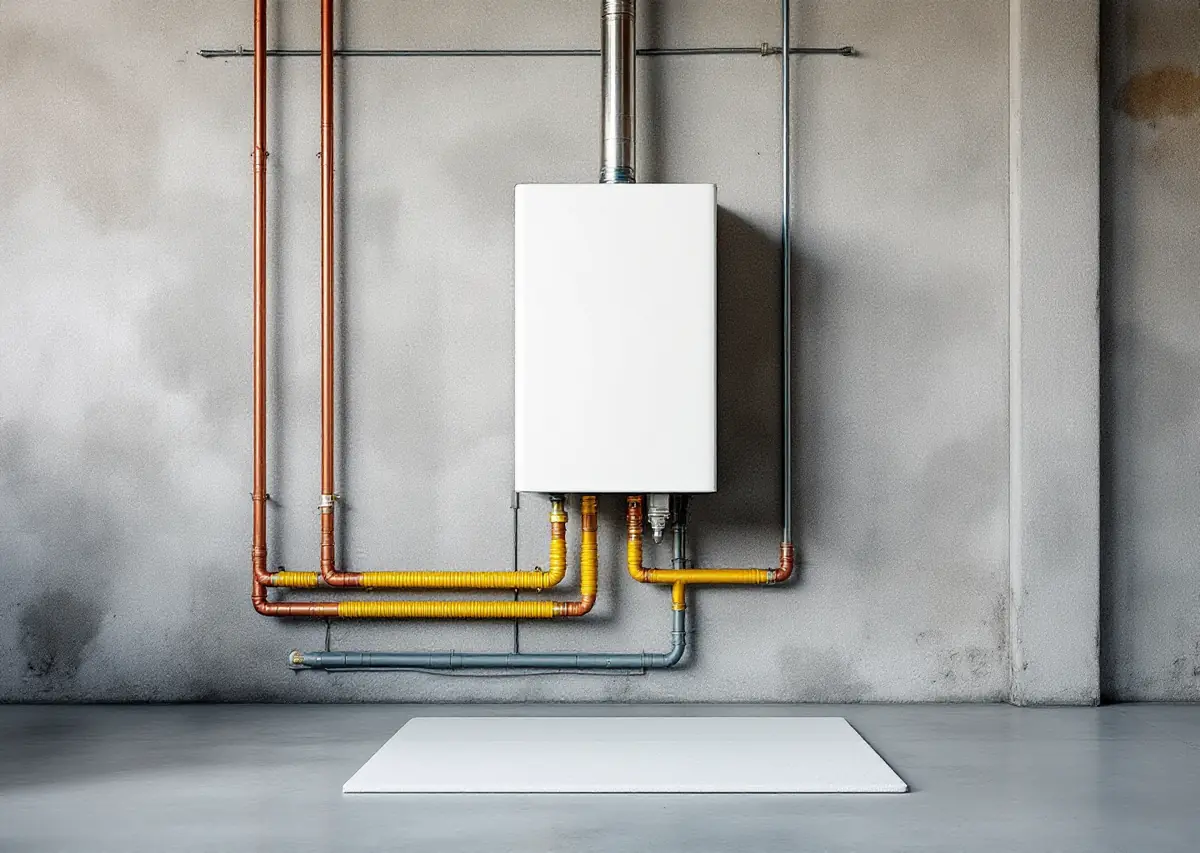
A tankless water heater — the same appliance is called a demand water heater, an on demand water heater, an instantaneous water heater and, in the searches, an instant water heater — is a burner or a set of electric elements wrapped around a heat exchanger, with a flow sensor that switches it on when a tap opens and off when the tap closes. There is no stored water. The Department of Energy's description is the plainest: tankless heaters “provide hot water only as it is needed. They don't produce the standby energy losses associated with storage water heaters, which can save you money.” That last clause is the entire economic case, and the rest of this page is about when it is large and when it is not.
- What it is. A wall-hung box the size of a suitcase that delivers a rated number of gallons per minute at a chosen temperature for as long as a tap runs. Gas units do most of the work in American houses; electric units serve a single fixture well and a whole house only where the electrical service allows.
- What it is not: instant. Hot water does not arrive at the tap any faster. The pipe between the heater and the tap still holds cold water, and a tankless unit adds a moment while it fires. “Instant” describes the heating, not the wait.
- What it is not: unlimited. It delivers its rated flow endlessly. Ask it for more flow than that — three showers at once — and every one of them gets cooler water. A tank delivers any flow until it is empty; a tankless unit delivers one flow forever.
- What it replaces. A storage tank that keeps forty or fifty gallons hot around the clock, losing heat through its walls all night. That loss, the standby loss, is what a tankless unit eliminates, and how much it was worth depends on how often the tank was being used anyway.
The Mechanism
How a tankless water heater works
How does a tankless water heater work: four parts, one sequence, and two behaviours that explain most complaints.
The sequence
A tap opens. Water begins to move through the unit, and a flow sensor detects it. Above a minimum flow, the unit fires: a gas burner under a finned heat exchanger, or electric elements around one. A thermostat reads the outgoing temperature and the burner modulates up and down to hold the set point as the flow changes. The tap closes, flow stops, the burner shuts down. Nothing is stored, nothing is kept warm.
What it delivers
The Department of Energy's building-science material gives the range: “high-efficiency endless hot water heaters can provide hot water at a rate of 2 to 5 gallons per minute.” Those gallons are at a given temperature rise, which is the difference between the water coming in and the water going out, and that rise is the subject of the sizing section, because it is where a unit that is right in one state is wrong in another.
Not Faults
Minimum flow and the cold water sandwich: the two complaints that are not faults
Both are in the design, both are in the specification sheet, and both are the reason a tankless unit gets blamed for a cold tap it did not cause.
The minimum flow
The unit will not fire below a certain flow, because heating a trickle would overshoot the set temperature. A slow handwash, a low-flow faucet on its lowest setting, a sink filling gently: each can sit below the threshold and get cold water. The minimum flow is printed in the specification, and it is the first number to compare between models for a household with low-flow fixtures. A unit whose minimum is above your slowest fixture will be called broken once a week.
The cold water sandwich
Turn a shower off for a moment and back on, and a slug of cold water arrives between two hot ones. The hot water in the pipe from the last use is followed by the cold water that was in the unit when it shut down, then by fresh hot water once it fires again. It is a characteristic of the design, not a defect; some units carry a small buffer to reduce it, and a recirculation arrangement removes it at a cost that the temperature section explains.
What both have in common
Neither is repaired, because neither is broken. A household that finds them intolerable wanted a tank, or a tankless unit with a buffer, and the time to learn that is before the wall is drilled. Ask the two questions in the specification: minimum flow, and whether the unit buffers.
The Comparison
Tankless vs tank: the comparison the retailer will not make
Is a tankless water heater better? The federal answer is: for whom. The number that every sales page quotes has a condition attached that the sales pages leave off.
The DOE figure, with its condition
The Department of Energy: “For homes that use 41 gallons or less of hot water daily, demand water heaters can be 24 to 34 percent more energy efficient than conventional storage tank water heaters.” Forty-one gallons a day is a small household: one or two people, ordinary showers, a dishwasher run every other day. The saving comes from standby loss, the heat a tank leaks through its walls while nobody is using hot water, and a small household leaves its tank standing idle for most of the day. A large household does not. Its tank is drawn down and reheated constantly, standby loss is a small share of its water-heating energy, and the tankless gain shrinks accordingly. The retailer quotes the top of the range to everybody; the agency attached it to the households it belongs to.
What the tank does better
Any flow, until empty. Three showers and a washing machine on a Saturday morning, from a big tank, with no sizing arithmetic. A simpler install: no gas line upsizing, no new vent, no condensate drain, no panel question. A lower purchase price. Repair by any plumber, with parts on any truck. And, for an electric household, an alternative the tankless unit cannot match on running cost: a heat pump water heater on a large tank, which is the appliance the remaining federal rebate is for, and which is compared with tankless on the replacement cost page.
What the tankless unit does better
Endless hot water at its rated flow: a long shower after a long bath, a soaking tub that outlasts any tank. Space: a wall-hung box where a tank stood. Longer service life, in the Department of Energy's words, “Other benefits include small size and longer life expectancy”, with a heat exchanger that is repairable and descalable rather than a tank that rusts through. No tank to leak forty gallons onto a floor. And the standby saving, sized to the household as above.
Is a tankless water heater worth it
For a small household with a gas line and a convenient wall for a vent, usually yes, on running cost and on space together. For a large household that never runs out of hot water from its tank and is chasing the bill, usually no; the money does more on a heat pump tank. For a household whose real complaint is waiting for hot water at a far bathroom, no, because a tankless unit does not shorten that wait and can lengthen it; a recirculation loop or a point-of-use heater does. The tool on this page walks those cases.
Both Columns
Tankless water heater pros and cons, honestly
The pros and cons lists on the subject are written to end in a purchase. This one is written by a referral service paid the same either way.
| Pro | True when | Con | True when |
|---|---|---|---|
| Lower running cost | Daily hot water use is low; DOE's 24 to 34 percent figure is for 41 gallons a day or less. | Higher purchase and install cost | Always, and most of the gap is the gas line and vent, not the unit. |
| Endless hot water | At the rated flow, sized at winter inlet temperature. | Limited flow at once | Two or more high-flow fixtures together, especially in a cold climate. |
| Space | Always; a wall-hung unit frees a floor. | Needs a gas line, a vent and often a condensate drain | Every gas install; the house decides how much. |
| Longer life, repairable | Water is soft or the unit is descaled on schedule. | Scale is its enemy | Hard water without descaling shortens the exchanger's life and voids warranties. |
| No tank to fail and flood | Always. | Minimum flow and the cold water sandwich | Low-flow fixtures; showers turned off and on. |
| No stored water for bacteria to grow in | No recirculation loop; see the temperature section. | Electric whole-house units are an electrical project | Almost every existing house; see the electric section. |
Gas And Propane
Gas and propane: the units that do most of the work
A gas tankless water heater is the unit that can serve a whole house, and it is the unit whose federal efficiency rule was repealed in 2025.
Condensing and non-condensing
A non-condensing unit sends hot exhaust up a stainless steel vent and wastes the heat in it. A condensing unit adds a second heat exchanger that pulls that heat out of the exhaust, cooling it enough to vent through plastic and to produce acidic condensate that has to be drained through a neutraliser. The condensing unit costs more, uses less gas, and needs a drain; the non-condensing unit costs less, uses more, and needs the stainless vent. ENERGY STAR's description of the certified gas units is brief: “By heating water only when it's needed, ENERGY STAR certified gas tankless water heaters cut water heating expenses, while also providing continuous hot water delivery.”
The rule Congress repealed
In December 2024 the Department of Energy issued an efficiency standard for consumer gas-fired instantaneous water heaters that would have taken effect in 2029. In May 2025 Congress voided it under the Congressional Review Act. The text of Public Law 119-6, approved May 9, 2025: “Congress disapproves the rule submitted by the Department of Energy relating to “Energy Conservation Program: Energy Conservation Standards for Consumer Gas-fired Instantaneous Water Heaters” (89 Fed. Reg. 105188 (December 26, 2024)), and such rule shall have no force or effect.” For a buyer, the consequence is simple: non-condensing gas tankless units stay on the shelf with no federal sunset, and the choice between condensing and non-condensing is yours, on price and gas cost, not the law's. The separate 2024 rule on storage water heaters, the one that moves electric tanks toward heat pump technology from 2029, is untouched by this and is covered on the replacement cost page.
The gas line
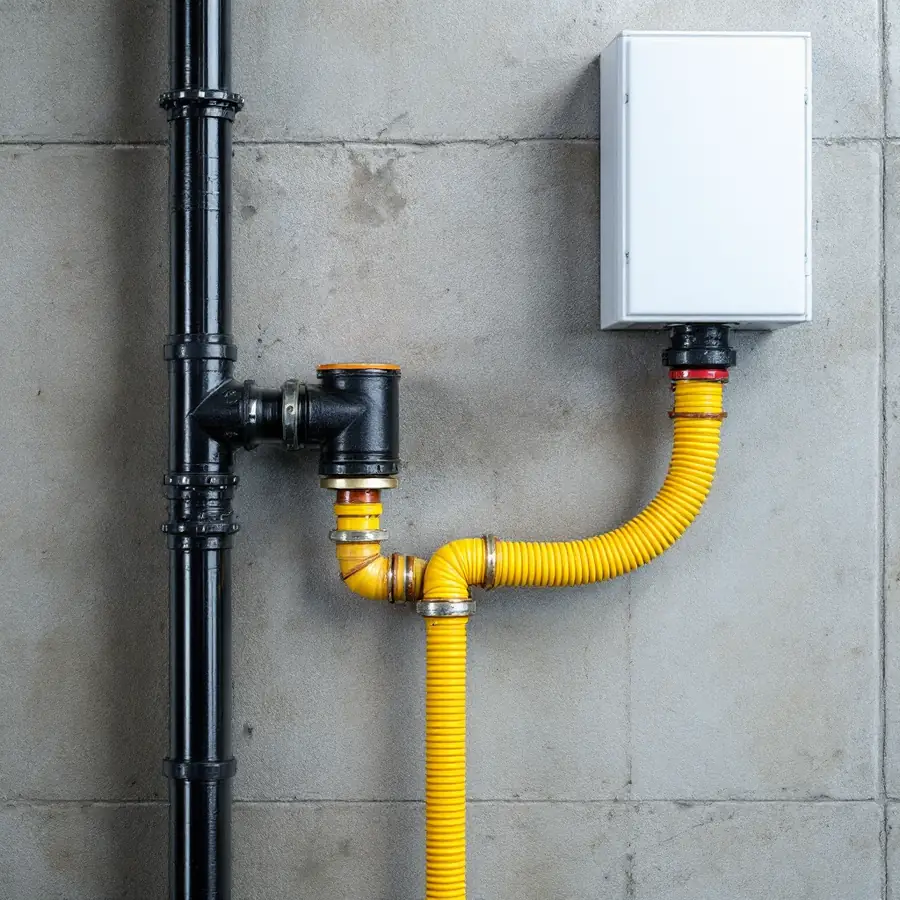
A gas tank heater sips; a gas tankless unit at full fire draws several times as much, for as long as a tap runs, while the furnace, range and dryer may be running too. Many houses were piped for the tank, and the line to the heater, sometimes the line from the meter, has to be upsized. That is the line on the quote that most often exceeds the unit, and it is a question to have answered before a model is chosen: what size line, what does this unit need at full fire, and is running it included.
The vent
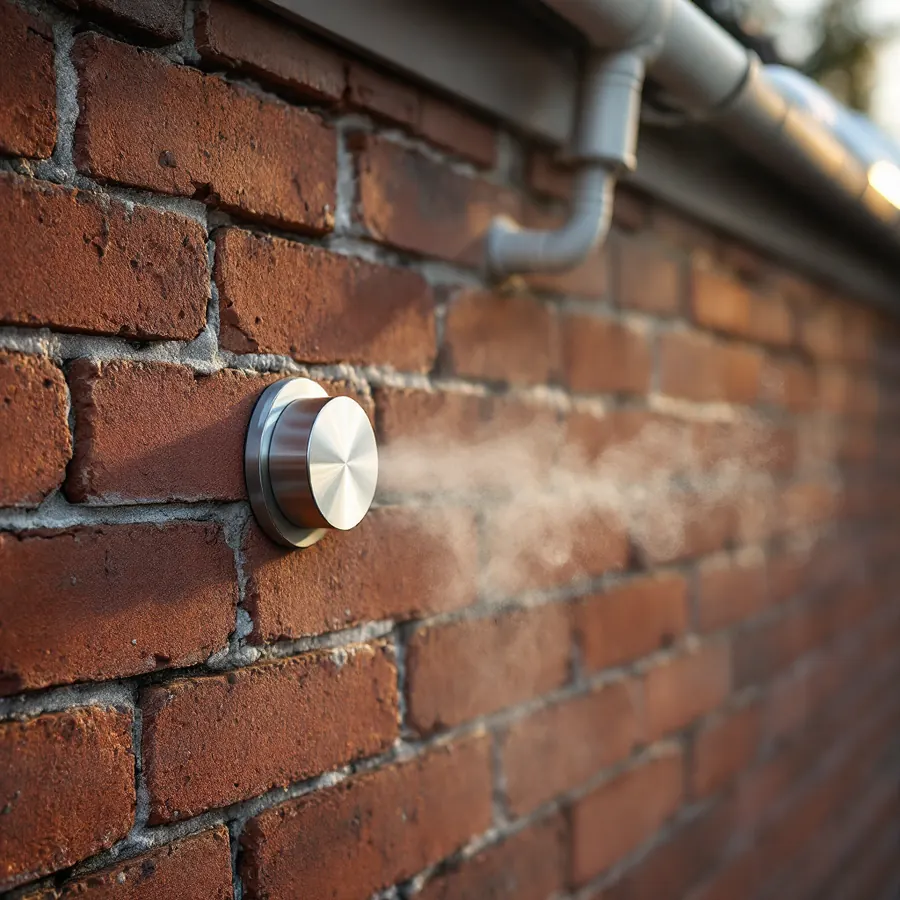
Tankless units do not use the old flue. Non-condensing units vent through stainless steel rated for hot exhaust; condensing units through plastic. Either way there is a new penetration through a wall or a roof, with clearances from windows, doors and air intakes, and that is carpentry as well as plumbing. Where the unit hangs is decided as much by where the vent can exit as by where the old tank stood.
The Fuel
Natural gas or propane: the same machine, two different supplies
A natural gas tankless water heater and a propane tankless water heater share a burner and an exchanger and differ in what feeds them, which is where the questions are.
The unit
Units are sold for one fuel or with a manufacturer's conversion kit that changes the orifice and the regulator setting. A unit run on the wrong fuel burns badly and voids its warranty; the fuel it is set for is on the rating plate, and it is the first thing to confirm on a unit that has changed hands.
The propane tank and regulator
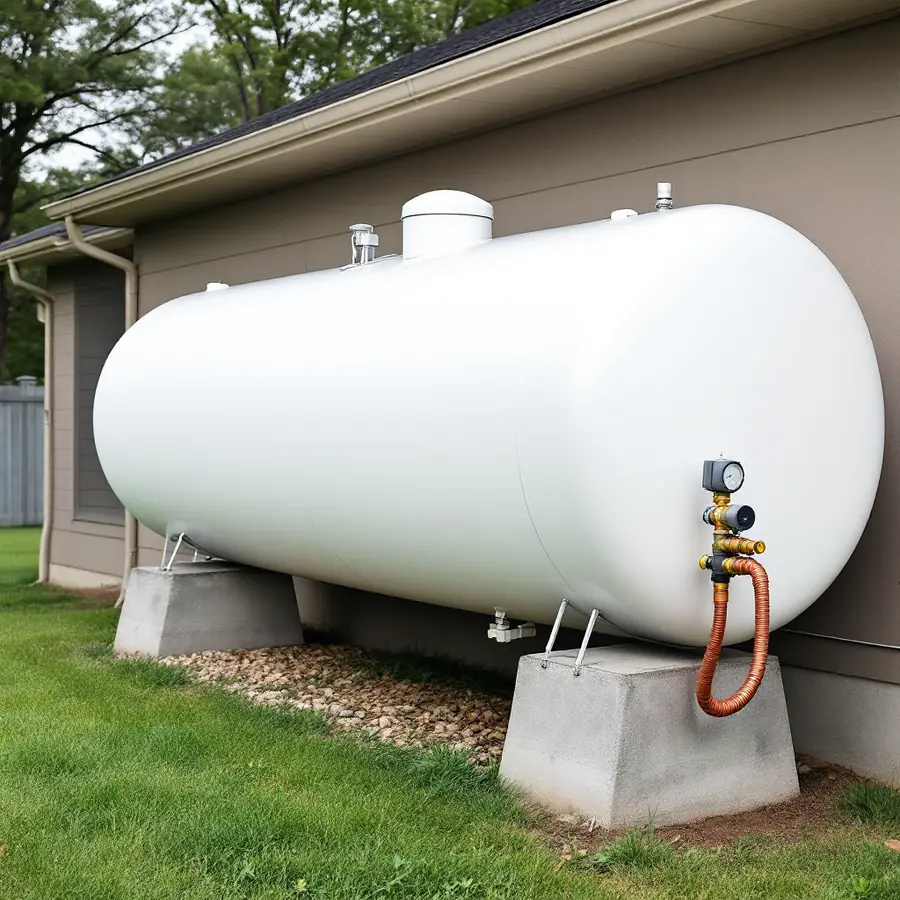
A tankless unit at full fire draws propane faster than a tank heater ever did, and in cold weather a small tank cannot vaporise propane fast enough to feed it. The tank size, the regulator's capacity and the line from the tank all have to match the unit's full-fire demand on the coldest day, and the propane supplier is the one to ask.
The running cost
Propane is bought by delivery and its price moves. A tankless unit that fires hard for every shower is a different draw pattern from a tank that reheats slowly overnight, and the running-cost comparison for a propane household has to be done with the delivered price rather than a natural gas rate. The Department of Energy's efficiency figure applies to the heat the unit makes, not to what the fuel costs.
Electric
Electric: a different machine with a different question
An electric tankless water heater is the most searched-for kind and the least often installed as a whole-house unit, for a reason that is on the electrical panel and not in the brochure.
The amperage
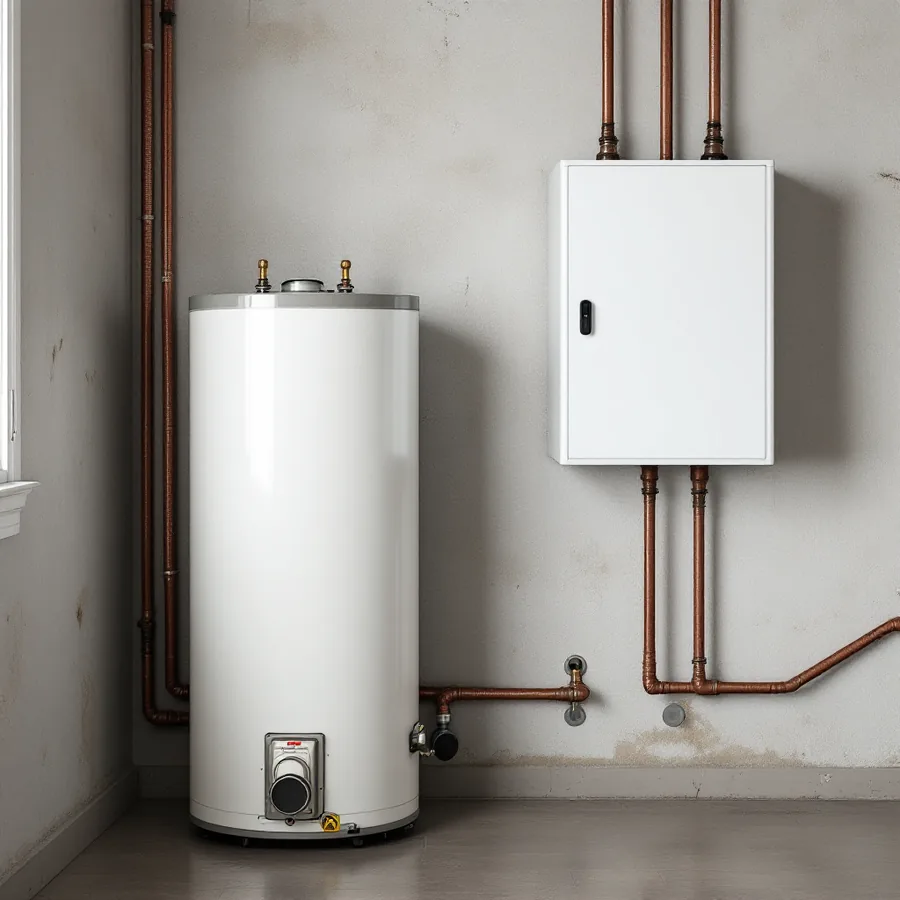
Heating water instantly with resistance elements takes a great deal of current. A whole-house electric tankless unit draws several times what an electric tank does, needs several new double-pole breakers and heavy wiring, and in many existing houses needs a panel or a service upgrade before it can be connected at all. That upgrade is a separate trade, a separate permit and a separate timeline, and it can cost more than the heater. The first question about any electric tankless unit is not its flow; it is how many amps it draws and how many the panel has to spare.
Temperature rise, and the cold climate
An electric unit heats fewer gallons a minute for a given temperature rise than a gas unit of comparable size. In a mild climate with warm incoming water, a whole-house electric unit can run a shower and a sink. In a northern winter, with incoming water near freezing, the same unit runs one shower and struggles with a second. The electric tankless water heater that reviews call the best is usually being reviewed in a warm state.
The best electric tankless water heater
Is the one whose amperage your panel can carry, whose temperature rise at your winter inlet delivers the flow you need, and whose minimum flow is below your slowest fixture. No model is best without those three numbers, which is why this page names none.
One Fixture
Point of use: the electric tankless unit that is almost always a good idea
The same name covers two different products. The small one is the good idea.
What it is
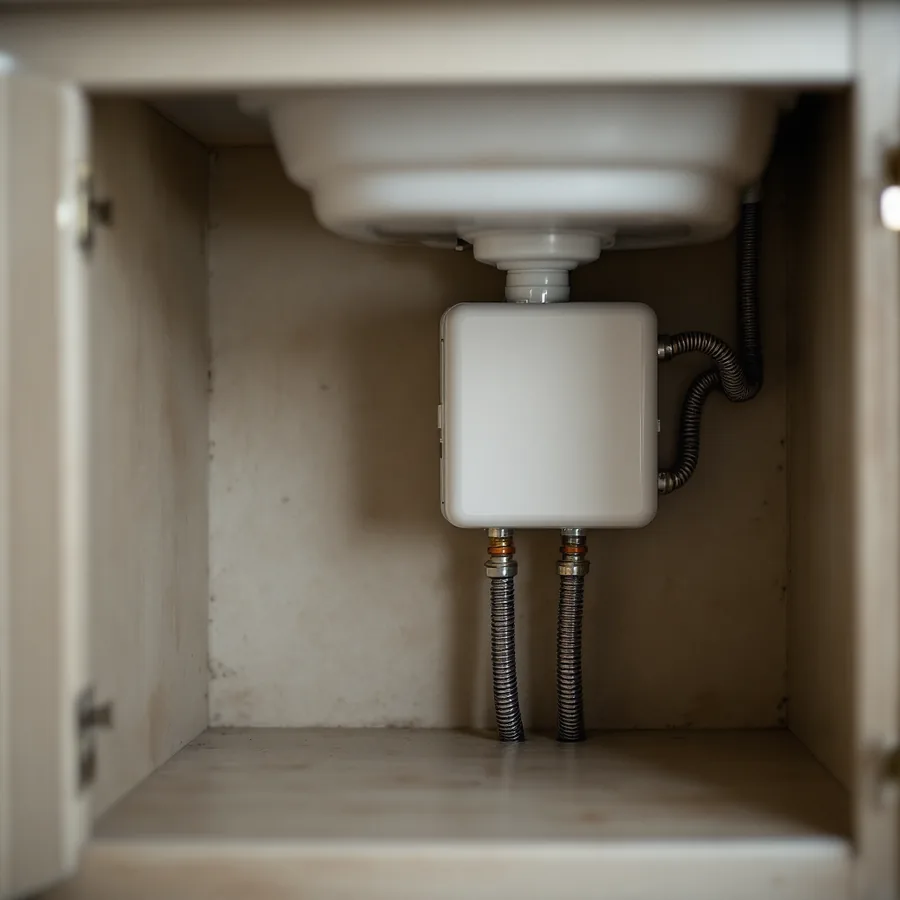
A compact electric unit under a sink, in a distant bathroom, at a workshop or an outbuilding, serving one fixture. It needs a modest circuit, no gas, no vent, and it heats only the water that one tap draws.
What it solves
The wait. A bathroom at the far end of a house from the main heater waits for the cold water in the pipe to clear every time; a point-of-use unit at that bathroom ends the wait without a recirculation loop and without touching the main heater. It is the honest answer to the most common complaint that sends people to this page, and it is a fraction of the cost of replacing the main heater.
What it does not do
Serve a shower well, in most cases: the small units deliver a modest flow at a modest rise, enough for a sink and a hand basin, not for a bath. A point-of-use unit for a shower is a larger unit with a larger circuit, and the whole-house arithmetic starts to apply.
Sizing
What size tankless water heater do I need
A tank is sized in gallons. A tankless unit is sized in gallons per minute at a temperature rise, and the second half of that is where most units are sized wrong.
Gallons per minute: what runs at once
Add the flow of the fixtures you expect to run at the same time. A shower head, a kitchen faucet, a washing machine fill, a bathroom sink each have a flow rate, printed on the fixture or measured with a bucket and a watch. The largest simultaneous total is the flow the unit must deliver. A household that will never run two showers at once needs a smaller unit than one that will, and a household with a large soaking tub needs to know its faucet's flow, not its capacity.
Temperature rise: where you live
The unit heats water from the temperature it arrives at to the temperature you set. In a southern state the incoming water in winter may be mild; in a northern one it is near freezing. The same unit, delivering the same heat, produces more gallons a minute of hot water from warm inlet water than from cold. The Department of Energy's range of 2 to 5 gallons per minute spans exactly that: the top of it is a large unit in a warm state, the bottom a modest unit in a cold one. Size for the coldest week of the year at your address, not for the average.
The arithmetic, without a model number
Take the flow you need at once. Take the rise from your winter inlet temperature to the set temperature. Read the manufacturer's flow-at-rise table for a candidate unit, which every manufacturer publishes. If the unit delivers your flow at your rise, it is sized; if it delivers your flow at a smaller rise than yours, it is a unit for a warmer state. A plumber who sizes by the number of bathrooms has skipped the second half.
Work It Out
Should you go tankless? Work it out
Four questions, nothing sent anywhere. What comes out is an honest verdict for your household, what the install will need, what the unit will not do, whether the Department of Energy's saving applies to you, and the question to ask first.
We are paid the same fixed fee for an introduction whether the answer is a tankless conversion or a like-for-like tank, which is why this tool has a verdict that is sometimes “no.”
The Unit's Price
What it costs to buy, and why the unit is the smaller half
How much is a tankless water heater: the box has a price on a shelf, and the shelf price is moved by four things. The larger half of the job is not on the shelf at all.
What moves the price of the unit
- Flow at rise. A unit rated for more gallons a minute at a given temperature rise costs more, because its burner and exchanger are larger. Buying more flow than the house can use is the commonest overspend.
- Condensing or not. The second heat exchanger and the plastic vent cost more up front and less over the years; the non-condensing unit is the reverse, and after the 2025 repeal both remain available.
- The warranty term. Manufacturers tier their units by exchanger warranty, and the longer tier is priced. Read what the warranty requires: most require annual descaling in hard water and proof of it.
- Controls and recirculation. Built-in recirculation pumps, app controls and buffer tanks add to the price and, in the recirculation case, add the temperature question in the section below.
The best tankless water heater
Does not exist as a product. There is the unit sized for your flow at your winter rise, in the fuel you have, with a minimum flow below your slowest fixture, at a warranty term that matches how long you will own the house. A review that names a model without those four numbers is reviewing it for somebody else's house.
The other half
The gas line, the vent penetration, the condensate drain, the electrical outlet, the isolation valves, the permit and, for an electric unit, the panel. In most houses those together exceed the unit, and they depend on the house rather than the product. What each of them is, and how to read a quote that lists them, is on the replacement cost page's tankless section. We publish no averages for either half.
Rebates And Credits
The federal money: what ended, what never applied
Two federal programs come up on every tankless page. One has ended; the other was never for tankless units.
The credit that ended
The section 25C credit returned a share of the cost of qualifying water heaters, including some gas tankless units, for three years. The IRS page for it now reads: “You can claim the credit for improvements made through December 31, 2025.” A tankless unit installed in 2026 does not earn it. Any page or quote that mentions a federal tax credit as a reason to buy is describing a program that has closed.
The rebate that is for something else
The Department of Energy lists a High-Efficiency Electric Home Rebate for an ENERGY STAR heat pump water heater, “may be eligible for either: a High-Efficiency Electric Home Rebate of up to $1,750”, managed by each state. It is for heat pump storage units. It does not apply to tankless units of either fuel. A household choosing between a tankless unit and a heat pump tank on cost should know that the rebate sits on one side of that comparison only.
What remains
Utility and manufacturer rebates, which vary by company and by month and are the installer's to name in writing on the quote. Nothing federal.
Maintenance
Flushing and descaling: the one job a tankless unit actually needs
How to flush a tankless water heater is the most searched maintenance question about the appliance, and it is the one job that decides how long the unit lasts.
Why scale is the enemy
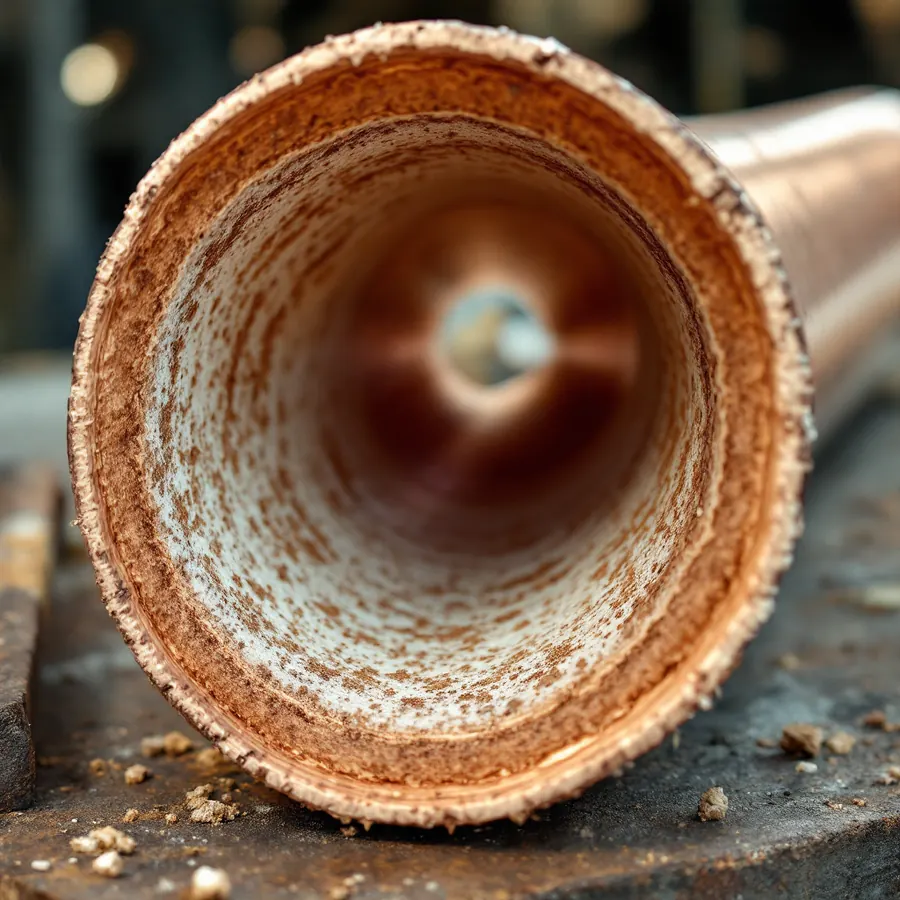
Hard water carries dissolved minerals, and minerals come out of solution on hot surfaces. In a tank they settle to the bottom as sediment; in a tankless unit they coat the inside of the narrow heat exchanger passages, insulating the water from the burner and narrowing the flow. The unit works harder, delivers less, throws an error and, eventually, fails. Every manufacturer's warranty on the exchanger assumes descaling on a schedule that depends on water hardness, and most require proof.
How hard is your water
Your water utility tells you, every year, in a document the EPA requires: “EPA requires community water systems to deliver a Consumer Confidence Report, also known as an annual drinking water quality report, to their customers.” “Reports must be sent by your water supplier each year by July 1.” The report lists hardness. A well is tested privately. Hard water means annual descaling at least; very hard water means more often, or a softener ahead of the unit.
How to descale a tankless water heater
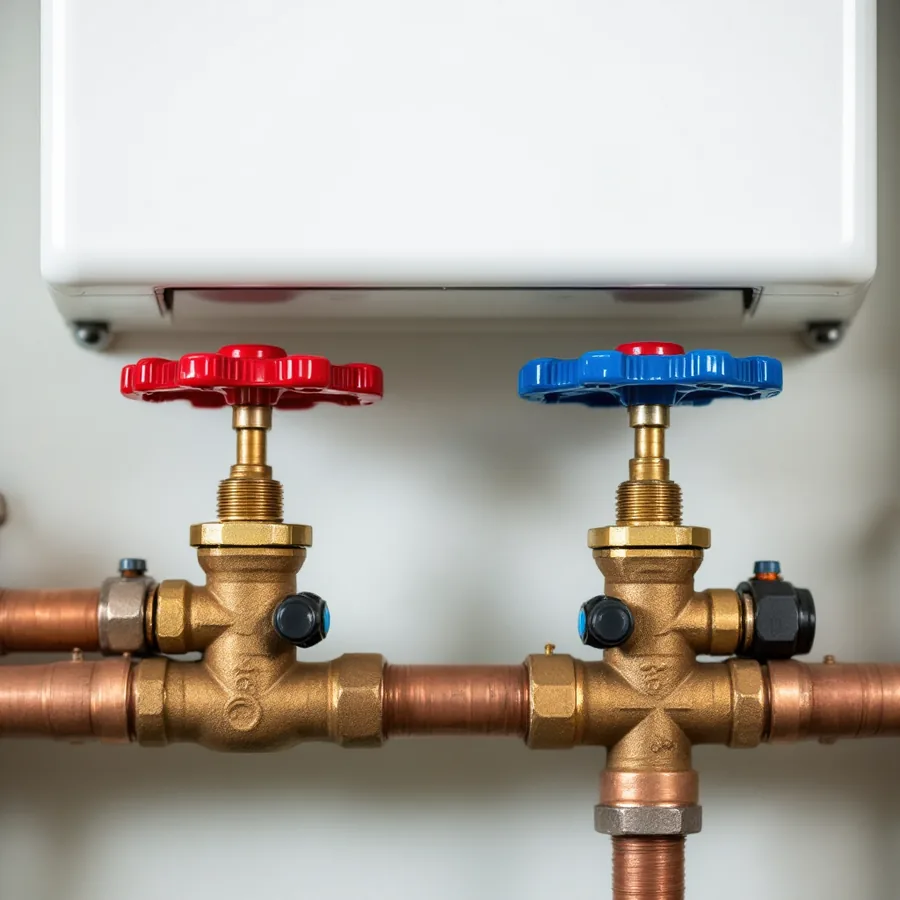
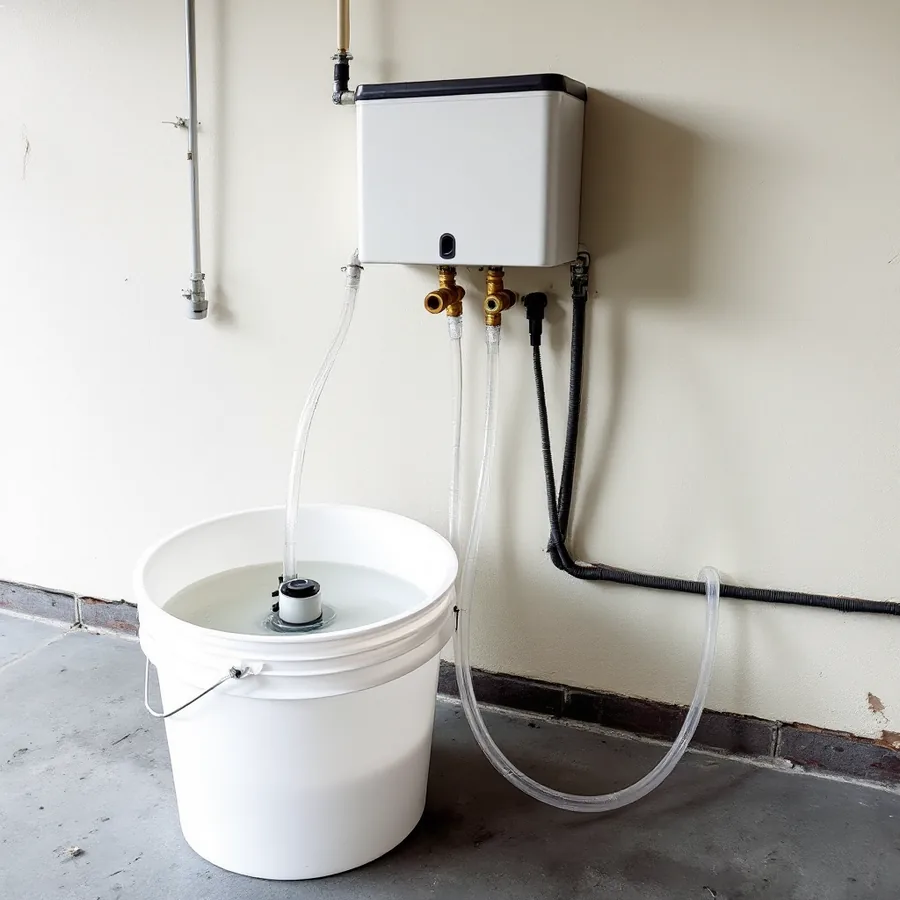
The procedure the manufacturers publish, which a homeowner can follow with a flush kit: close the isolation valves on the hot and cold lines, connect a small submersible pump and hoses to the service ports, circulate a few gallons of white vinegar or a descaling solution through the exchanger for the time the manual specifies, usually under an hour, then flush with fresh water and reopen the valves. A tankless water heater flush kit is the pump, the bucket and the hoses. The prerequisite is the pair of isolation valves with service ports, which should have been installed with the unit and which are the first thing to check on any quote; a unit installed without them cannot be flushed without a plumber.
How to clean a tankless water heater beyond the exchanger
The inlet water filter, a small screen at the cold connection, is cleaned by closing the valve and unscrewing it. The air intake filter on some gas units is vacuumed. The condensate neutraliser on a condensing unit has media that is replaced on the manufacturer's interval. None of it is difficult; all of it is on a schedule, which is the difference from a tank.
The Years
How long a tankless water heater lasts
Longer than a tank, in the Department of Energy's words, and on a condition the agency does not spell out.
What the federal source says
DOE's building-science material lists among the benefits “Other benefits include small size and longer life expectancy.” This page publishes no number of years, because the honest number depends on the water and the maintenance more than on the appliance.
Why it lasts, and why it does not
A tank fails when its steel rusts through, and nothing extends that except the anode. A tankless unit has no tank to rust; its heat exchanger is copper or stainless, its parts are replaceable, and a well-maintained unit is repaired rather than replaced for a long time. What ends it early is scale in hard water without descaling, and a unit that has been throwing flow errors for a year has usually been telling its owner exactly that.
Two Agencies
Temperature, scalds and the loop: two federal agencies again
A tankless unit settles one federal disagreement about water heater temperature and, with one popular accessory, reopens it.
The set point
A tankless unit lets you set the outgoing temperature on a control. The Consumer Product Safety Commission urges all users to lower their water heaters to 120 degrees Fahrenheit, and on a tankless unit that setting is simply the number on the display, with no mixing valve needed to get there.
What a tankless unit removes
The CDC's guidance for building water systems asks for stored hot water to be kept well above the range in which Legionella grows, 77–113°F, which on a storage tank conflicts with the CPSC's scald advice and is reconciled with a mixing valve. A tankless unit stores nothing. There is no tank of warm water for the bacterium to grow in, and the conflict, for the heater itself, does not arise. That is a real and rarely mentioned advantage.
What the recirculation loop brings back
A recirculation loop, added so that hot water reaches a far bathroom without a wait, keeps water moving and warm in the pipes at all hours. The CDC's guidance for circulated water is explicit: “Ensure hot water in circulation does not fall below 120°F (49°C).” A loop that lets its water cool into the growth range between cycles has recreated, in the pipes, what the tankless unit removed from the heater. A loop on a tankless unit is a design the manufacturer has to support and a temperature the installer has to hold, and it deserves the question before it is added.
Before Anyone Hangs It
What to ask before anyone hangs one on the wall
Five questions that separate a company that sized your house from one that sold you a unit.
| Ask | What it tests | A weak answer |
|---|---|---|
| At my winter inlet temperature, how many gallons a minute does this unit deliver at 120 degrees, and which fixtures can run at once? | Whether sizing was done by flow and rise or by bathrooms. | “It’s good for a three-bathroom house.” |
| What size gas line do I have, what does this unit need at full fire, and is upsizing included? | Whether the larger half of the job was priced. | “We’ll see when we get there.” |
| Are isolation valves with service ports on the quote, and what is the descaling schedule for my water? | Whether the unit can be maintained and whether the warranty will hold. | “You don’t really need those.” |
| Condensing or non-condensing, and where does the vent exit and the condensate go? | Whether they know the two designs and what each needs from the house. | A model number with no vent plan. |
| If you are mentioning a rebate or tax credit, which program, and is it open today? | Whether they know the federal credit ended and the rebate is for heat pump tanks. | “You’ll get the federal credit.” |
What we do, and what we do not
We are not a plumber and we do not sell water heaters of any kind. We are paid a fixed fee for an introduction — the same for a tankless conversion and a like-for-like tank — which is why this page can afford to say that a large household chasing its bill should look at a heat pump tank instead. When you want the sizing done at your house, we connect you with independent licensed and insured plumbing companies. Who pays us and how is on our about page, and the rest of what we publish starts from the home page.
Straight Answers
Tankless water heater questions, answered
Is a tankless water heater worth it?
For a small household with gas at the house, usually yes: DOE puts the efficiency gain over a tank at 24 to 34 percent for homes using 41 gallons of hot water a day or less, and the unit frees the floor. For a large household chasing the bill, usually no; the gain is small and a heat pump tank does more. For a household whose real complaint is a wait at a far tap, no; a recirculation loop or a point-of-use heater fixes that.
Does a tankless water heater run out of hot water?
Not at its rated flow: it delivers that flow for as long as a tap runs. Ask it for more flow than it is rated for, such as three showers at once, and every fixture gets cooler water. Sizing by gallons per minute at your winter inlet temperature is what prevents that.
Gas or electric tankless?
Gas for a whole house in most homes; it delivers more flow at a given temperature rise and does not depend on the electrical panel. Electric for a single fixture at a distance from the main heater, and for a whole house only where the panel has the spare amperage, which most existing houses do not without an upgrade.
How often should I flush a tankless water heater?
On the manufacturer's schedule for your water hardness, which your utility reports every year in the Consumer Confidence Report the EPA requires. Hard water means at least annually; very hard water more often or a softener. The flush needs isolation valves with service ports, a small pump, hoses and vinegar or a descaling solution, and it is the one job the unit needs that a tank never did.
How long does a tankless water heater last?
DOE lists longer life expectancy among its benefits over a tank. This page publishes no number of years, because scale in hard water without descaling shortens that life more than anything else, and a descaled unit is repaired rather than replaced for a long time.
Is there still a federal tax credit for a tankless water heater?
No. The IRS states that the Energy Efficient Home Improvement Credit can be claimed for improvements made through December 31, 2025. The state-run rebate of up to $1,750 that DOE lists is for ENERGY STAR heat pump water heaters, not tankless units.
What happened to the efficiency rule for gas tankless water heaters?
Congress repealed it. Public Law 119-6, approved May 9, 2025, disapproved the Department of Energy's December 2024 standard for consumer gas-fired instantaneous water heaters, so it has no force or effect. Non-condensing gas tankless units remain available with no federal sunset.
Where This Comes From
Sources
- The 24 to 34 percent figure, the 41-gallon condition and standby losses — U.S. Department of Energy, Test Your Home Energy IQ.
- Flow of 2 to 5 gallons per minute and longer life expectancy — U.S. Department of Energy, Building Science Education: Water Heaters, Gas Fired Tankless.
- The repeal of the gas tankless efficiency standard — Public Law 119-6, H.J. Res. 20, approved May 9, 2025 (Congress.gov).
- Certified gas tankless units — ENERGY STAR, Whole Home Tankless Gas Water Heaters.
- The end date of the section 25C credit — Internal Revenue Service, Energy Efficient Home Improvement Credit.
- The heat pump water heater rebate — U.S. Department of Energy, Home Upgrades.
- The 120-degree setting — U.S. Consumer Product Safety Commission, Publication 5098, Avoiding Tap Water Scalds.
- Legionella growth range and circulated water temperature — Centers for Disease Control and Prevention, Controlling Legionella in Potable Water Systems.
- The annual water quality report — U.S. Environmental Protection Agency, CCR Information for Consumers.
Our editorial standards explain how we source and check what we publish. Every quotation on this page is taken from the federal page linked beside it; we name no brands and publish no price averages. We are a referral service rather than a plumber. Last updated .
Before you call anyone
The flat-fee match — we are paid for the introduction, not for the size of your job
Most plumbing advice is written by the company that wants to do the work. That is not a failing of the people who read it; it is a defect in who is talking: the diagnosis, the estimate and the invoice come from one party, and no amount of care on your side fixes that.
We are built the other way round. We do not repair, install or sell anything, so the payment reaches us when you are connected to a licensed, insured plumbing company — the same amount whether you need a two-dollar flapper or a new water heater. Nobody here has a reason to talk you into the larger number. You can check that rather than take it on trust: how we make money is written down, and this site keeps telling readers when not to buy. Why does not everyone work this way? Because a flat fee leaves money on the table every time the job turns out to be big.
Waiting is the one thing that actually costs money. A water heater that is leaking from the tank does not get better and does not wait for a convenient week; the water it lets go finds the floor, the drywall and whatever is stored below. A drain that backs up once backs up again, and the second time it is sewage. And if it turns out to be a flapper or a reset button, say so on the call. We will tell you, and that call earns us nothing.
Not for you if: you want a price over the phone — nobody honest gives one without seeing the pipe; you need a guarantee of arrival within the hour — we cannot promise that for a company we do not run; the building is commercial; or you would rather do it yourself, in which case the pages on this site are written so that you can.