Clogged Drain
Clogged drain — one drain, several drains, or the lowest drain in the house: that question decides everything
A shower that stands in water, a kitchen sink that fills, a washing machine that overflows its pipe, a toilet that rises instead of falling. Every page on the subject goes straight to what to pour or push down the opening. This one starts a step earlier, with the single question a plumber asks before touching anything: is it one drain, the drains in one room, or the lowest drain in the building? The answer says where the blockage is, what will reach it, whether anything you pour can help, and whether this is a plunger, a cable, or the main line. Alongside that: the federal figure on what actually blocks pipes, the chemistry of why a fizz clears nothing, and what the label on a chemical opener leaves out.
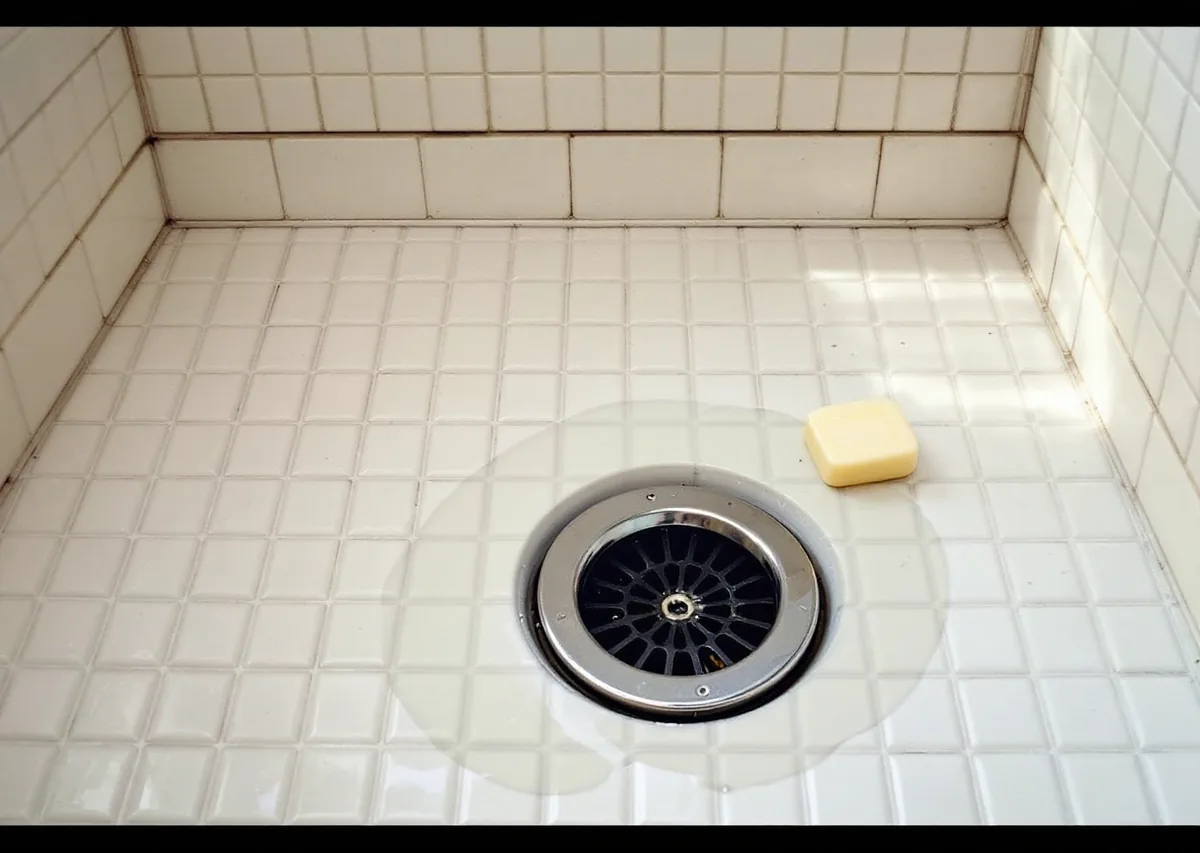
One drain, several drains, or the lowest drain: the question that decides everything
Every drain in a house runs into a shared system: the fixture's own trap, then a branch pipe shared by the fixtures in that room, then a vertical stack, then the house drain that leaves the building and becomes the sewer lateral. A blockage can sit at any of those four places, and the symptom tells you which, provided you look at the other drains before you look at the one that is misbehaving.
- One fixture, everything else clear. The blockage is in that fixture or its trap. This is the strainer, the stopper, the pop-up, the P-trap under the sink, the first few inches of pipe. It is the commonest clog in a house, it is reachable from the drain opening, and it is the one everything you have read about plunging and augering is actually about.
- Several fixtures in one room. The blockage is in the branch they share, past the point where their pipes meet. Plunging one pushes air out of the others. A plunger will not reach it; a cable from a cleanout or through a removed trap will.
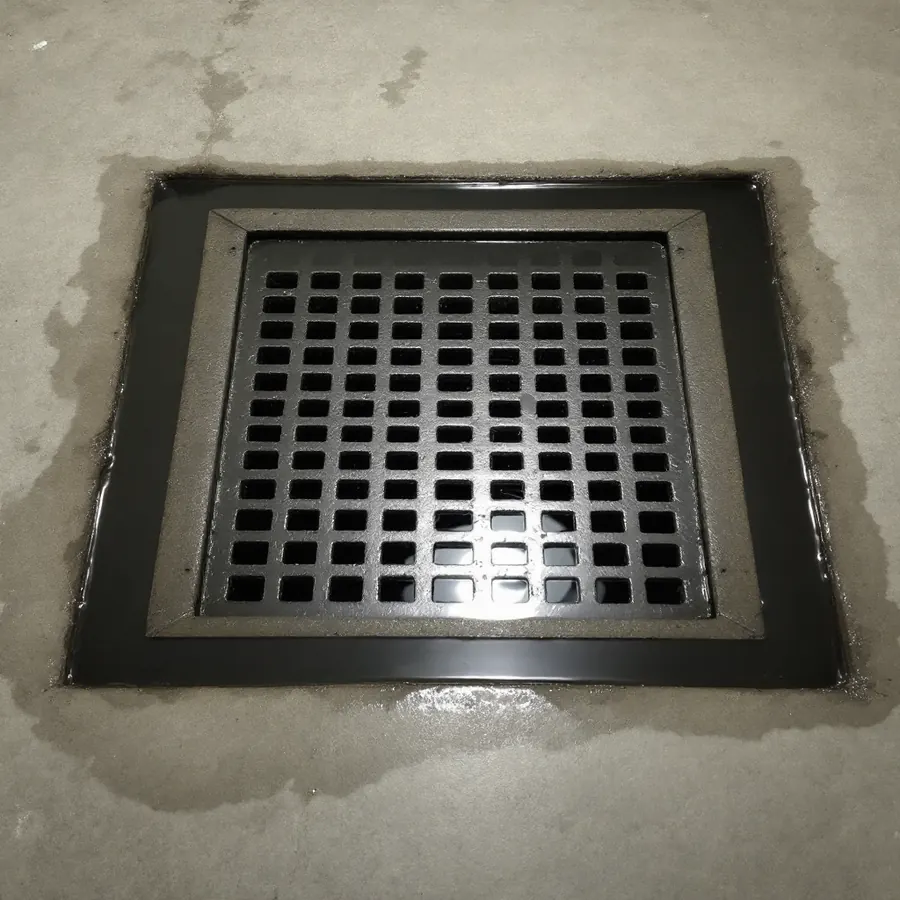
- The lowest drain in the building backs up when others are used. The basement floor drain, the ground-floor shower, the first-floor toilet. Everything in the house is trying to leave through one blocked pipe, and that pipe is the house drain or the sewer line. Nothing you own reaches it, and the only useful thing to do is stop running water. That is the sewer line page, and the section on it below says how to tell.
- The search that costs the most. “Clogged drain deep in pipe” and “clogged drain line” are the expensive clicks on this subject, and they are usually the second case wearing the first case's clothes: a fixture that keeps clogging because the branch behind it is narrowed. The tool on this page starts with that distinction because nothing else on the page works without it.
The sections that follow take the drains of a house one at a time, because each has a characteristic clog and a characteristic mistake. Then what actually clears a drain, then the two things people pour, then the smells and gurgles that are not clogs at all.
The Shower And The Tub
The shower and the tub: hair, soap and the stopper
A clogged shower drain is the single most searched drain problem in the country, and the single easiest to clear by hand, because the clog is almost always within reach.
What the clog is
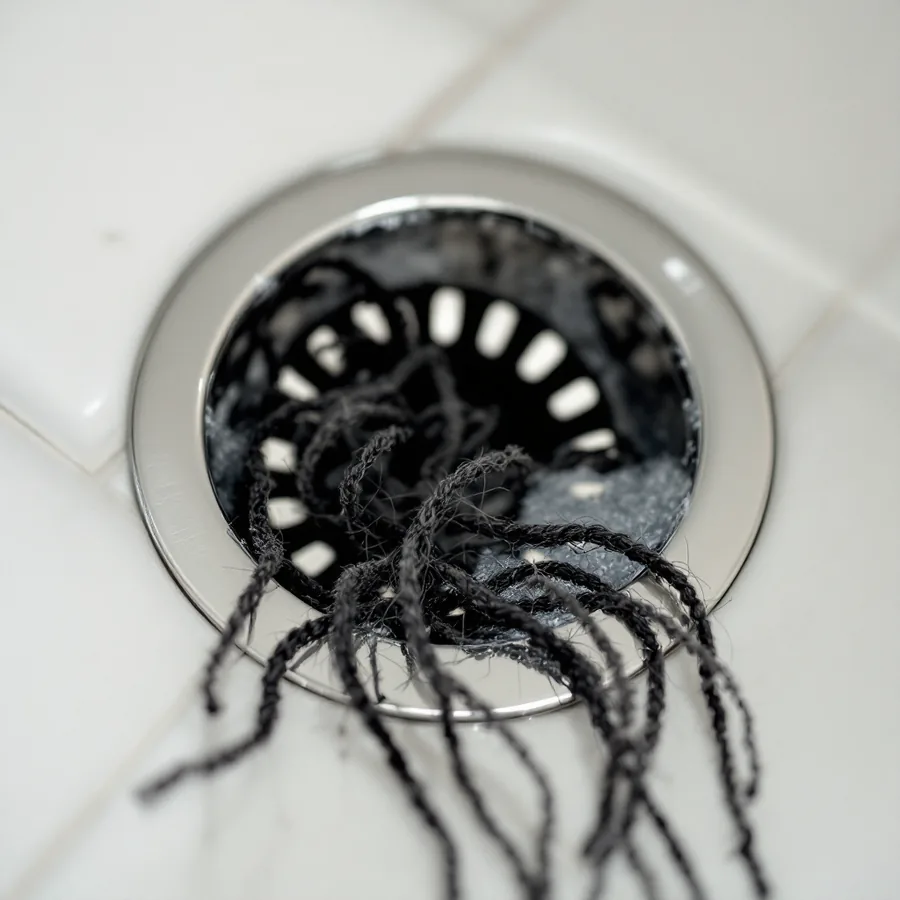
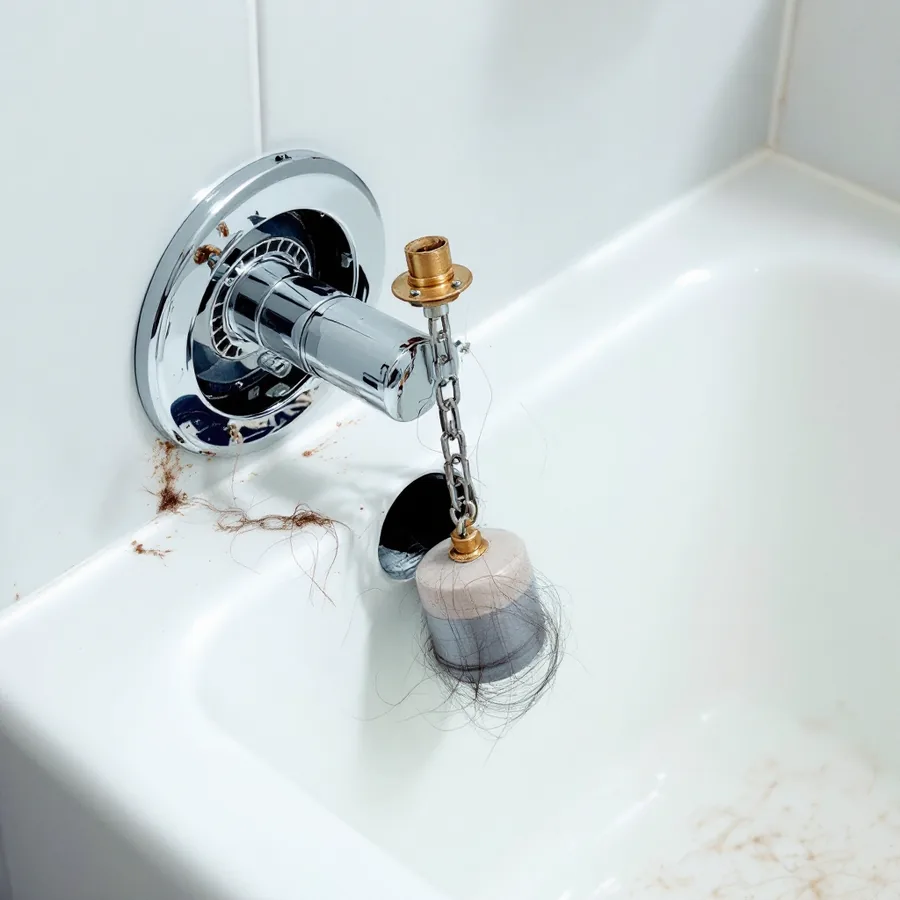
Hair, wound into a rope by soap and skin oils, caught on the strainer's underside or on the crossbar of the drain fitting a few inches down. In a tub with a lever stopper, it collects on the linkage that hangs down behind the overflow plate. It is not deep in the pipe. Water stands because the rope has grown into a mat that water has to seep through, and the seep gets slower every week.
How to fix a clogged shower drain, in the order that works
Remove the strainer: most lift out or are held by one screw. Reach in with a barbed plastic strip, the kind sold for a few dollars, or a coat hanger bent into a hook, and pull. What comes out is the clog. Run hot water from the tap, not the kettle, for a minute. If the water still stands, plunge with the overflow opening held closed by a wet cloth, because a plunger with an open overflow pushes air out of the overflow instead of down the pipe. If it still stands after that, the clog is past the trap and the section on what clears a drain applies.
The tub stopper
A tub with a lever on the overflow plate has a stopper mechanism inside the overflow pipe, and hair collects on it where nobody can see. Remove the two screws on the plate, pull the whole linkage out through the overflow, and clean it. A tub that is slow but not clogged is often just this: the plunger-type stopper sitting low because the linkage has stretched, throttling the drain without blocking it. Adjusting the threaded rod on the linkage fixes what looks like a clog.
Standing water, and the diagram question
A shower drain clogged with standing water does not need the water removed before you work on it, unless you intend to use a chemical, which this page will tell you not to. A cup and a bucket empty a tub in a few minutes if you want to see the drain. The searches for a clogged bathtub drain diagram are looking for one thing: the tub drain and the overflow join in a tee below the tub, and the trap is below that. The stopper linkage hangs in the overflow leg; the hair sits in the drain leg; a plunger works only if both legs are sealed.
The Bathroom Sink
The bathroom sink: the pop-up and the trap
A bathroom sink clogs at two places, both designed to come apart without tools.
The pop-up
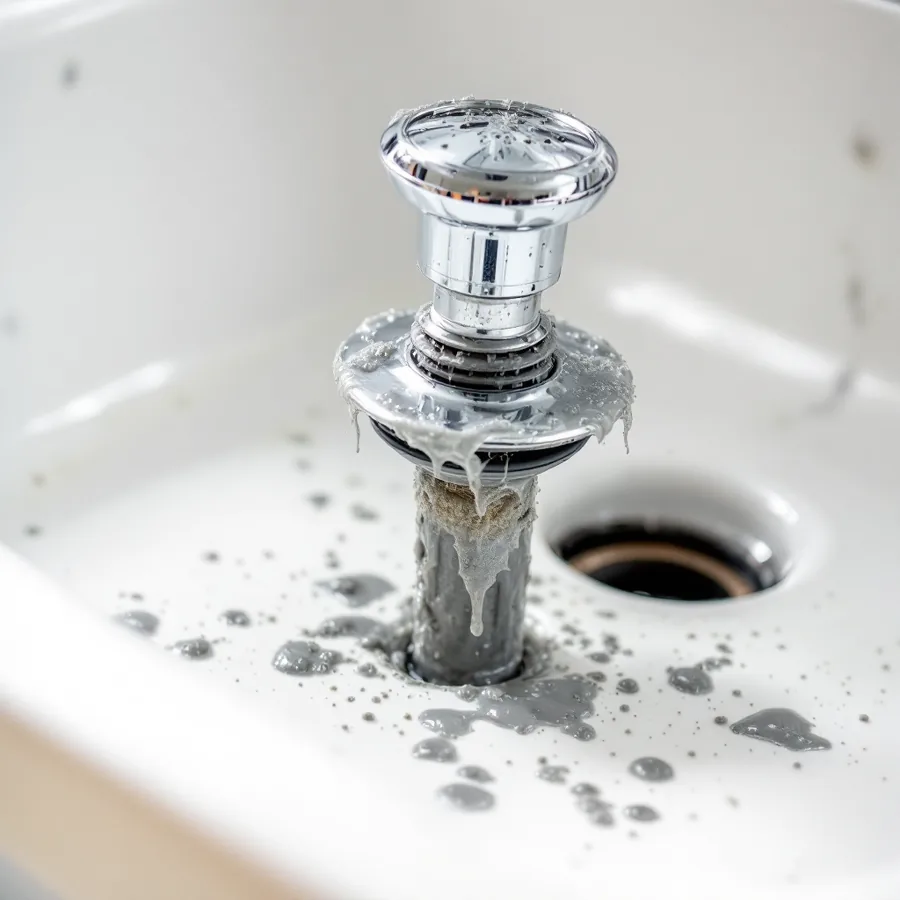
The stopper in a bathroom sink is lifted by a horizontal pivot rod that enters the tailpiece under the sink. Hair and toothpaste wrap around the stopper's foot and the rod. Under the sink, unscrew the nut holding the pivot rod, pull the rod back, lift the stopper out from above, clean both, reassemble. That is most bathroom sink clogs.
The P-trap
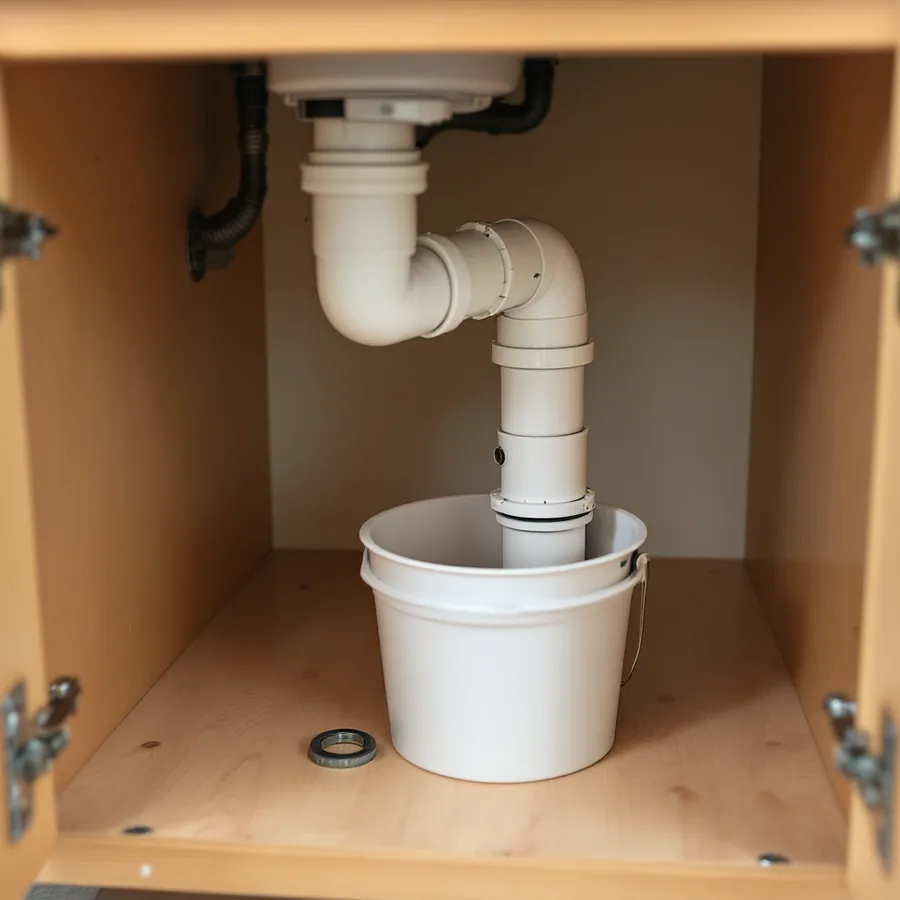
The U-shaped pipe under the sink exists to hold a plug of water that keeps sewer gas out of the room, and it holds anything heavy that goes down with the water: a ring, a cap, a cotton bud. Two slip nuts, usually hand-tight, a bucket underneath, and it comes off. Clean it and put it back with the washers seated. A trap that has been leaking at a slip nut for months is a trap that was put back wrong; they are meant to seal by hand.
How to clear a clogged sink drain past the trap
With the trap removed, the pipe that goes into the wall is the trap arm, and a hand auger fed into it reaches the branch. If the auger meets nothing and the sink still will not drain with the trap reassembled, the vent is the suspect, and that has its own section below.
The Kitchen
The kitchen: grease, the disposal and the dishwasher
A clogged kitchen sink drain is a different clog from a bathroom one. It is grease, and grease behaves like nothing else in a pipe.
What the federal data says blocks pipes
The Environmental Protection Agency's fact sheet on fats, oils and grease quotes its own Report to Congress on sewer overflows: “grease from restaurants, homes, and industrial sources are the most common cause (47%) of reported blockages. Grease is problematic because it solidifies, reduces conveyance capacity, and blocks flow.” That is the municipal sewer, but the mechanism in the pipe under a kitchen sink is identical. Grease goes down warm and liquid, cools against the pipe wall a few feet along, and sets. Coffee grounds, rice, pasta and eggshell fragments bind into it. Each pour adds a layer. The pipe narrows from the inside until a normal load of water cannot pass it.
The hot water myth
Hot tap water does not dissolve set grease; it softens the surface and moves a little of it a little further along, where it sets again. Boiling water from a kettle softens the grease and also softens a plastic trap and its seals, which is why a kitchen trap that starts leaking after a “home remedy” has usually been cooked. Dish soap with hot water is a legitimate first try on a fresh, soft grease clog, because soap does emulsify grease. On a set one, the answer is mechanical.
The disposal
A clogged garbage disposal drain is usually not the disposal. The grinding chamber empties into the same trap as the sink, and what blocks is the trap or the trap arm, fed by the disposal with a slurry that would never have gone down a plain drain. If the disposal hums and does not turn, that is a jam, not a clog: power off, the hex key in the socket underneath, turn it free, reset button, power on. If it turns and the water stands, it is the drain, and the sink section applies with one warning: never run a disposal against standing water in the hope of forcing the clog, and never put a chemical opener into a sink with a disposal, because the next person to switch it on gets a spray of what is left.
The dishwasher
A dishwasher drains through a hose into the disposal's inlet or into a tee on the sink tailpiece, and it is meant to loop up high under the counter, or pass through an air gap on the sink deck, so that sink water cannot flow back into the machine. A dishwasher that will not drain, or a sink that fills when the dishwasher runs, is usually one of: a clogged dishwasher drain hose where it joins the disposal (the knock-out plug on a new disposal was never removed, or grease has closed the inlet), a hose that has sagged and lost its loop, or the same sink clog as everything else in this section. Clear the sink first; a clogged sink shows up as a dishwasher problem before it shows up as a sink problem.
The best drain cleaner for a clogged kitchen sink
Is a cable. Grease clogs are soft, long and stuck to the wall; a hand auger through the trap arm pulls a plug of it out and a second pass takes the rest. Enzyme products, which digest grease slowly over days, are a reasonable maintenance habit for a kitchen line and a useless emergency measure. Chemical openers are addressed in their own section, and the short version for a kitchen is that they do not reach a grease clog and they leave the pipe with a caustic pool in it.
The Washing Machine
The washing machine: a standpipe that overflows is not always a clog
A washer drain that overflows is the drain problem most often misdiagnosed, because two different faults look identical from across the room.
The clog
Lint, detergent residue and the occasional sock build up in the trap below the standpipe, and the pipe fills faster than it can empty. A machine's pump discharges a large volume in a short burst, so a partial blockage that a bathroom sink would tolerate overflows a washer standpipe within a minute. The blockage is cleared from the standpipe with a hand auger, or from the trap if it is accessible, and it is worth checking a floor drain nearby: a washer discharge backing up at a floor drain is the classic first sign of a main-line clog, not a washer problem.
The standpipe that was never big enough
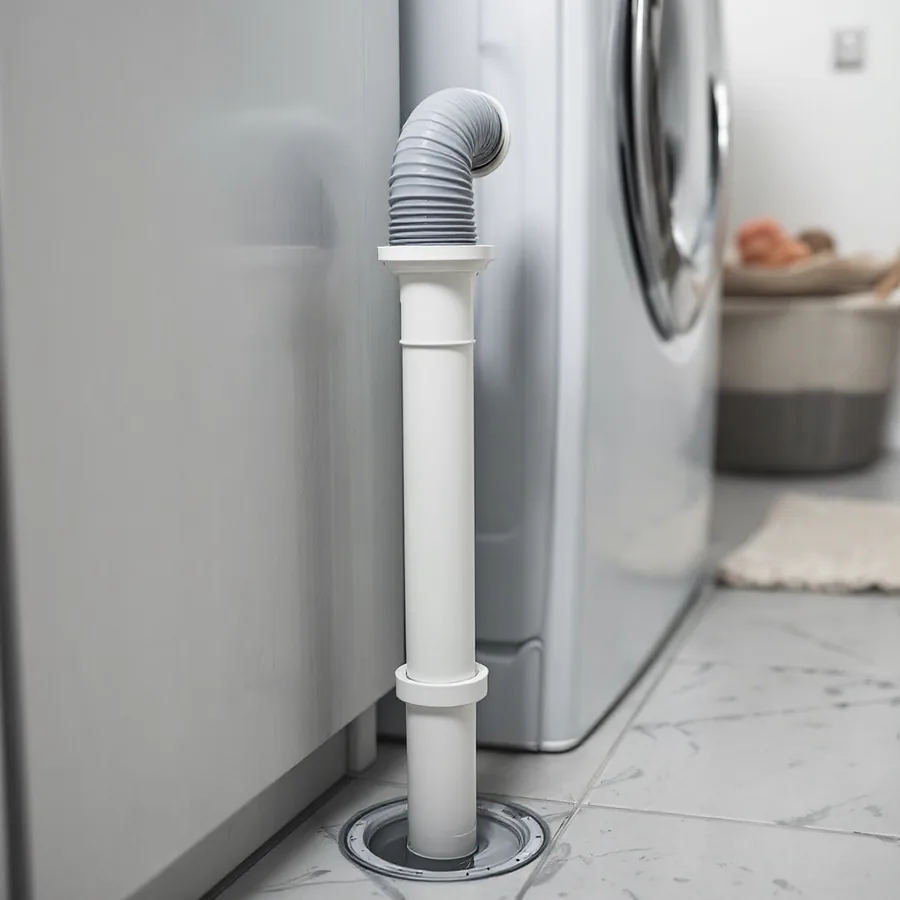
A standpipe has to be tall enough and wide enough for the machine's pump, and the drain hose has to hook into its top with an air gap rather than being pushed to the bottom. A newer, faster machine on an old standpipe overflows within seconds of the pump starting, with nothing blocked at all. A hose pushed deep into the pipe seals it and siphons the machine, or overflows around itself. Time the overflow: a pipe that takes the first minute and then overflows is blocked; one that overflows at once is the wrong pipe or the wrong hose position, and no amount of clearing will change it.
The Toilet
The toilet: the one drain with its own trap
Google treats a clogged toilet and a clogged shower as the same question, and for the purposes of where the clog is and what reaches it, it is right. For the purposes of what to do, the toilet is different in three ways.
The trap is inside the fixture
A toilet's trap is cast into the porcelain: the S-bend you can see the outline of on the side of the bowl. There is no strainer, no stopper, no slip nuts. A plug of paper, a wipe, a toy or a toothbrush stops in that bend or just past the flange where the toilet meets the floor. The tools that reach it are the flange plunger, whose fold-out lip seals the bowl outlet, and the closet auger, a short cable in a rigid sleeve bent to follow the toilet's own trap without scratching it. A straight drain snake in a toilet marks the porcelain and does not follow the bend.
How to drain a clogged toilet without flooding the floor
Do not flush again to see whether it cleared; the tank refills the bowl and the bowl overflows. If the water is high, close the supply valve behind the toilet, or lift the tank lid and hold the flapper down. Bail the bowl to half. Then the plunger: a good seal, slow strokes so the seal holds, a dozen at a time, and the water level will tell you when the plug has moved. Then the closet auger if it has not. Nothing else goes into a toilet: no chemical opener, which cannot work in that volume of water and damages the wax ring the toilet sits on, and no hot water, which cracks porcelain.
What the EPA says to flush
Toilet paper. The agency's statement is short: “Flushing anything other than toilet paper, including disinfecting wipes, can damage internal plumbing, local sewer systems and septic systems.” Its SepticSmart poster lists what is not to go in: cotton swabs or balls, paper towels, feminine hygiene products, medications, disposable diapers, wipes (baby or flushable), plastics, cigarette butts, dental floss, toxic substances. “Flushable” on a packet of wipes describes what happens in the bowl, not in the pipe; wipes do not break down the way paper does and are the commonest thing a closet auger brings back. A toilet that clogs on ordinary paper, repeatedly, is a different problem: a weak flush from a worn flapper or a low tank level, a partially blocked rim or jet, or a flange set too high. That is a toilet repair rather than a drain clog, and it is worth asking about before the third plunging.
When to call a plumber for a clogged toilet
When the plunger and the closet auger have both failed; when the toilet backs up while a shower or washer runs, which is the main line, not the toilet; when a solid object went down and has not come back, because the toilet may need lifting; and when it is the only toilet in the house and the household needs it tonight. A company asked about a toilet should ask what went down and whether other fixtures are affected before naming a price, and the section on cost below says why.
Work It Out
Find where the clog is
Three questions, nothing sent anywhere. The first one — what else is affected — is the one that separates a plunger from a main-line call, and it is the one nobody asks before pouring something in.
Our fee for an introduction is the same whether the answer is a barbed strip from the hardware aisle or a camera down the main line, which is why the second row of this tool exists at all.
Tools, In Order
What actually clears a drain, and what only moves the problem
How to fix a clogged drain, as a plumber would do it: mechanically, from the opening inward, with the cheapest tool first and the trap opened before anything is poured.
Hands, and a barbed strip
For a shower, a tub and a bathroom sink, most clogs are within reach of a fingertip or a plastic strip with backward-facing teeth. This clears the majority of single-fixture clogs in a house at no cost and with nothing to clean up. Everything below is for when it does not.
The plunger, done properly
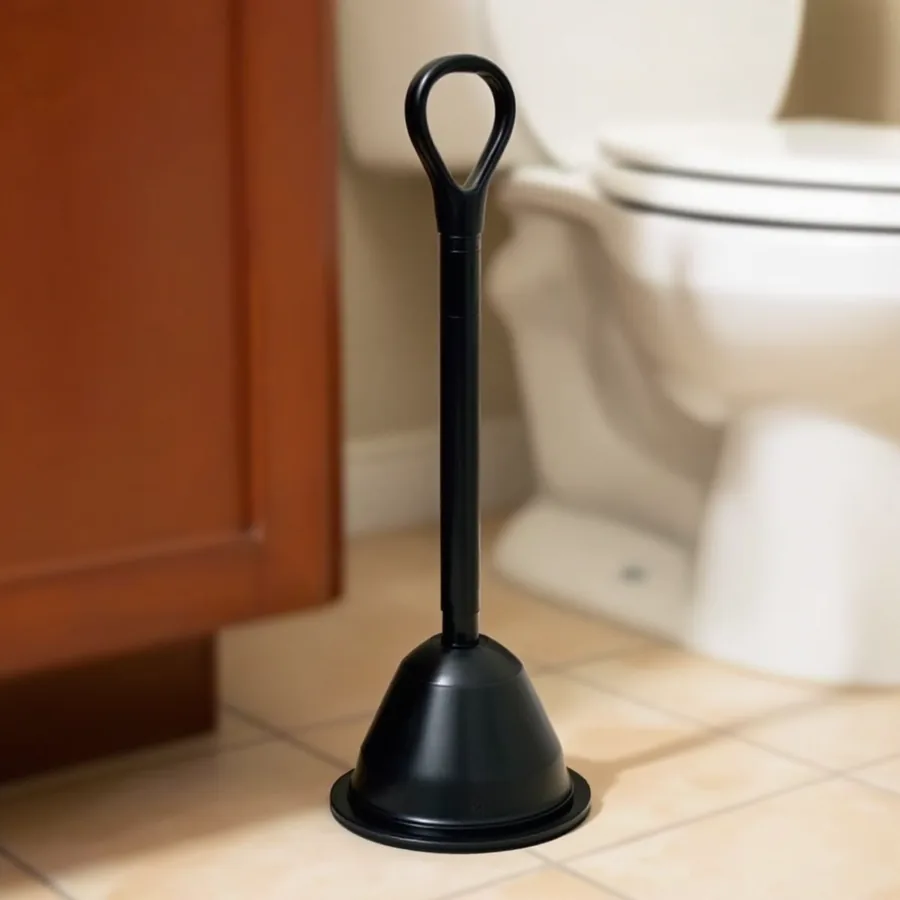
A plunger works by moving the column of water in the pipe, not the air above it, so the cup has to be under water and every other opening on the same fixture has to be sealed: the overflow on a tub or sink with a wet cloth, the second bowl of a kitchen sink with a stopper, the disposal inlet if there is one. Slow, full strokes, a dozen at a time; the pull stroke does as much as the push. If water begins to move on the third round, it will clear. If it does not move at all after three, the clog is past the trap and plunging is done.
The hand auger
A cable in a drum, turned by hand, fed into the drain opening or, better, into the trap arm with the trap removed. It reaches the branch line where a plunger cannot. Feed until it meets resistance, turn to work through, pull back and look at what is on the end: hair means the fixture, grease means the kitchen line, nothing means the blockage is further than the cable or is not a clog. It is the last homeowner tool. Powered drum machines and sectional cables exist to rent; the honest note is that they break old pipe, fittings and hands in inexperienced use, and a fixture line that needs one is usually a branch that needs a professional.
Hot water, and the standing-water case
Hot tap water is a rinse after a clog has been cleared mechanically, not a clearing method. It has one legitimate use: on a fresh soap clog in a bathroom drain, with dish soap, before anything else has been tried. How to clear a clogged drain with standing water is the same list as above; the water does not need to go first unless you were going to pour a chemical, and you were not.
What only moves the problem
Pushing a clog with water pressure, a bladder or a compressed-air device moves it from the trap into the branch, where it stops again out of reach. Running a disposal against a clog packs it. A chemical opener, if it does anything, dissolves the top of a clog and leaves the rest as a plug lower down, in a pipe that is now full of caustic. Every one of these turns a fixture clog into a branch clog, which is the difference between a plunger and a service call.
The Home Remedy
Baking soda and vinegar: the chemistry of a fizz
The most repeated home remedy for a clogged drain is repeated because it is dramatic. The chemistry is worth thirty seconds, because it explains why the drama achieves nothing.
What the fizz is
Baking soda is a weak base, vinegar a weak acid. Poured together they neutralise each other: the products are sodium acetate, water and carbon dioxide, and the fizz is the carbon dioxide leaving. The reaction is finished within a minute, and what is left in the pipe is dilute salt water. Neither ingredient dissolves hair; neither dissolves set grease; and the reaction that consumes both happens in the pipe above the clog, not in it. The foam can lift a fresh, loose film of soap scum off a pipe wall, which is the entire basis of every success story.
What it can honestly do
Freshen a drain that smells, by scrubbing the first few inches of pipe with foam. Loosen a very recent, very soft slime clog in a bathroom sink, occasionally. Cost nothing and harm nothing, which puts it well ahead of a chemical opener. What it cannot do is any of the things it is searched for: clear standing water, dissolve hair, or move grease. The home remedy for a clogged drain with standing water is the barbed strip and the plunger in the section above; the baking soda can go in afterwards if the drain smelled.
The Bottle
Chemical drain openers: what the label does not say
The search for the best clogged drain cleaner has a short answer: there is no best one, because the category does the wrong job in the wrong place. Here is what the products are, from a federal medical source, and what happens to the pipe.
What is in them
The National Library of Medicine's MedlinePlus encyclopedia, in its entry on drain opener poisoning, lists the poisonous ingredients as hydrochloric acid, lye (sodium hydroxide or caustic soda), potassium hydroxide, sulfuric acid. The alkaline products are lye; the acid products are sulfuric acid; the oxidising products are bleach-based. All three work by chemical burn: lye turns fat into soap and dissolves protein, which is why it attacks hair, and acid attacks almost everything including the pipe. A clog that is mostly hair and soap, near the top of the drain, in a metal pipe, is the one case in which a lye product does what the label says, and that clog is also the one a plastic strip removes in a minute.
What happens in a pipe with standing water
Poured into a drain that is holding water, the product sinks through the water, reacts with it (lye gives off heat as it dissolves, enough to soften a plastic trap), sits in the trap, and reaches the clog only if the clog is in the trap. Anything further down is untouched. What remains is a trap full of caustic solution under a fixture that still does not drain. That is the state in which most drain calls after a chemical begin, and it is why the first question a technician asks is what has been poured, before the trap is opened over their hands.
If someone is exposed
MedlinePlus's guidance for swallowing: “Do not make a person throw up unless told to do so by poison control or a health care provider.” The Poison Help line for the United States is 1-800-222-1222, and the encyclopedia's summary of outcomes is direct: “How well a person does depends on the amount of poison swallowed and how quickly treatment is received.” Splashes to the eyes from a product reacting in standing water are the commoner household injury, and they are rinsed with running water for as long as it takes to reach care. None of this appears on the front of the bottle.
The honest place for a chemical
A slow bathroom drain with no standing water, a metal drain line, a fresh hair clog near the top, and the trap not opened by anyone for the next day. Even then, the plastic strip is faster. There is no case on a kitchen line, a toilet, a washer standpipe, a plastic trap, a septic system, or any drain already holding water.
Not A Clog
Smells, gurgles and slow drains that are not clogs
A shower drain that smells but is not clogged, a tub that is slow but not clogged, a sink that gurgles when the toilet flushes. Each is searched as a clog and none of them is one.
The dry trap
Every drain has a trap holding a plug of water that seals the pipe from the sewer. A drain that is not used — a guest shower, a basement floor drain, a laundry sink — loses that water to evaporation over weeks, and sewer gas comes through. The federal toxicology profile for the gas responsible is plain about what you are smelling: “Hydrogen sulfide (H2S) is a flammable, colorless gas that smells like rotten eggs”, and about how little it takes: “People usually can smell hydrogen sulfide at low concentrations in air, ranging from 0.0005 to 0.3 parts hydrogen sulfide per million parts of air (ppm).” The gas is, in the same profile's words, “Hydrogen sulfide is also associated with municipal sewers and sewage treatment plants”, which is where a drain leads. The fix is a minute of running water to refill the trap, and a cup of water a month to keep it full. A floor drain may have a small trap primer line meant to do this automatically; when it fails, the drain smells.
The biofilm
A trap that holds water and still smells has a film growing on the pipe wall above the water line and in the overflow passage, fed by soap and skin. It smells of drains rather than of eggs. Scrubbing the first few inches of the pipe and the overflow with a bottle brush, then the baking soda fizz for what the brush missed, ends it. No chemical opener is called for; there is nothing to open.
The slow drain that is a stopper
A bathtub drain slow but not clogged — a tub that won’t drain properly yet has nothing blocking it — is often a stopper sitting too low in the drain, a pop-up that no longer lifts fully, or a strainer half-covered by a mat. The water has a restriction, not a blockage, and the drain runs at exactly the same slow rate every day rather than getting worse. Adjusting the linkage or the pop-up is the repair.
The gurgle
Gurgling is air being drawn through a trap. It happens when a pipe cannot get air from its vent, so it takes it from the nearest trap instead, or when a partial blockage downstream creates suction as water passes. A sink that gurgles when the toilet flushes is the tell. If it comes with slow drains, it is a partial clog that will finish closing; if the drains run at full speed and only the noise is new, it is the vent.
Above The Roof
The vent: when the clog is above the roof
The symptoms of a clogged drain vent pipe look like a clogged drain from inside the house, and no amount of plunging reaches them.
What the vent does
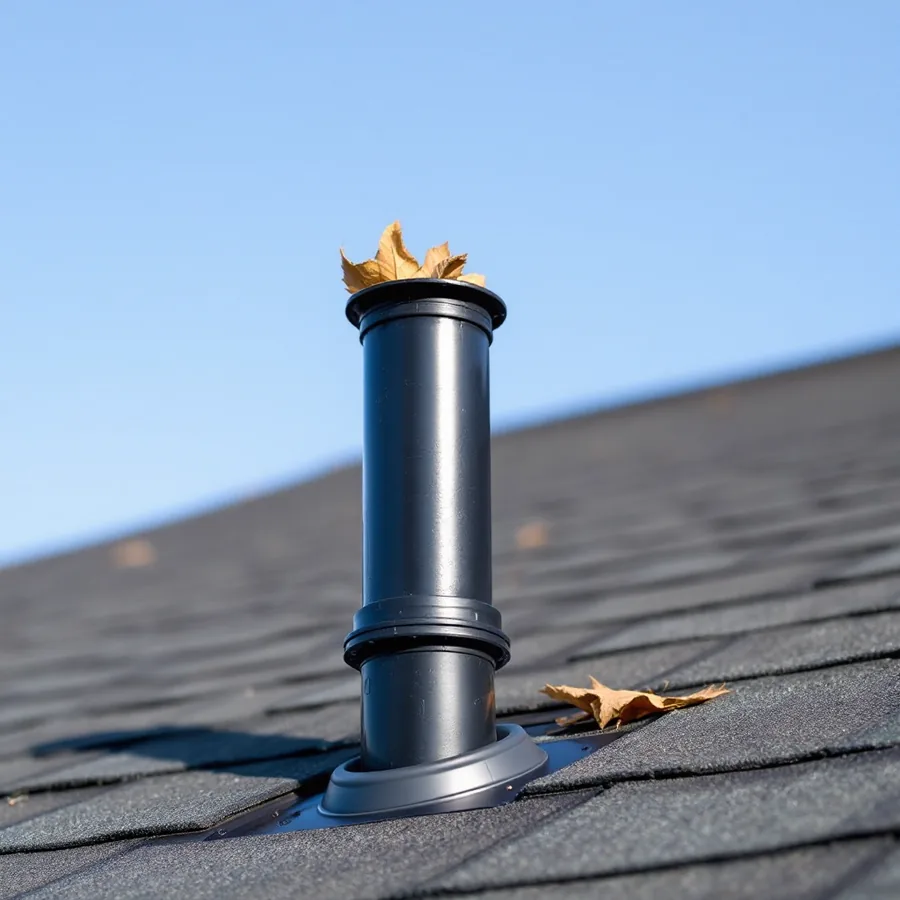
Every drain line is open to the air through a pipe that rises through the roof. It lets air in behind draining water so the water can fall, and it lets sewer gas out above the house instead of through the traps. Without it, water drains slowly and pulls traps dry as it goes, which is why a blocked vent produces the two symptoms that are not supposed to go together: slow drains and smells.
What blocks it
Leaves and a bird's nest at the top, ice in a cold climate, a tennis ball, and in older houses a pipe that has broken or been cut off in the attic during other work. The tell from inside is a whole bathroom that drains slowly and gurgles while the fixtures downstairs are fine, and traps that keep drying out. From the roof it is a look down the pipe; from the attic it is a look at the pipe. Clearing a vent is a roof job with a hose or a cable from the top, and it is a plumber's call, not because of the pipe but because of the roof.
The Line Past The House
When it is the main line, and what that page is for
This page stops at the house drain. Here is how to know you have reached it.
- The lowest drain backs up when others run. A basement floor drain that fills when the washer discharges. A ground-floor shower that fills when a toilet upstairs is flushed. That is not the floor drain's clog or the shower's; it is everything in the house meeting one blocked pipe.
- More than one room is affected. A branch serves a room. The stack and the house drain serve all of them. When drains in two rooms on different floors are slow together, the blockage is below both.
- Water rises at the cleanout. An outdoor or basement cleanout cap that weeps or lifts is the line telling you where the blockage is.
- What to do until somebody comes. Stop using water. Every gallon run upstairs arrives at the lowest drain. Do not pour anything in. Do not walk in backup without protection.
What comes next — a cable from the cleanout, a camera to see what the cable met, and the difference between roots, a belly, an offset joint and a single obstruction — is the sewer line page, because the decisions on that side of the wall are different decisions with different money attached.
Money
What a drain call costs, and what moves it
How much does a plumber charge to unclog a sink, a drain, a toilet? No national averages, by policy. What is on the invoice, so that a quote can be read.
- The visit is most of a fixture clog. A trap cleared, a stopper cleaned, a short cable through a tub drain: the labor is minutes and the trip is the bill. After hours multiplies the trip. This is the clog the tool above tries to keep in your own hands.
- The cable is the branch. A branch clog is a machine from a cleanout or through a removed trap, priced as a job rather than a visit, and it varies with access: a cleanout in the wall is one price, a trap under a vanity another, a roof vent a third.
- The camera is a separate line, and worth asking for. On a clog that has come back, a camera after clearing is the difference between clearing it again next month and knowing what is narrowing the pipe.
- What you poured changes the price. A drain holding a chemical opener is opened in gloves and goggles, slowly, and some companies decline it or charge for it. Say what went in before anyone arrives.
- Clogged drain cleaning services with a “from” price. The number in the advertisement is the fixture clog with a cleanout at hand. The branch, the camera, the vent and the main line are not in it. Ask what the number covers and what turns it into the next one.
Before Anyone Brings A Machine
What to ask before anyone brings a machine
Four questions that separate a company that found the clog from one that pierced it.
| Ask | What it tests | A weak answer |
|---|---|---|
| Is this the fixture, the branch or the main line, and how do you know? | Whether the first question on this page was asked before the machine came off the truck. | A price before a place. |
| What came out? | Whether the clog was removed or pushed. Hair, grease, wipes and roots each say something about the next one. | “It’s clear now.” |
| If it has come back before, will you run a camera, and what did it show? | Whether the cause or the symptom was treated. | “We don’t usually need to.” |
| Did you use a chemical, and what do you recommend I keep in the house? | Whether they sell what this page says not to buy. | A bottle from the truck. |
What we do, and what we do not
We are not a plumber and we do not sell drain products. We are paid a fixed fee for an introduction — the same for a cleared trap and a main-line camera — which is why this page can afford to spend its first sections on the clogs that need nobody. When you want somebody to bring the cable, we connect you with independent licensed and insured plumbing companies. Who pays us and how is on our about page, and the rest of what we publish starts from the home page.
Straight Answers
Clogged drain questions, answered
Why does my drain keep clogging?
Because it is being pierced rather than cleared, or because the pipe behind it has narrowed. A clog that returns within weeks in a shower is usually a stopper or strainer that was never fully cleaned; in a kitchen it is grease that a plunger moved along the line; in an old house it is scale or a belly in the branch that a camera would show. Ask for what came out and for a camera on the third visit.
Is it safe to use a chemical drain cleaner?
The federal medical encyclopedia lists the ingredients as hydrochloric acid, lye, potassium hydroxide and sulfuric acid, and its entry is titled drain opener poisoning. In a drain holding standing water the product sits in the trap and does not reach the clog. The honest use is narrow — a slow metal bathroom drain with a fresh hair clog and no standing water — and a plastic barbed strip does that job faster. Never in a kitchen line, a toilet, a plastic trap or a septic system.
Does baking soda and vinegar unclog a drain?
No. The two neutralise each other into salt water and carbon dioxide; the fizz is the reaction ending, above the clog. It can freshen a smelly drain and occasionally loosen a very fresh soap film. Hair and grease are untouched by it.
How do I know if it is the main sewer line?
The lowest drain in the house backs up when other fixtures are used: a basement floor drain filling on a washer cycle, a ground-floor shower filling when a toilet upstairs flushes, drains slow in more than one room. Stop using water and treat it as the main line; the sewer line page takes it from there.
My outside drain is clogged with dirt. Is that this page?
Partly. A yard or patio drain that has silted up is cleared by lifting the grate and digging the silt out of the catch basin below it, then flushing with a hose. If it connects to the house's drainage rather than a separate storm line, and it backs up along with indoor fixtures, it is the main line and the sewer page applies. If it simply fills with rain and drains slowly, it is silt.
How long does it take to unclog a drain?
A fixture clog is minutes: a strainer, a stopper or a trap. A branch clog is a cable job of an hour or so, depending on access. A main line is a longer visit with a machine and often a camera. A clog that a technician spends an hour on and does not clear is usually not a clog; it is a pipe problem, and the next step is seeing inside it.
Why does my shower drain smell if it is not clogged?
A dry trap, if the shower is rarely used: sewer gas comes through, and a minute of running water refills the seal. A biofilm in the pipe and overflow, if the trap is full: a bottle brush and the baking soda fizz end it. Neither needs a chemical opener.
Where This Comes From
Sources
- Grease as the most common cause of reported blockages (47%) — U.S. Environmental Protection Agency, Controlling Fats, Oils, and Grease Discharges from Food Service Establishments, EPA-833-F-12-003, quoting the agency's Report to Congress on CSOs and SSOs (EPA-833-R-04-001).
- Flushing only toilet paper — U.S. Environmental Protection Agency, EPA Encourages Americans to Only Flush Toilet Paper, 30 March 2020.
- The do-not-flush list — U.S. Environmental Protection Agency, SepticSmart poster: Protect Your Pipes, EPA 830-H-180-02.
- Drain opener ingredients, first aid and outlook — MedlinePlus Medical Encyclopedia (NIH, National Library of Medicine), Drain opener poisoning.
- Hydrogen sulfide: smell, odor threshold and sewers — Agency for Toxic Substances and Disease Registry (CDC), ToxFAQs for Hydrogen Sulfide.
- Sanitary sewer overflows and their causes — U.S. Environmental Protection Agency, Sanitary Sewer Overflows (SSOs).
Our editorial standards explain how we source and check what we publish. Every quotation on this page is taken from the federal page linked beside it, and we publish no price averages. We are a referral service rather than a plumber. Last updated .
Before you call anyone
The flat-fee match — we are paid for the introduction, not for the size of your job
Most plumbing advice is written by the company that wants to do the work. That is not a failing of the people who read it; it is a defect in who is talking: the diagnosis, the estimate and the invoice come from one party, and no amount of care on your side fixes that.
We are built the other way round. We do not repair, install or sell anything, so the payment reaches us when you are connected to a licensed, insured plumbing company — the same amount whether you need a two-dollar flapper or a new water heater. Nobody here has a reason to talk you into the larger number. You can check that rather than take it on trust: how we make money is written down, and this site keeps telling readers when not to buy. Why does not everyone work this way? Because a flat fee leaves money on the table every time the job turns out to be big.
Waiting is the one thing that actually costs money. A water heater that is leaking from the tank does not get better and does not wait for a convenient week; the water it lets go finds the floor, the drywall and whatever is stored below. A drain that backs up once backs up again, and the second time it is sewage. And if it turns out to be a flapper or a reset button, say so on the call. We will tell you, and that call earns us nothing.
Not for you if: you want a price over the phone — nobody honest gives one without seeing the pipe; you need a guarantee of arrival within the hour — we cannot promise that for a company we do not run; the building is commercial; or you would rather do it yourself, in which case the pages on this site are written so that you can.