Sewer Line
The sewer line — the one pipe in the house you cannot see, cannot reach, and may not even own
Everything a house drains leaves through one buried pipe. When it stops, the lowest drain in the building fills with what the rest of the house sent down. This page is the whole of that pipe: how to know the problem is there and not at a fixture, whose pipe it is once it crosses the property line, how to find it, what a camera finds inside it and what each finding means, the difference between cutting roots and closing the hole they came through, what trenchless lining is made of and what the federal occupational-health agency measured coming off it, what the replacement number is built from, and what flood insurance actually says about sewer backup — in the program's own words, which are shorter than any policy brochure.
What a sewer line is, where it runs, and where this page starts
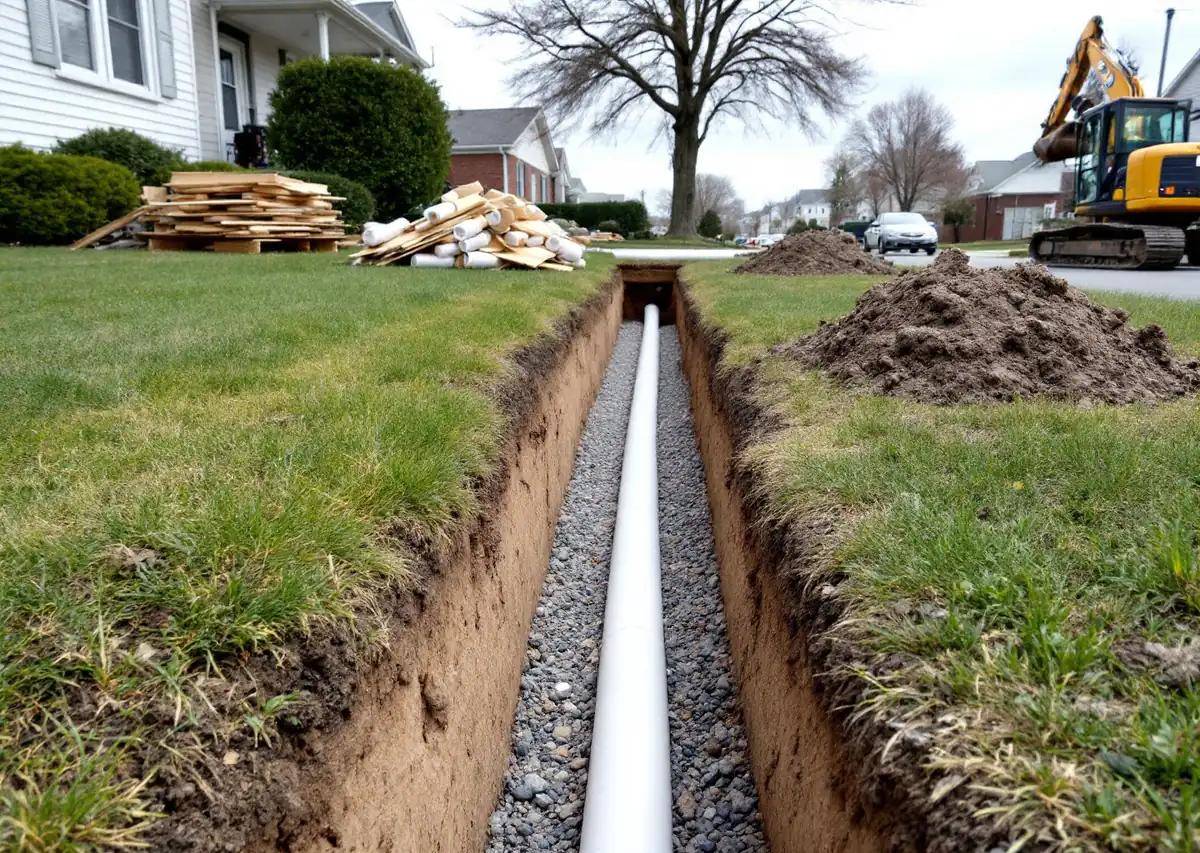
Inside the house, every fixture drains into a branch, the branches into a vertical stack, and the stack into a horizontal pipe under the basement floor or crawlspace called the building drain. Where that pipe leaves the foundation it becomes the sewer lateral — the sewer line, in ordinary speech — and it runs, usually in a straight line and downhill, to the municipal main under the street. A house sewer line diagram is that simple: one pipe, one direction, one connection.
- How deep it is. Below the frost line in cold climates and below the building drain everywhere, which puts it anywhere from a couple of feet down near the house to well below that at the street, depending on how deep the main is. The depth is why replacement is priced by the foot and the foot is priced by the depth.
- How much fall it needs. Waste moves by gravity, and gravity needs slope: most plumbing codes set a minimum fall for a residential sewer of a fraction of an inch per foot of run, enough to keep solids moving with the water and not so much that the water outruns them. A line laid too flat, or one that has settled flat in places, holds solids. That settled place is a belly, and it has its own section.
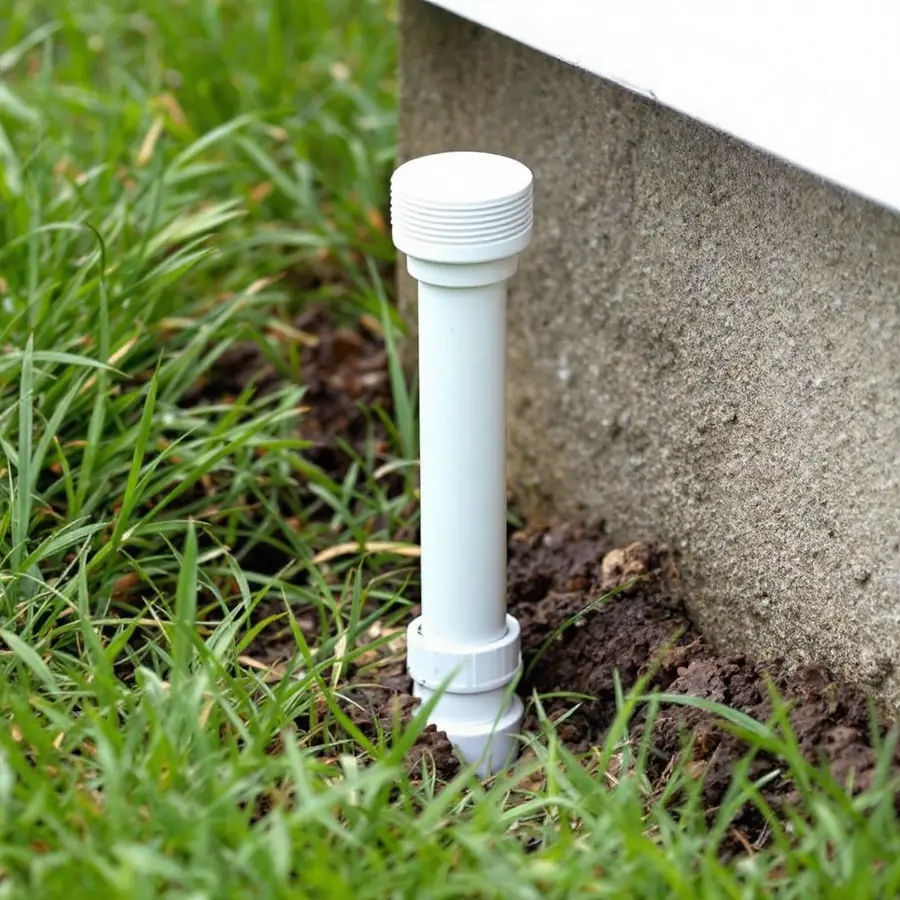
- The cleanout. A capped pipe rising to the surface near the foundation, in the basement floor, or at the property line, giving access to the line without opening a fixture. Its location matters more than any other single fact on this page, because every clearing and every camera starts there. A house without one has a harder and more expensive time of everything below.
- Where this page starts. Inside the house, a clog is a fixture, a branch or a stack, and it is covered on the clogged drain page. This page begins at the building drain and ends at the main.
The Property Line
Whose pipe it is: the answer under the street
Who is responsible for the sewer line under the street is a local question, and the local answer is often not the one homeowners expect.
The usual rule
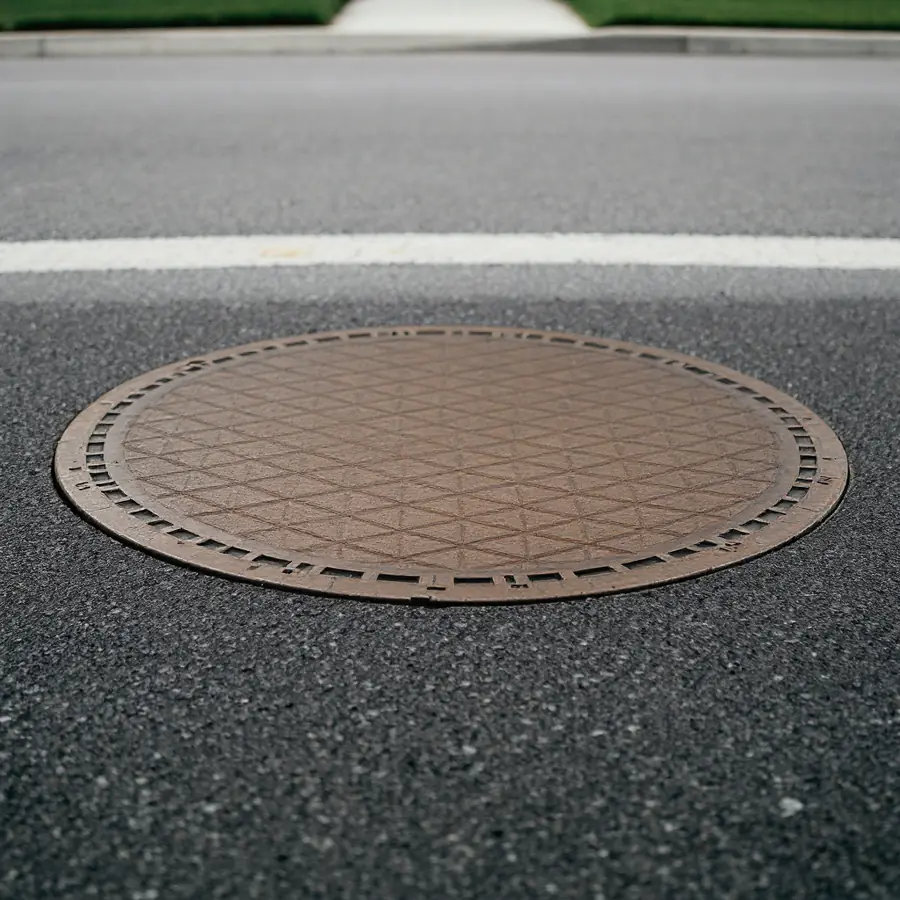
Many utilities put the whole lateral on the owner. Los Angeles County's public works department states its version without hedging: “The private property owner is responsible for the entire length of the lateral, which includes that portion that may be located within the public right of way.” And it defines what owning it means: “Maintaining the lateral includes keeping the lateral line flowing and free of debris such as roots or grease.” Under that rule a break beneath the sidewalk, or beneath the road, is the homeowner's dig, the homeowner's road permit and the homeowner's pavement to restore.
The other rules
Other cities own the lateral from the property line or the curb to the main and maintain that section themselves; some own it from the cleanout at the line; a few own the whole thing. The rule is written in the utility's ordinance or its service agreement, and a call to the sewer utility with the address gets it. Get it in writing before anybody quotes an excavation under a public road, because a contractor pricing a dig in the right of way will price the permit, the traffic control and the restoration, and if that section is the city's, the city does it.
Who is responsible for sewer line repair inside the property
The owner, everywhere. The one exception is a new house within the builder's warranty period, where a settled or crushed line is a construction defect, and a recording from the camera is the document that makes that conversation short.
In The Yard
How to find a sewer line in the yard
How to locate a sewer line is a question with three answers of increasing precision, and the third is the only one that gives a depth.
Start at the cleanout and the stack
The line leaves the house where the building drain does, which is near the main stack and the lowest fixtures, and it runs toward the street or the alley where the main is. An outside cleanout marks the line where it stands. The gas and water utilities can be called to mark their own lines for free before any digging, and that call is required by law in every state before excavation; the sewer lateral, being private, is usually not among what they mark.
The utility's records
The sewer utility often has a tap card or a drawing showing where the lateral joins the main and at what depth, from when the house was connected. It is not always accurate and it is not always available, but it is free to ask.
The locator
The precise method is the camera: a transmitter in the camera head sends a signal that a receiver at the surface follows, giving the position and the depth of the line at every point, including the exact spot of a defect. How to find the main sewer line from house to street, to a foot, is that instrument, and it is the same visit as the inspection. Anybody proposing to dig without having located the line with it is proposing to look for a pipe with a backhoe.
The Symptom
How to know the main line is clogged, not a fixture
How do I know if my main sewer line is clogged? By what the lowest drain in the house does when the highest fixtures are used.
The lowest drain fills when others run
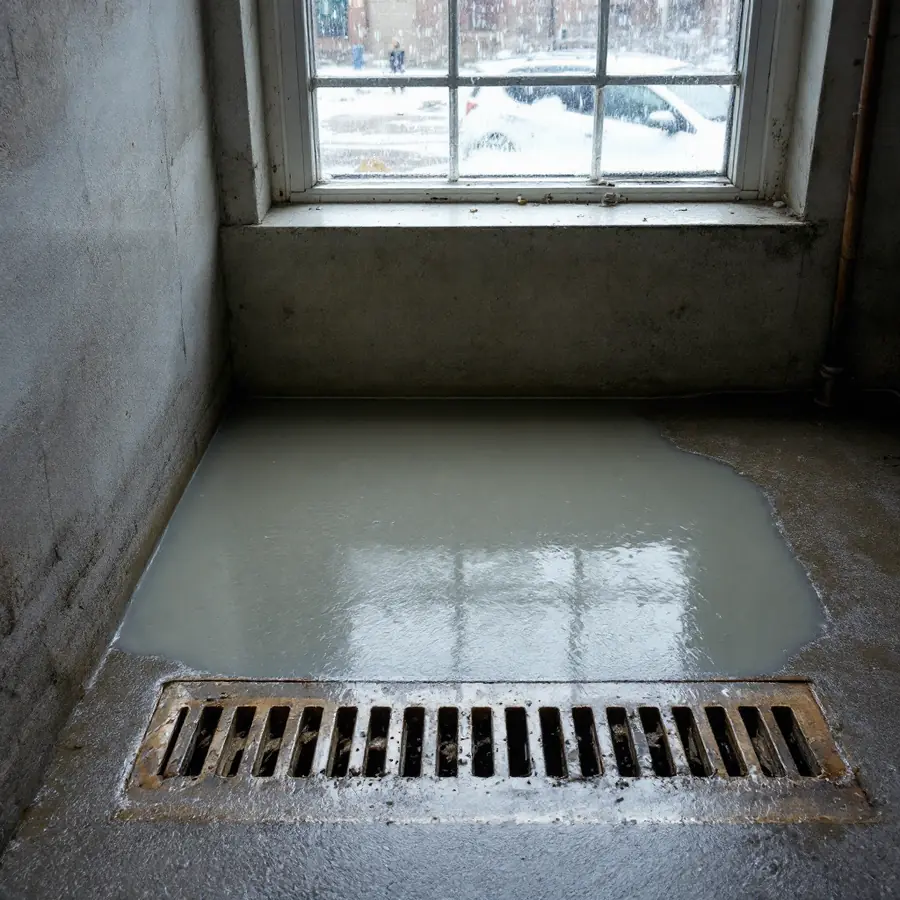
A basement floor drain that wells up when the washing machine empties. A ground-floor shower that fills when a toilet upstairs is flushed. A first-floor toilet that rises when the tub above it drains. Everything in the house is arriving at one blocked pipe, and the lowest opening is where it shows. That pattern is the main line, and nothing at a fixture will touch it.
More than one room, on more than one floor
A branch serves a room; a blocked branch slows the drains in that room and no others. When drains in two rooms on different floors are slow together, the blockage is below both of them, in the stack or the building drain or the lateral.
Gurgling, and the cleanout
A toilet that gurgles when a sink drains, or bubbles when nothing is running, is air being pulled through its trap because the line below cannot pass water freely. An outside cleanout whose cap weeps or lifts is the line announcing exactly where the water has backed up to. A clogged main drain that has not yet backed up into the house usually gives one of these two warnings first.
What to do before anyone comes
Stop using water. Every gallon run anywhere in the house arrives at the lowest drain. Do not run the washing machine, which sends the most water fastest. Do not pour anything in. Do not walk in what has come up without protection, because the EPA's description of what a sewage backup carries applies to the one in your basement as much as to one in a street: “Because SSOs contain raw sewage they carry bacteria, viruses, protozoa (parasitic organisms), helminths (intestinal worms), and inhaled molds and fungi.”
The Boundary
Clearing a main line clog: what is yours to do and what is not
How to clear a main sewer line clog yourself is the most searched question about this pipe. The honest answer has a short first half and a firm second.
What is yours
Finding the cleanout. Opening the cap slowly, with a bucket and old clothes, if the line is backed up: the standing water in the line will come out of it. Looking at what is there. If the cleanout is dry and the backup is inside the house, the blockage is between the house and the cleanout; if it is full, the blockage is between the cleanout and the main. That one observation halves the problem before anybody arrives, and it is the useful thing a homeowner can do.
What is not
Cabling the main line. A rented drum machine with a hundred feet of heavy cable and a cutting head is the tool, and it is the tool that breaks wrists, breaks old pipe, and gets stuck in a broken pipe where retrieving it becomes the excavation. How to unclog a sewer line from the toilet is not a method; the toilet's own trap will not pass a main-line cable, and lifting the toilet to reach the line is a job with a wax ring and a flange at the end of it. A snake down the sewer line is a professional's cable, from the cleanout, with the machine's clutch and the experience to feel the difference between a soft clog and a collapsed pipe.
The chemical question
The best chemical to unclog a sewer line does not exist. A caustic or acid product poured into a main line holding tens of gallons of standing sewage is diluted to nothing, reaches no clog, and sits in the pipe until the technician who opens the cleanout gets it on their skin. The best sewer line cleaner, as a product category, is maintenance: an enzyme or bacterial treatment used monthly on a line prone to grease, which digests what a cable will otherwise have to cut. It is not a clearing method, and no bottle is.
What clearing looks like when it is done properly
A cable from the cleanout, run to the main and back, with the head sized to the pipe. Then the camera, on the same visit, because a main line clog that is cleared and not looked at is a main line clog with an appointment to return. The section on the camera says what it is looking for.
Roots
Roots: what the EPA says, what kills them, and what does not
Tree roots in a sewer line are the most searched cause of main line trouble, and the most misunderstood, because the root is the symptom.
How they get in
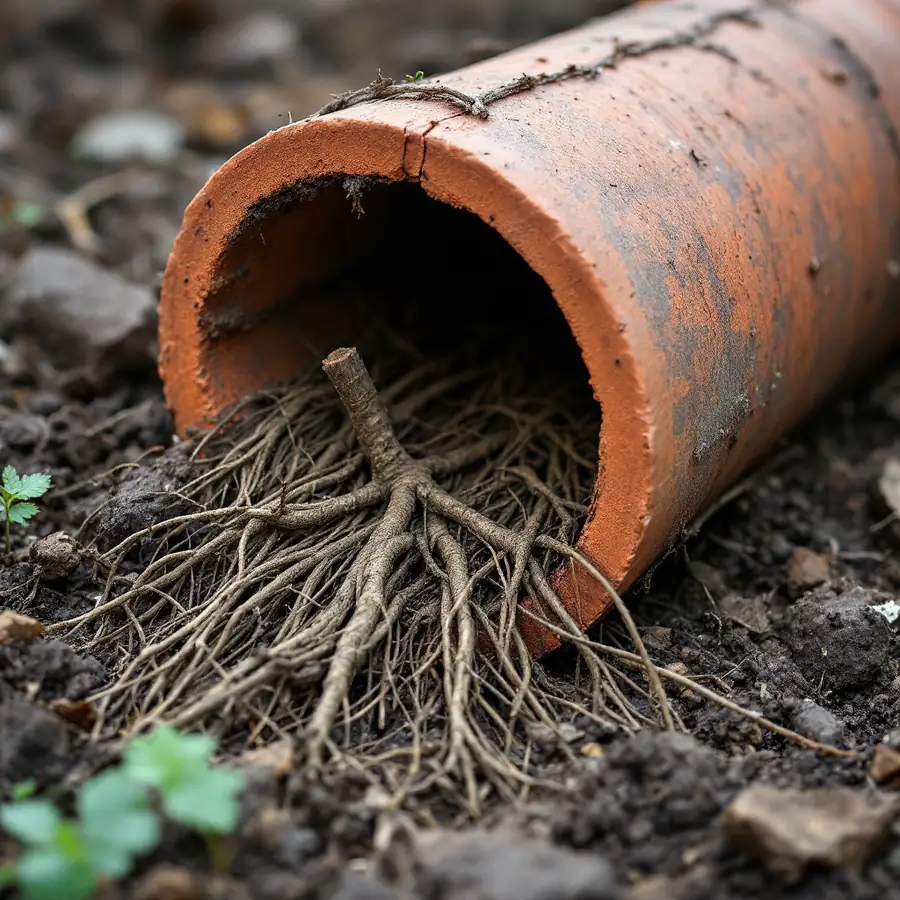
The EPA's list of what causes sewer overflows puts it in one sentence: “Tree roots entering through defects or openings in a sewer line may cause blockages.” The operative words are “defects or openings.” Roots do not break into a sound pipe. They follow moisture and nutrients to a joint that has separated, a crack, a failed seal, and they grow through the opening into the one place in a yard that is always wet and always fed. Inside the pipe a root mass grows into a net that catches paper, and the line clogs on the net.
What kills them
Cutting: a cable with a root-cutting head clears the mass from the pipe, and the roots grow back through the same opening, usually within a year or two. Foaming root treatments, applied after cutting, kill root tissue in the pipe and slow the regrowth; copper sulfate crystals flushed down a toilet reach the roots in a diluted, uneven way and are prohibited in some jurisdictions. Both treat the pipe. Neither closes the opening. How to get rid of roots in a sewer line, permanently, is to close the defect they came through.
What closes the opening
One joint: a spot repair, excavating and replacing the section. Several joints along a run of clay or cast iron: a liner, which seals every joint in one pass and is the case trenchless lining was designed for. Joints failing everywhere: replacement. The camera decides which, and the section on findings says how.
The tree
Removing the tree removes the pressure, and the roots already in the pipe die and rot, which briefly makes the clog worse. A tree that is valued is kept, and the pipe is sealed instead; a root barrier between the tree and the line is a landscaping measure with mixed results. A new tree planted over a sewer line is a decision about the next owner's excavation.
The Other Causes
Grease and wipes: the other two causes with a federal number
Roots need a defect. The next two causes need nothing but a kitchen and a bathroom.
Grease
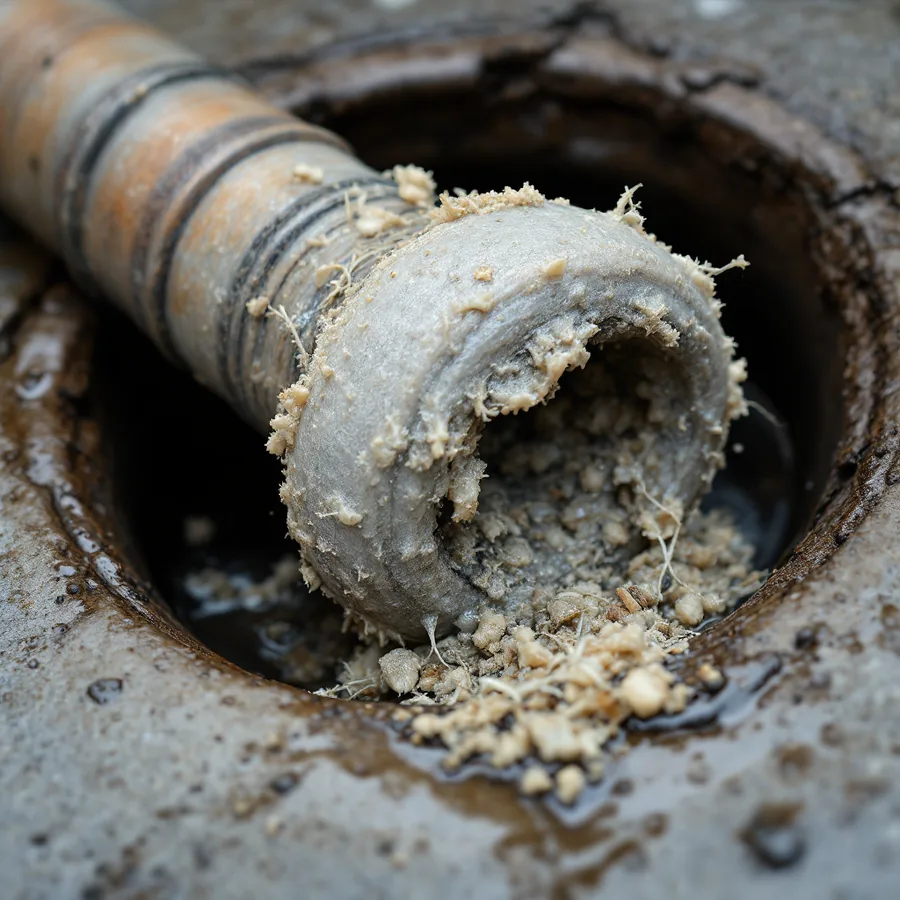
The EPA's fact sheet on fats, oils and grease quotes its own report to Congress: “grease from restaurants, homes, and industrial sources are the most common cause (47%) of reported blockages.” That figure is municipal, and the mechanism in a lateral is the same: grease leaves the kitchen warm, cools against the pipe wall a few dozen feet along, sets, and takes wipes and paper into itself. A lateral that clogs at the same footage every year, with a camera showing a sound pipe, is usually a grease line, and the fix is in the kitchen.
Wipes
The same EPA list names the household products it sees in blockages: “materials such as fats, oils and grease (FOG), and some household products (including some marked ‘flushable’) such as baby wipes, facial wipes, sanitary pads, and tampons. All of these may create blockages.” “Flushable” describes what happens in the bowl. A wipe survives the trip to the lateral intact, snags on the first root or the first offset joint, and becomes the core of the next clog. A house with a main-line clog history and a wipe habit has found its cause.
Only When It Rains
When the basement floods from the drain in the rain
A backup that comes only in storms is not a clog. It is the municipal main, full, and the house being the lowest opening on it.
Why the main fills
The EPA's causes of sewer overflows include what enters a sanitary sewer that should not: “Connections of sources of water such as sump pumps, roof leaders, foundation drains and area drains can overload a sanitary sewer.” In a storm, every downspout and sump that somebody connected to the sanitary line, and every crack that lets groundwater in, fills the main beyond what it can carry. The main surcharges, and it backs up into the lowest laterals, and the lowest drains on them.
What the camera shows
A sound lateral, and sometimes nothing at all. That is the finding the tool on this page lists as “clear,” and it is a finding, not a failure to find: the problem is not in the pipe you own.
The backwater valve
A one-way valve on the building drain that closes when flow reverses, keeping the main's contents out of the house. It is the repair for a rain backup, it is required on new construction in many places, and it is the answer to ask about before anybody proposes to replace a lateral that the camera showed to be sound. A leaking sewer pipe in the basement, as opposed to a backup, is a different finding, and it is in the section on cracks below.
The Instrument
The camera: the only diagnosis, and how to read one
Nothing on this page can be known without one. The sewer line camera inspection cost is the cheapest line on any sewer invoice and the only one that turns a guess into a decision.
What it is
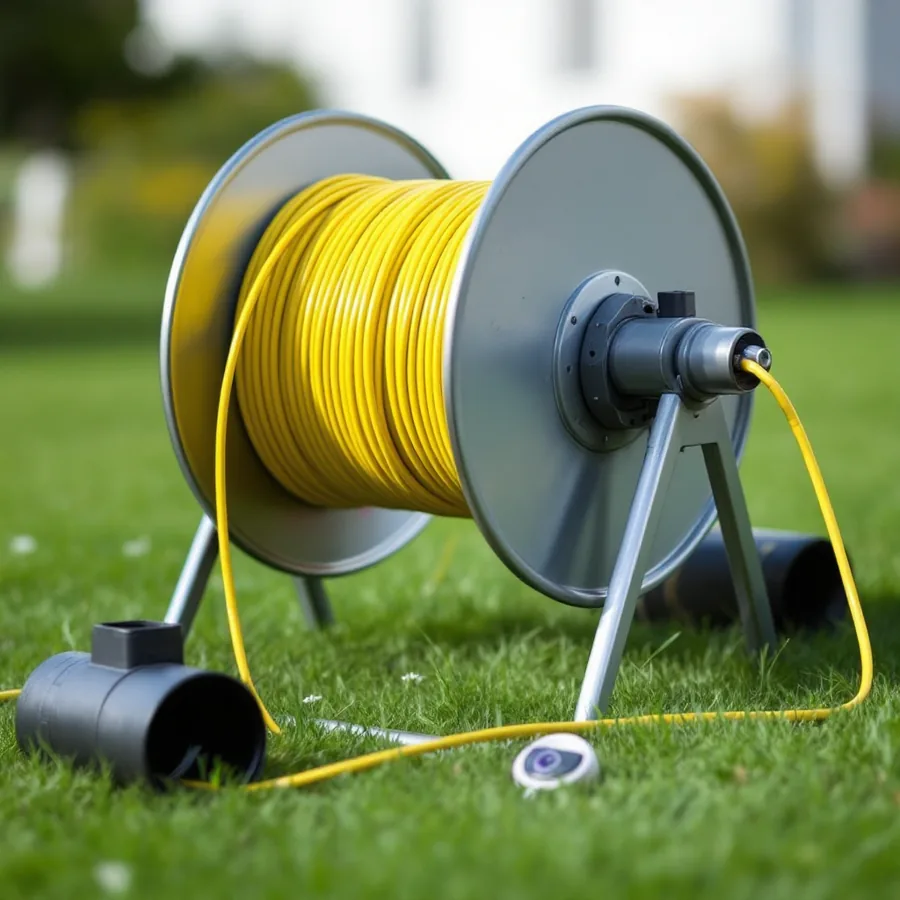
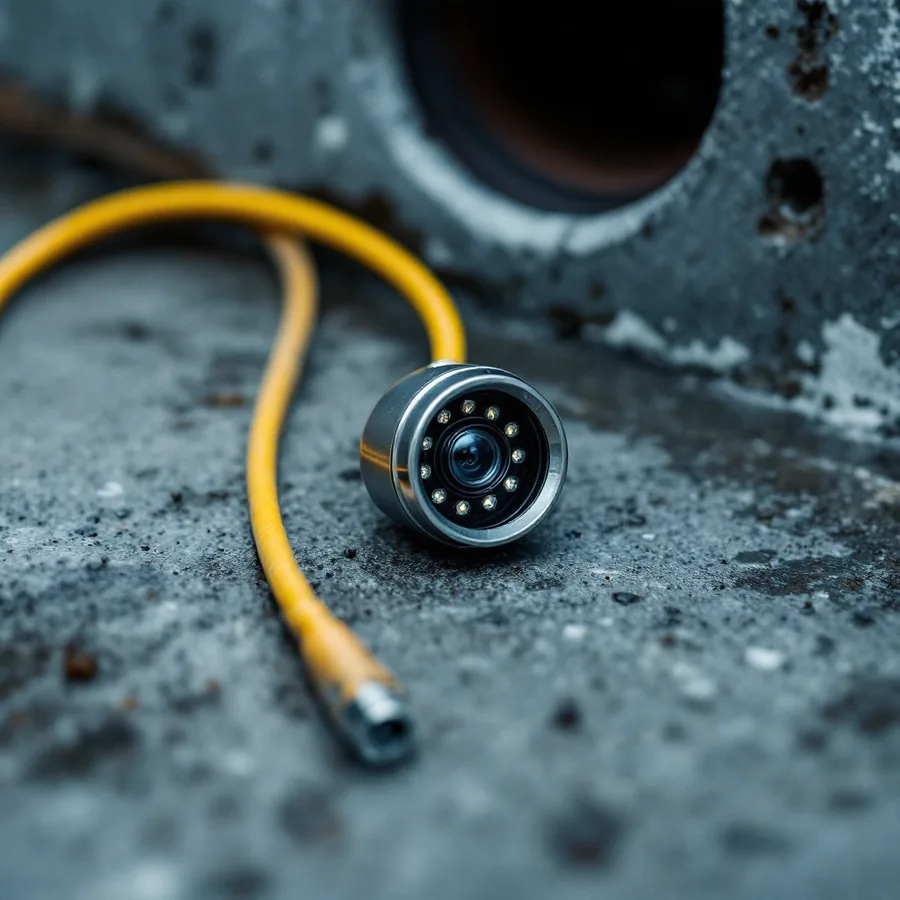
A waterproof camera head on a push cable, fed from the cleanout down the line, with a transmitter that a locator follows at the surface. It records the run, counts the footage, and marks the depth and the position of what it finds. A sewer line inspection without a locator finds a defect; with one, it finds where to dig.
What to ask for
The recording, as a file you keep. The footage and the depth at every defect. A second pass after any clearing, because a camera run through a clog sees the clog. And the operator's reading of the pipe material and the joints, because the material sets the life of the whole line and not just the defect on the screen.
What it sees, and what it cannot
A camera sees the inside of the pipe: roots, grease, standing water in a belly, an offset step at a joint, a crack, a crushed section, and the water level, which tells the operator about slope. It cannot see the outside: the void that a leaking joint has washed out under a driveway, or the condition of the bedding. It cannot pass a collapse, and where it stops is where the excavation begins.
Five Findings
Belly, offset, crack, break, collapse: five findings, five different repairs
A camera report names one of a handful of things. Each has a different repair and a different amount of money, and a quote that does not name the finding is a quote for the most expensive one.
The belly
What is a belly in a sewer line: a section that has settled below the pipe on either side, so that water stands in it and solids drop out. The pipe is intact; the slope is gone for that length. Does a sewer line belly need to be replaced? A belly that has never caused a backup and holds little water is sometimes lived with and cleaned periodically. A belly that catches every solid that passes is excavated and re-laid on proper bedding. What a belly cannot be is lined, because a liner takes the shape of the pipe it cures in, belly included. A quote to line a bellied line is a quote to seal the belly in.
The offset joint
One section has shifted relative to the next, leaving a step or a gap at the joint. Paper catches on the step; roots and soil enter the gap. One offset is a spot repair. Several small offsets along a run are what a liner is for, if the liner can pass them. A large offset is dug.
The crack and the leak
A crack in the wall lets water out and soil and roots in. A leaking sewer pipe under a basement floor shows as a damp or smelling patch on the slab, sometimes as a settled floor, before it ever backs up. One crack in a sound line is a spot repair or a short liner; cracks along the length are the line telling you its age.
The break
A broken sewer line is a crack that has opened, a joint that has separated fully, or a section crushed by a vehicle, a root, or the ground. Water and soil exchange freely; a void forms outside the pipe; the ground above eventually shows a depression. A break is dug at the break, and the rest of the line is judged by the camera.
The collapse
A collapsed sewer line has lost its shape or its wall. Nothing passes, the camera stops, and the house has no working drain. It is excavated at minimum; if the material is one that fails by collapse — bituminous fibre pipe from the mid-century decades is the usual case — the rest of the line is on the same clock, and the quote for the whole run is the honest one.
Work It Out
Read your camera report
Three questions from the inspection, nothing sent anywhere. What comes out is what the finding means, which repair methods fit it and which do not, the question to ask before signing, and where insurance stands on that particular finding.
We are paid the same fixed fee for an introduction whether the answer is a cable and a camera or a full replacement, which is why this tool has a row that says when a method should be declined.
Water Under Pressure
Jetting: what it is and when it is the wrong tool
What is jetting a sewer line: water at very high pressure through a nozzle that pulls itself down the pipe and scours the wall as it goes. It cleans a pipe better than a cable. It also opens a pipe that a cable would have left alone.
When it is right
Grease lines, where a cable bores a hole through the grease and jetting removes it from the wall. Sand and silt. Scale in cast iron, at controlled pressure with the right nozzle. A sound line with a long history of soft clogs, as maintenance.
When it is wrong
Bituminous fibre pipe, which delaminates under it. Cast iron with a thinned bottom, which it opens. Clay with offset joints, where it washes bedding out through the gaps. Any line that has not had a camera first, because the operator does not know which of those it is. How much does it cost to hydrojet a sewer line is the wrong first question; the first question is whether the camera said the line can take it.
No Dig
Trenchless: lining, bursting, and the emissions nobody mentions
No-dig sewer line replacement is two different methods sold under one word, and the leading pages on the subject are written by companies that sell one of them.
Lining
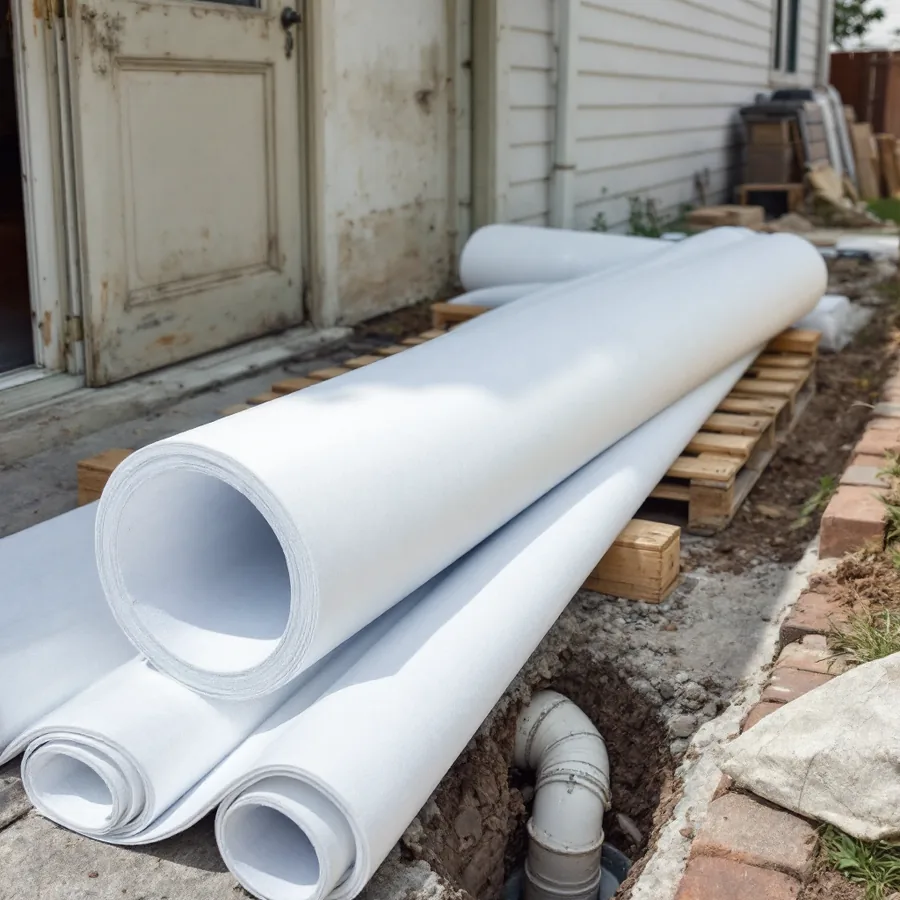
Cured-in-place pipe: a resin-saturated felt or fibreglass tube is pulled or inverted into the old pipe and cured — with hot water, steam or ultraviolet light — into a new pipe inside the old one. The federal occupational-health agency describes it plainly: “The CIPP procedure involves the chemical manufacture of a new plastic pipe called a CIPP inside a damaged water pipe.” It seals every joint at once, which is why it is the right answer for a clay line with roots at many joints. It cannot correct a belly, it narrows the bore slightly, it needs the old pipe to hold its shape, and every branch connection has to be cut back open from inside afterwards.
What NIOSH measured
The curing step is a chemical reaction, and the agency's 2017 science bulletin on it reports that “A variety of VOCs and SVOCs were measured in the emission cloud and included suspected carcinogens, hazardous air pollutants”, and that the exposure reports it had received “These exposure reports primarily originated from the general public who were not associated with the installation work being performed.” In a residential lateral, the pipe being lined connects to every trap in the house and to the neighbours' laterals through the main. The questions that follow from that are simple ones: which cure method, how the emissions are vented and where, whether the house's traps will be sealed during the cure, and whether the neighbours are told. A company that cannot answer them has not thought about them.
Bursting
Pipe bursting pulls a conical head through the old pipe, splitting it outward into the soil, and draws a new pipe in behind it. Two pits, one at each end, instead of a trench. It replaces the pipe entirely, at full size or larger, and it is the trenchless method for a collapsed line, a fibre line, or a line that needs a bigger bore. It needs room to pull and it does not go around a large belly or a hard offset any better than a liner does.
What trenchless cannot do
Fix a belly. Pass a collapse it cannot pull through. Reconnect a branch that was not located. Change the route of a line. Where the camera has found any of those, the trench is not the old-fashioned answer; it is the answer.
Digging
The open trench: when digging is the honest answer
How to install a sewer line, as it is done when the ground is opened: a sequence that explains most of the number.
The sequence
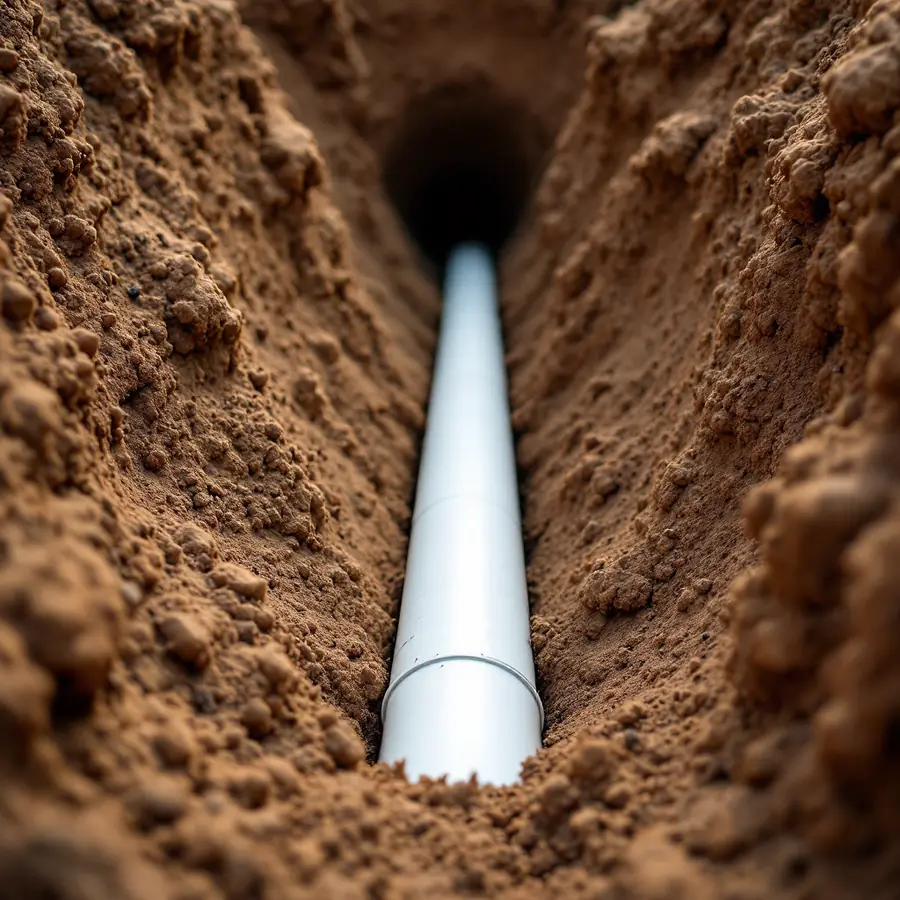
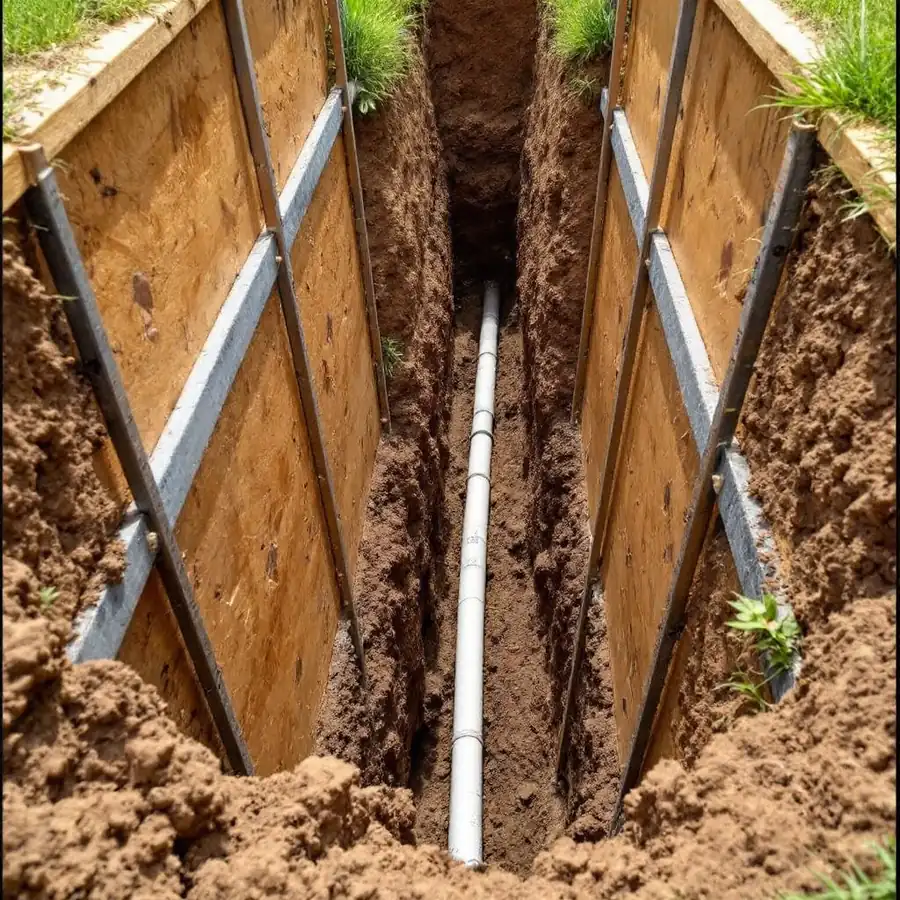
Locate and mark every utility. Excavate to the line, shoring the trench where the depth requires it. Remove the failed section, or the whole run. Lay bedding, set new pipe at the correct fall, connect to the building drain at one end and to the main or the sound remainder at the other. Inspect, with the trench open, because the inspector wants to see the pipe and the bedding. Backfill in lifts, compacting each. Restore the surface: lawn, driveway, sidewalk, road.
What makes one trench three times another
Depth, which sets shoring and machine size. Surface, because a lawn is put back with seed and a driveway is put back with a concrete crew and a road with a permit and traffic control. Access, because a backhoe reaches a front yard and a hand crew reaches a back yard behind a fence. Length, which is the footage everybody prices by, and which matters less than the other three on a short deep line under a driveway.
Money
Sewer line replacement cost: what the number is made of
No national averages, by policy, and on this pipe more than any other, because the cost to replace fifty feet of sewer line under a lawn and the same fifty feet under a road are not the same job with a different address. What the number is built from, so that two quotes can be read.
The lines on a sewer quote
| Line | What it is | What moves it |
|---|---|---|
| Diagnosis | The camera and the locate. | Whether a clearing was needed first; whether a second pass was run. |
| Method | Spot repair, liner, bursting or trench. | The finding. A method the finding does not fit is the line to question. |
| Footage | The length being repaired or replaced. | The camera's footage marks; the section versus the run. |
| Depth and access | Excavation, shoring, machine, pits. | How deep the main is; what is above the line; whether a machine can reach. |
| Surface and restoration | Putting back what was opened. | Lawn, driveway, sidewalk, road: each a different trade. |
| Permit and inspection | The plumbing permit, and a right-of-way permit if the street is opened. | Your jurisdiction; whether the utility owns the far section. |
| Connections | Tie-ins at the house and the main; branches reopened after lining. | How many branches; the condition of the main tap. |
| Timing | Emergency versus scheduled. | A collapsed line with no working drain is priced as an emergency; a camera finding on a working line is priced as a schedule. |
Why sewer line replacement is so expensive
Because it is an excavation with a pipe at the bottom of it. The pipe is the cheapest part. The shoring, the machine, the permit, the road plate, the concrete crew and the days are the rest, and none of them scale with the size of the problem inside the pipe. A crack that a camera can see in ten seconds sits under the same six feet of ground as a collapse. That is also why the sewer line repair cost for a spot repair on a sound line and the cost for a full replacement are different by the length of the trench and not by the severity of the defect, and why the camera's footage marks are the most valuable numbers on the invoice.
The main line clog repair cost, separately
A clearing is a visit, a machine and an hour or two; a camera after it is a line of its own and the one to insist on. Neither is a repair, and a company that quotes a clearing as a repair has not looked at the pipe. Emergency sewer line repair is the same work at an emergency rate, and it is worth asking whether a temporary clearing today and a scheduled repair next week is available, because it usually is.
The Clock
How long it takes, and how long a line lasts
Two clocks: the days of the job, and the decades of the pipe.
How long it takes to replace a sewer line
A spot repair in a yard is a day: dig, replace, inspect, backfill. A liner is a day or two, including the cure and reopening the branches, with the house's drains out of use during the cure. Bursting is a day or two with the pits. A full open trench is days, and a trench under a road is days plus the permit's calendar. In every case the household is without drains for some of it, and the honest quote says how long.
How long a sewer line lasts
By material. Clay, in sound ground and left alone by roots, outlasts the house; its joints do not. Cast iron corrodes from the inside over decades and fails at the bottom first. Bituminous fibre pipe from the mid-century decades has, in most ground, already reached the end of its life whether or not it has failed yet. Plastic does not corrode and fails only where it was installed badly. A camera tells you the material and the state it is in, which is worth more than any table of expected lifespans, and this page publishes none.
Can a sewer line freeze
A line below the frost line, flowing, with proper fall, does not. A line laid shallow, a belly holding water, a line under a driveway that is kept clear of snow, or a house left unheated with a trap full of standing water, can. The symptom is a backup in the coldest week that clears on its own in the thaw, and the repair is the shallow section or the belly.
The Policy
Insurance: what the federal flood program actually says
Does homeowners insurance cover sewer line replacement? The pages that answer this are written by companies selling something. Here is the one federal source that speaks in plain words, and then the structure of everything else.
The National Flood Insurance Program
The program's own coverage page: “Damage caused by sewer backup is covered by flood insurance only if it directly results from flooding.” And the next sentence: “Damage is not covered if the sewage backup is caused by some other problem.” A backup from a clogged, cracked or collapsed lateral is a backup caused by some other problem. A flood policy does not respond to it, and a homeowner who has one because the house is in a flood zone should not assume it covers the basement after a root clog.
The standard homeowners policy
As a rule, it excludes water that backs up through sewers and drains, and it excludes the pipe in the yard entirely, both as wear and as an underground structure outside the dwelling. Whether tree roots in a sewer line are covered by insurance, whether a broken sewer line is covered, whether a belly is: under the base policy, generally no, because each is deterioration or earth movement rather than a sudden covered peril. The recording from the camera is what an adjuster reads to decide which it was.
The two endorsements
A water and sewer backup endorsement adds coverage for the damage inside the house when a backup happens, to a stated limit. It does not fix the pipe. A service line endorsement adds coverage for the buried lines the owner is responsible for — sewer, water, sometimes power and data — to a stated limit, with exclusions that vary by insurer and are worth reading before the pipe fails rather than after. Together they are the honest answer to sewer line coverage: two riders, two limits, two sets of exclusions, and neither is in the policy unless it was added.
The home warranty
Does home warranty cover sewer line? A home warranty is a service contract on systems and appliances inside the house, and most exclude the lateral, or cover it as an optional add-on with a low cap. Read the contract's exclusions page, which is where the lateral is.
The Mailer
Protection plans and warranties: a contract is not a policy
Water and sewer line insurance, as it is advertised in the letter that arrives with the utility's logo, is not insurance. Whether it is worth it depends on four things the letter does not lead with.
What it is
A service contract, usually from a third-party company under a utility's marketing agreement, that pays for repair of the lateral up to a cap, using the company's contractors, subject to exclusions. It is regulated as a warranty or a service contract, not as insurance, which is why the letter says “protection program” and the search says “insurance.”
Whether a sewer line protection program is worth it
- The cap against the trench. A cap sized for a spot repair in a lawn does not reach a replacement under a driveway. Ask what the cap is and what a full replacement in your street costs from a local contractor; the gap is what you still carry.
- Pre-existing conditions. A line with a camera report showing defects may be excluded from the day the contract starts. A line with no camera report is a line the company may camera at the first claim.
- The utility's own rule. If your utility owns the section under the street, the contract is covering a shorter pipe than the letter implies. If you own it to the main, the contract's cap is the number to compare against a road excavation.
- Who does the work. The contract's contractor, on the contract's terms. A sewer line warranty from the contractor who replaced your line is a different document, worth more, and worth asking for in writing with its term and its transfer to the next owner.
Before Anyone Digs
What to ask before anyone digs
Five questions that separate a company that diagnosed your pipe from one that quoted a method.
| Ask | What it tests | A weak answer |
|---|---|---|
| May I have the camera recording, with footage and depth at each defect? | Whether a diagnosis exists that another company could read. | “We saw it; trust us.” |
| What is the finding, and why does the method you are quoting fit it? | Whether the method follows the finding. A liner for a belly, or a trench for one root joint, is a method looking for a job. | A method named before a finding. |
| Whose section is this, and does the quote include the right-of-way permit and restoration if it is mine? | Whether the street was priced or deferred. | “We’ll see what the city says.” |
| If you are lining: which cure, where do the emissions vent, will my traps be sealed, and will the neighbours be told? | Whether they have read what NIOSH measured. | “It’s just steam.” |
| What is the warranty on the work, in writing, and does it transfer? | Whether the company expects to be here when the pipe is tested by the next decade. | “Lifetime,” with nothing on paper. |
What we do, and what we do not
We are not a plumber and we do not sell lining, bursting or protection plans. We are paid a fixed fee for an introduction — the same for a camera inspection and a full replacement — which is why this page can afford to say that a sound line with a rain backup needs a valve and not a trench. When you want a camera down the line, we connect you with independent licensed and insured plumbing companies. Who pays us and how is on our about page, and the rest of what we publish starts from the home page.
Straight Answers
Sewer line questions, answered
How do I know if my main sewer line is clogged?
The lowest drain in the house backs up when higher fixtures are used: a basement floor drain filling on a washer cycle, a ground-floor shower filling when a toilet upstairs flushes. Drains slow in more than one room on more than one floor, a toilet that gurgles when a sink drains, or a cleanout cap that weeps, all point the same way. Stop using water.
Can I clear a main sewer line clog myself?
You can find the cleanout and open it carefully to see whether the line is full, which halves the diagnosis. Cabling a main line with a rented machine is where homeowners get hurt and old pipes get broken, and a cable stuck in a collapsed pipe becomes the excavation. No chemical reaches a main-line clog through the standing water. A professional cable from the cleanout, followed by a camera, is the method.
How do I get rid of roots in my sewer line permanently?
Close the opening they came through. The EPA's own description is that roots enter through defects or openings in the line. Cutting and foaming treatments clear and slow them; a spot repair at the joint, a liner through a run of leaking joints, or replacement closes the door. The camera says which.
Does homeowners insurance cover sewer line replacement?
Generally not under the base policy, which treats the buried pipe as outside the dwelling and its failure as wear. A service line endorsement covers the pipe to a cap; a water and sewer backup endorsement covers the mess inside the house, not the pipe. The federal flood program's own words: sewer backup is covered by flood insurance only if it directly results from flooding, and not if it is caused by some other problem.
Does a belly in a sewer line need to be replaced?
A belly that has never backed up and holds little water can sometimes be lived with and cleaned periodically. One that catches solids is excavated and re-laid at proper fall. A belly cannot be lined, because a liner takes the shape of the pipe it cures in; decline a quote to line one.
How long does it take to replace a sewer line?
A spot repair in a yard is a day. A liner or a pipe burst is a day or two, with the house's drains out of use during the cure or the pull. A full open trench is days, and a trench under a road adds the permit's calendar. Ask how long the household will be without drains.
Is a sewer line protection program worth it?
It is a service contract, not insurance. Compare its cap against what a full replacement in your street would cost, read the pre-existing condition clause, find out whether your utility owns the section under the street, and note that the work is done by the contract's contractor on the contract's terms. For a short, shallow line in a lawn it may be reasonable; for a deep line under a driveway the cap is the number that matters.
Where This Comes From
Sources
- Sewer backup under the federal flood program — FEMA, National Flood Insurance Program: Types of Coverage.
- Roots, grease, wipes, inappropriate connections and what a backup carries — U.S. Environmental Protection Agency, Sanitary Sewer Overflow (SSO) Frequent Questions.
- Grease as the most common cause of reported blockages (47%) — U.S. Environmental Protection Agency, Controlling Fats, Oils, and Grease Discharges, EPA-833-F-12-003.
- Cured-in-place pipe: what it is and what was measured — National Institute for Occupational Safety and Health (CDC), Science Bulletin: Cured-in-Place-Pipe (CIPP), 2017.
- Owner responsibility for the lateral, one county's rule — Los Angeles County Public Works, Sewer Maintenance Division: Homeowner Responsibilities.
- Sanitary sewer overflows generally — U.S. Environmental Protection Agency, Sanitary Sewer Overflows (SSOs).
Our editorial standards explain how we source and check what we publish. Every quotation on this page is taken from the government page linked beside it; the Los Angeles County rule is one jurisdiction's and your utility's may differ; and we publish no price averages. We are a referral service rather than a plumber. Last updated .
Before you call anyone
The flat-fee match — we are paid for the introduction, not for the size of your job
Most plumbing advice is written by the company that wants to do the work. That is not a failing of the people who read it; it is a defect in who is talking: the diagnosis, the estimate and the invoice come from one party, and no amount of care on your side fixes that.
We are built the other way round. We do not repair, install or sell anything, so the payment reaches us when you are connected to a licensed, insured plumbing company — the same amount whether you need a two-dollar flapper or a new water heater. Nobody here has a reason to talk you into the larger number. You can check that rather than take it on trust: how we make money is written down, and this site keeps telling readers when not to buy. Why does not everyone work this way? Because a flat fee leaves money on the table every time the job turns out to be big.
Waiting is the one thing that actually costs money. A water heater that is leaking from the tank does not get better and does not wait for a convenient week; the water it lets go finds the floor, the drywall and whatever is stored below. A drain that backs up once backs up again, and the second time it is sewage. And if it turns out to be a flapper or a reset button, say so on the call. We will tell you, and that call earns us nothing.
Not for you if: you want a price over the phone — nobody honest gives one without seeing the pipe; you need a guarantee of arrival within the hour — we cannot promise that for a company we do not run; the building is commercial; or you would rather do it yourself, in which case the pages on this site are written so that you can.