Sump Pump
Sump pump replacement cost: the six line items, and the question that comes before them
Every page written about sump pumps starts with what one costs. That is the second question. The first is how often water actually arrives where you live, and it has an answer: we counted every flood, flash flood and heavy rain event the National Weather Service logged in every county in the country over twenty years. The median county reported water on 21 separate days in two decades. Some reported it on 300. On this page: what the machine does, the five ways they die, what the six line items on a replacement quote really are, where the discharge is allowed to go and why that is a federal question, what a battery buys you and what it does not, and what the federal flood program actually pays for in a basement, which is close to the opposite of what you have read.
What a sump pump is, and the one job it has
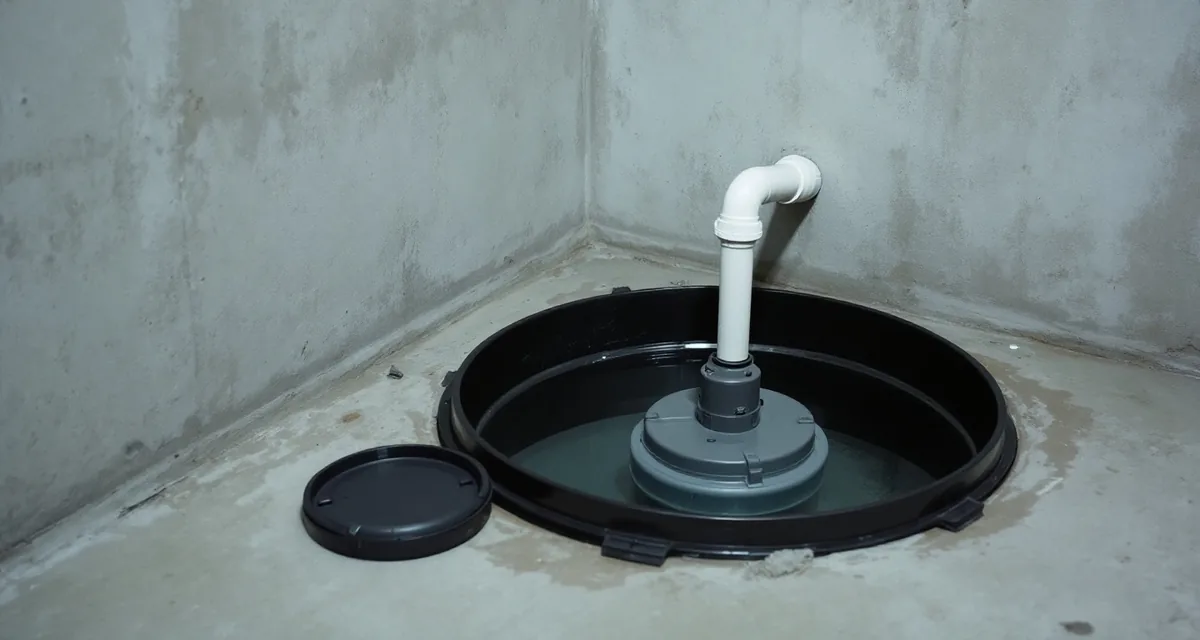
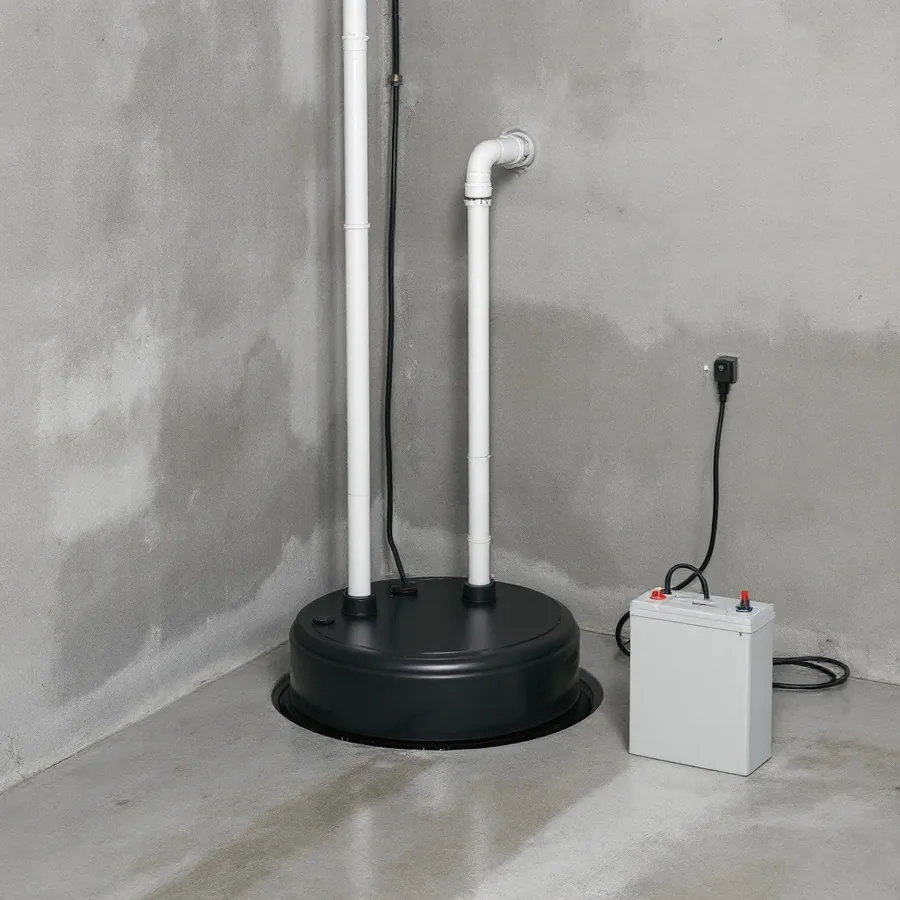
A sump pump is an electric pump sitting in a hole in the lowest floor of a building. The hole has a name, the sump, and in most houses it is a plastic or concrete basin about eighteen inches across sunk into the slab. Groundwater finds the basin, the water level rises, a float rises with it, the float closes a switch, the pump runs, and the water leaves through a pipe. When the level drops the float falls and the switch opens. That is the entire machine. Whats a sump pump, or what’s a sump pump if you write it properly, and what is a sump pump used for, all have the same one-sentence answer: moving water that has already arrived at the lowest point of a house to somewhere outside it.
The job is narrow, and being clear about how narrow saves money. A sump pump does not stop water entering. It does not seal anything, dry anything, or lower the water table. It is the last stage of a drainage system, and in a house that has one it is usually the only powered part. Everything upstream of it works by gravity.
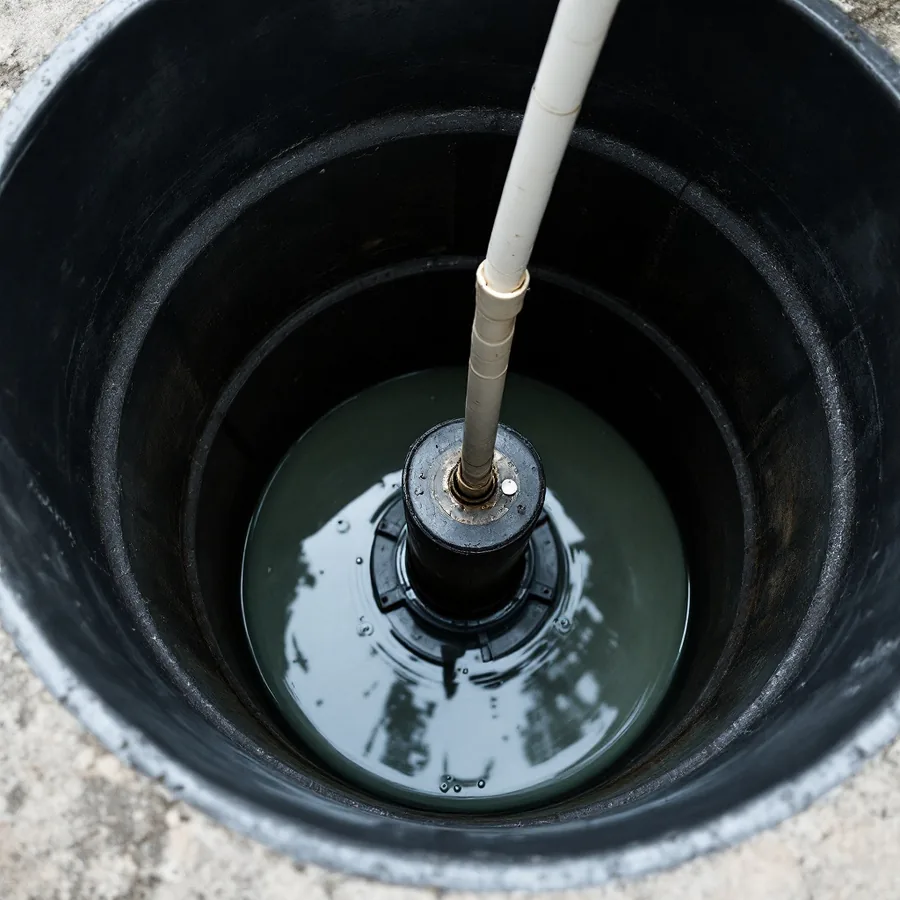
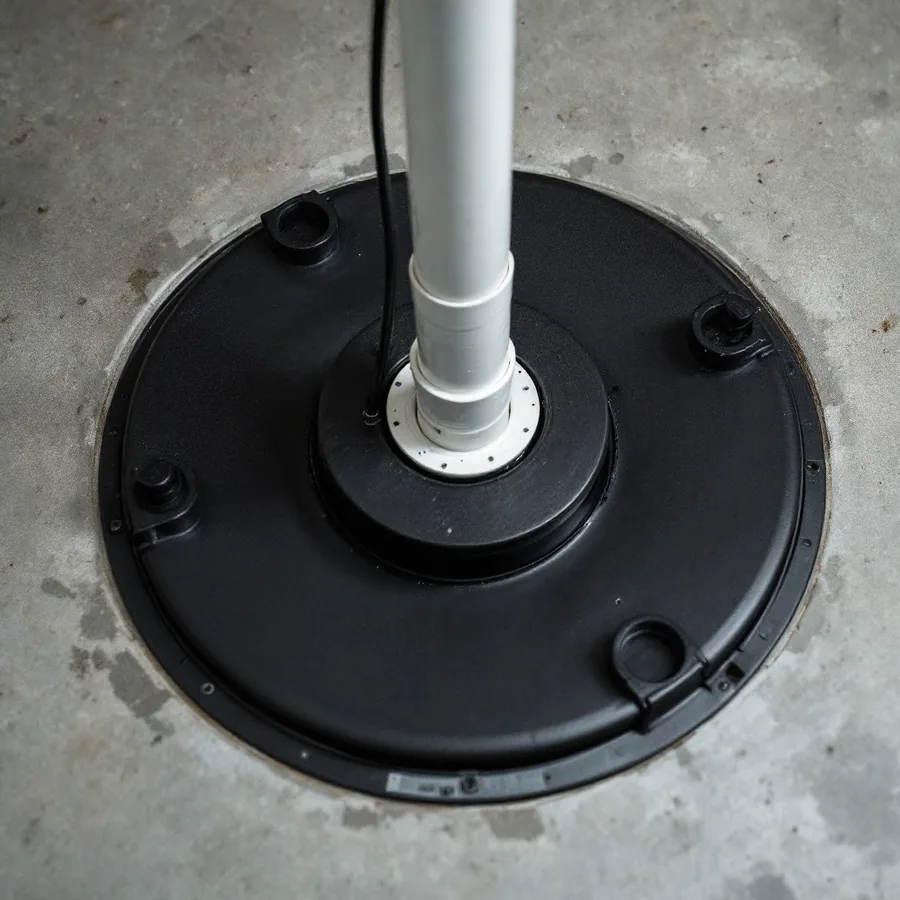
- The basin. Also called the pit, the crock or the liner. Its size matters more than people expect: a small basin means the pump starts and stops constantly, and every start is wear. What does a sump pump look like from above is usually just a lid, a pipe and a cord.
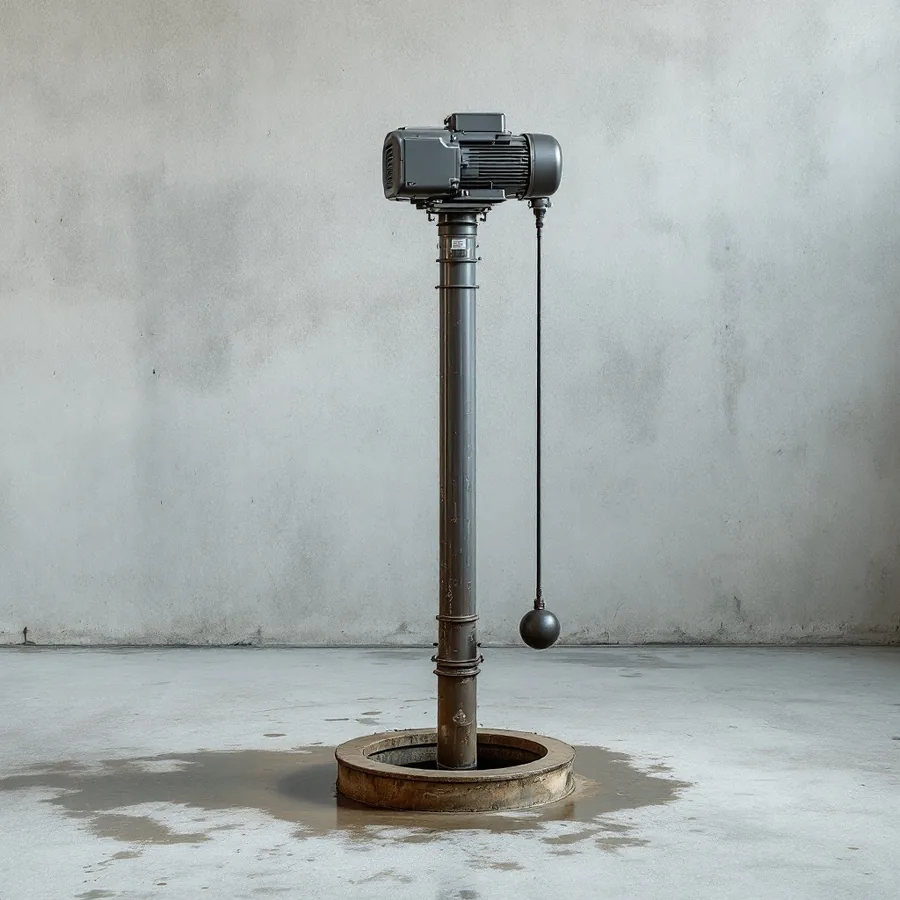
- The pump. Either submersible, sitting in the water at the bottom, or pedestal, with the motor on a shaft above the basin and only the intake down in the water. Both move water. They differ in noise, in how long they last, and in how much of the machine is standing in water while it works.
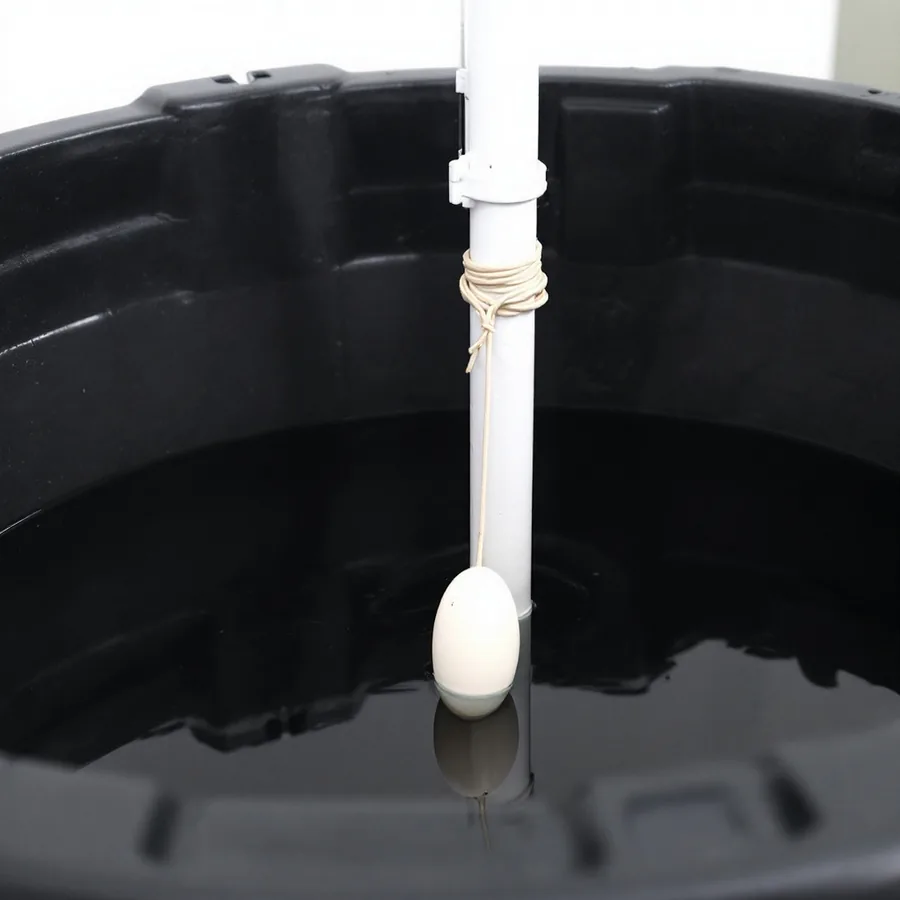
- The float switch. The part that decides when to run. It is also the part that fails most often, which is why it gets its own section below.
- The check valve. A one-way valve in the discharge pipe just above the pump. When the pump stops, the column of water standing in the pipe wants to fall back into the basin. The check valve stops it. Without one, the pump re-pumps the same water on every cycle.
- The discharge line. The pipe that carries water out of the building. Where it ends is not a matter of taste, and the reasons are in the section on where water is allowed to go.
The Mechanism
How a sump pump works, from the water table to the yard
How does a sump pump work is really two questions: how the water gets to the basin, and what happens once it is there. Most explanations answer only the second.
How the water reaches the basin
Below every basement floor there is soil, and in that soil there is water at some depth. After rain or snowmelt the depth changes, and if it rises above the level of your floor slab, the water is pressing upward and sideways on the shell of your basement. That pressure has a name, hydrostatic pressure, and it is the reason basements leak at the joint where the wall meets the floor rather than in the middle of a wall.
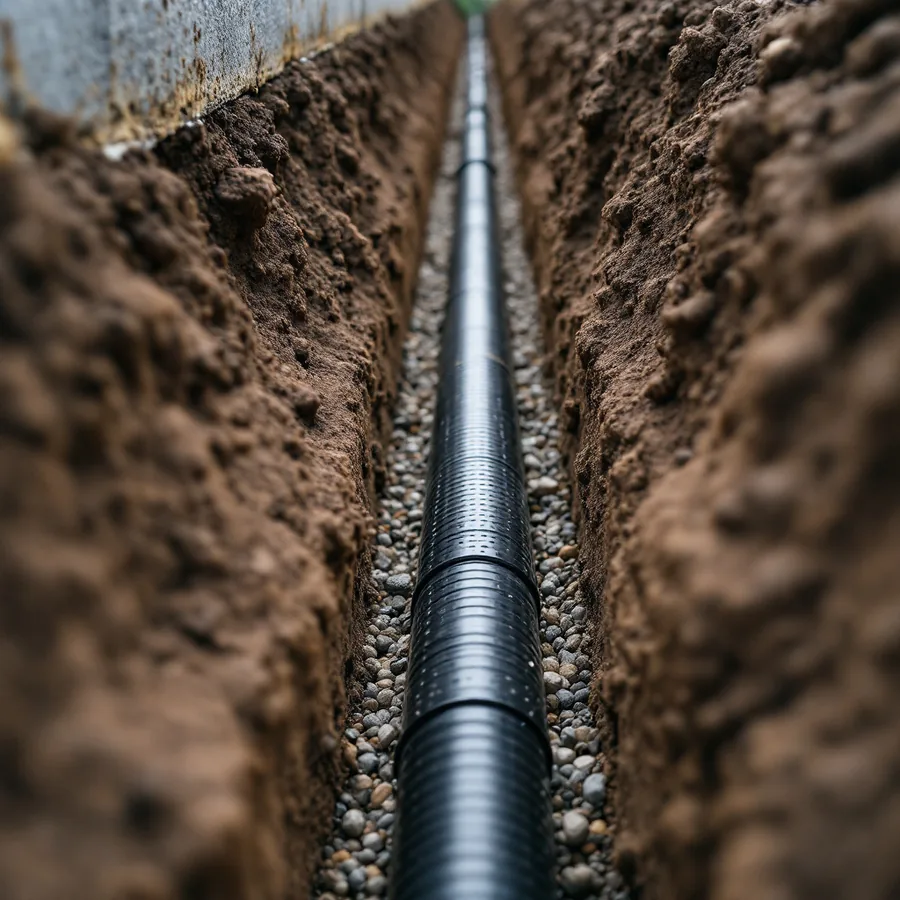
A house built to manage this has a perforated pipe laid in gravel around the footing, called drain tile or weeping tile. It gives the water an easier path than through your wall: the water enters the pipe, runs downhill inside it, and arrives at the lowest point of the loop, which is the basin. In an older house there may be no drain tile at all, and the basin simply collects whatever finds its way under the slab.
What happens once it is there
If you want a sump pump diagram, the paragraph below is one in words, and it is the whole of it. The float rises. On most pumps the switch is a sealed float on a short tether or a vertical rod, and it closes at a set level. The motor spins an impeller, which is a disc with vanes that throws water outward into the discharge pipe by centrifugal force. Water leaves, level drops, float falls, switch opens, and the check valve holds the pipe full so the column does not come back. A healthy cycle in a small basin takes a few seconds of pumping.
What a sump pump sounds like
A submersible pump under a closed lid is a muffled hum for a few seconds, then a single thump as the check valve seats. That thump is normal and is often mistaken for a fault. A pedestal pump is louder because its motor is in the room with you. Why is my sump pump so loud is most often answered by one of three things: a pedestal motor, a loose discharge pipe vibrating against a joist, or a check valve slamming rather than closing. None of the three is an emergency. A grinding or screaming noise is different, and it means the impeller or the bearing.
How you know you have one
How do I know if I have a sump pump: look for a round or square lid in the lowest floor, often in a corner, with a plastic pipe rising out of it and a cord running to a nearby outlet. In a crawl space it may be a plain hole in the ground with a pump in it. If there is no basin anywhere, your house was built without one, and whether that is a problem depends on where you live rather than on whether a pump is generally a good idea.
Our Own Count
How often your county actually floods: the number nobody in the results will show you
We read the whole National Weather Service storm archive for twenty years and counted water events by county. Not rainfall. Events that were logged because they did damage.
What we counted and why it means something
The National Oceanic and Atmospheric Administration publishes the Storm Events Database, which is the archive every local weather office fills in after something happens. We took every record of the types Flash Flood, Flood and Heavy Rain for 3,254 counties across the twenty full years from 2006 to 2025, kept only the county-coded rows, and counted events and distinct event days for each county. That is 151,562 reported events: 77,635 flash floods, 49,663 floods and 24,264 heavy rain events.
The count is meaningful because of how the archive defines its own terms. The instruction that governs what goes into it defines a flash flood as “A life-threatening, rapid rise of water into a normally dry area beginning within minutes to multiple hours of the causative event”, a flood as “Any high flow, overflow, or inundation by water which causes damage”, and heavy rain as “Unusually large amount of rain which does not cause a Flash Flood or Flood event, but causes damage”. Damage or a threat to life is in all three. So this is not a count of wet weather. It is a count of times the water did something.
The distribution
| Where the county sits | Events in 20 years | Distinct event days | Roughly per year |
|---|---|---|---|
| Driest tenth of counties | 7 | 6 | one day every three years |
| Quarter of counties below this | 14 | 11 | one day every two years |
| Median county | 29 | 21 | about one day a year |
| Quarter of counties above this | 55 | 37 | about two days a year |
| Wettest tenth of counties | 102 | 60 | about three days a year |
| Wettest one percent | 285 | 141 | about seven days a year |
| Highest single county (San Bernardino, California) | 877 | 313 | about sixteen days a year |
The part that changes a decision
18 percent of counties recorded ten or fewer water events in twenty years. 10 percent of counties recorded a hundred or more. Those two groups are in the same country, read the same pages, and are sold the same battery backup. Taking the median county of each state that has at least five counties, the spread runs from 174 in Arizona down to 6 in Michigan, a factor of twenty-nine. Whether a second pump is insurance or decoration is a local answer, and this is the table that gives it to you.
What this table is not
It is a count of reported events, and reporting is human. A weather office with a dense population and an active spotter network logs more than one covering empty ground, and offices differ in how readily they log a minor event. Arizona has fifteen counties and each is enormous; Michigan has seventy-nine. Part of that twenty-nine-fold spread is weather and part of it is geography and paperwork. Read the table as an order of magnitude, compare your county against the national median of 21 days rather than against a neighbour, and treat a county with a high count as a place where water is a normal event rather than as a place under threat. The full method, including every limitation we know of, is in the file we publish alongside this page.
The National Weather Service puts the general case plainly: “Flooding is a coast-to-coast threat to some part of the United States and its territories nearly every day of the year.” Somewhere is always wet. The table exists to tell you whether that somewhere has been you.
The First Question
Do I need a sump pump? Four honest answers, and one of them is no
Is a sump pump necessary, is a sump pump required, does every house have a sump pump. Three different questions with three different answers.
Is it required by law
Not federally, and not generally by state law either. Where a requirement exists it is local and it usually attaches to new construction rather than to existing houses: a building department that has decided basements in its soil need drain tile and a basin writes that into what it approves. If you are asking whether your city will make you install one in a house that has stood for forty years without, the answer is almost certainly no. If you are asking whether an addition or a finished basement will trigger one, that is a question for your building department, and it is worth asking before drawings rather than after.
Does every house have one
No, and most do not. A house on a slab has nothing below the floor to drain. A house on a crawl space may have a pump or may have a vapour barrier and vents instead. Houses on high ground with sandy soil often have a basement and no basin, and nothing is wrong with them. The pump is a response to a condition, not a component every house is supposed to have.
Four situations, four answers
| What you have | What it calls for | The mistake to avoid |
|---|---|---|
| A basin, and the pump runs | A working pump, a check valve, a lid and an alarm. The rest of this page is about keeping one. | Assuming a bigger pump is an upgrade. It is only an upgrade if the lift was wrong. |
| A basin, and the pump never runs | Testing twice a year. The pit that sits dry for years is the one that seizes the week it is needed. | Reading the idleness as permission to remove it. The drain tile still ends there. |
| No basin, and the floor is dry | Nothing. Check the county table above and spend the attention on gutters and grading instead. | Installing one because an article said every home should have one. |
| No basin, and the floor gets wet | Finding out where the water enters before anyone cuts concrete. The five other doors come first. | Cutting a basin to catch water that runs down an inside wall. That treats the puddle, not the leak. |
When is a sump pump necessary in a crawl space
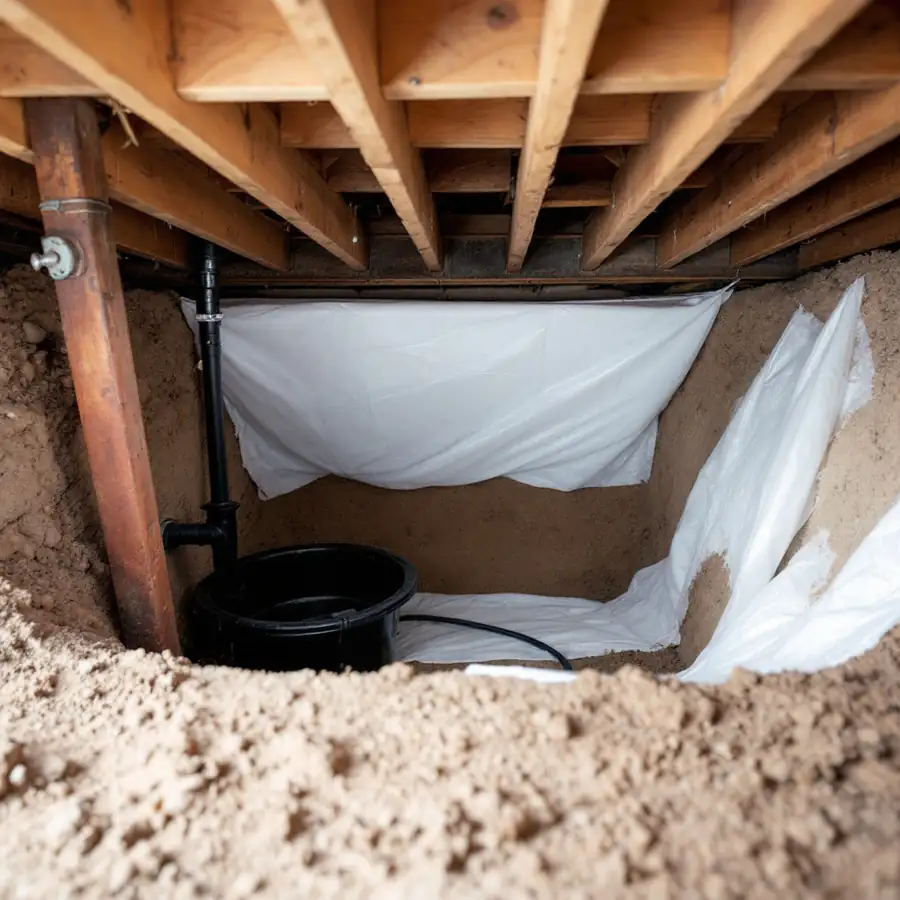
When water stands in it. A crawl space that dries between rains needs a barrier and airflow. A crawl space with standing water after every storm needs the water gone, and a basin with a pump is the usual way, often with a sealed liner over the ground. The difference from a basement is access: a pump you cannot see or reach will not be tested, and an untested pump in a crawl space fails without anyone knowing until the smell reaches the house.
Context
How many American homes even have a basement
A public number that almost nobody writing about sump pumps uses, because it makes the market look smaller than the marketing does.
The Residential Energy Consumption Survey asks households what they live in. In its 2024 round, out of 132.54 million homes, 39.14 million have a basement, split 23.04 million finished and 16.10 million unfinished. 52.02 million answered no. Apartments and mobile homes, 41.38 million of them, were not asked. Among households for whom the question applies, a basement is a minority answer at about forty-three percent.
Two things follow. First, a finished basement is not a niche: 23.04 million of them is more than half of all basements, and it is the case where water is expensive rather than inconvenient. Second, when a page tells you that every homeowner should own a backup pump, it is addressing a population that mostly has no basin to put one in. Regional concentration is the reason the topic feels universal in some places and absurd in others; basements cluster in the cold and wet north, and so does the industry that sells for them.
How They Die
What actually ends a sump pump: five ways, in order of how often
Sump pump failure is not one event. It is five, and only one of them is the motor wearing out from honest work.
One: the float switch
The most common failure on the list, and the cheapest. A tethered float catches on the power cord, on the discharge pipe, or on the wall of a basin too narrow for its swing, and stops rising. The pump does not know there is water. Nothing is broken, nothing is worn, and the basement floods. A vertical float on a rod fails differently: the rod stiffens with silt or mineral scale and the switch stops travelling. Either way the failure is silent, which is why a high-water alarm is the single most useful thing you can add to a working pump.
Two: the check valve, which kills the pump slowly
A check valve that no longer seals lets the column of water in the discharge pipe fall back into the basin every time the pump stops. The level rises, the float closes, the pump runs again. Why is my sump pump running constantly, in a house where it is not raining, is usually this. The water is not new water. It is the same water, and the pump is grinding through its service life pumping it in a circle. Can sump pumps run continuously: they can, and they are not built to.
Three: the intake and the impeller
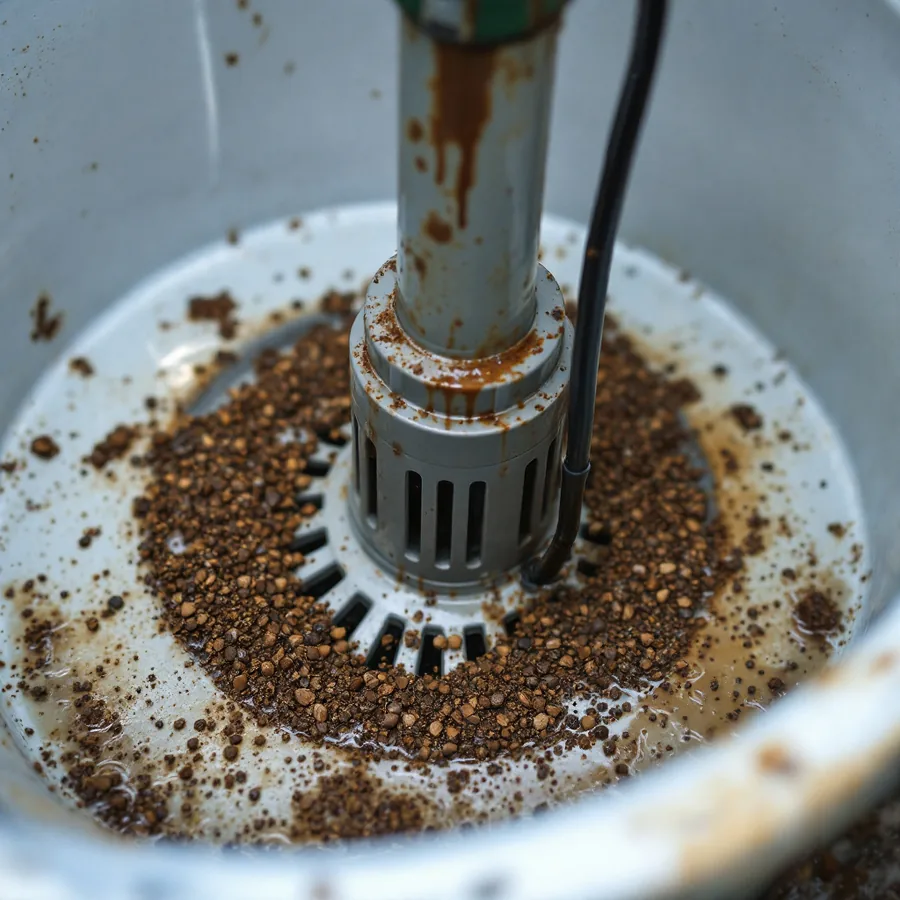
Can sump pumps get clogged, yes. Silt settles in the basin, gravel washes in from the drain tile, and a screen or an impeller packs with it. The pump hums, moves nothing, and heats up. Sump pump just hums is this failure or a seized bearing, and the two are told apart by whether anything moves.
Four: running dry, and overheating
Can sump pumps run dry: a submersible pump uses the water it sits in to cool its motor, so running dry is the fast way to cook one. Can sump pumps overheat, yes, and most have a thermal cutout that stops the motor before it burns; a pump that runs, stops, and restarts a few minutes later is often tripping that cutout rather than following the float. Will a sump pump burn out: eventually, and sooner if any of the four failures above went unnoticed.
Five: honest wear
How long do sump pumps last has no single answer, because the number that matters is not years but cycles, and cycles depend on the county table above rather than on the pump. A pump in a dry county may sit for a decade and fail from sitting. A pump in the wettest tenth can cycle tens of thousands of times a year and wear out its mechanical switch in a fraction of the same calendar. That is why every stated lifespan you read is a range, and why the honest version of how long does a sump pump last is: look at how often yours runs, then judge.

Timing
When to replace a sump pump, and how to tell before it fails
The useful signals are all things you can see or hear standing next to the basin with the lid off.
The four signs worth acting on
- It runs and does not lower the water. The pump is running, the level is not dropping, and the discharge is not freezing outside. Intake, impeller, or a discharge line that is blocked.
- It cycles far more than the weather explains. Check the check valve first. If the valve holds, the float may be set too low for the basin, which is an adjustment rather than a replacement.
- It has started making a new noise. A rattle from a loose pipe is nothing. A grinding or a screech is a bearing or an impeller, and both mean the motor is working harder than it should.
- Rust or mineral crust around the intake, and visible corrosion on the housing. Not a failure by itself, but it tells you the machine has been working in this water for a long time.
How to know if a sump pump is working
Pour water in until the float lifts, and watch the whole cycle rather than just the start. The pump should start within a second or two of the float rising, the level should fall visibly, the check valve should thump once when it stops, and the pump should stop rather than short-cycling back on. Then go outside and confirm water came out of the discharge. A pump that starts and a discharge that never runs is a blocked line, and it is easy to miss when you only test from indoors.
Are sump pumps easy to replace
Swapping a submersible pump for the same type in an existing basin is a short job in itself: unplug, unbolt the union in the discharge pipe, lift the old one out, set the new one in, reconnect, plug in, test. What makes it not simple is the part around it. The outlet may not be to current expectations. The check valve is usually reused when it should not be. The old basin may have no room for the new pump's float swing. And the discharge pipe often turns out to be glued rather than fitted with a union, which turns a fifteen-minute swap into pipework. None of that is beyond a capable homeowner, and none of it is why people call, which is usually that the basement is wet now.
How often should a sump pump be replaced
On a schedule only if you want the certainty. Otherwise on evidence, using the four signs above, and with the one exception that matters: a pump you rely on to protect a finished room or a piece of the house that is not insured against water is a pump worth replacing before it proves it needed replacing. The insurance section explains why the finished room is the uninsured half.
The Number
Sump pump replacement cost: the six line items on an honest quote
We publish no averages, for a reason: the national average for this job is an average of a straight swap in a dry county and a new basin cut into a slab. Those are not the same work and one number cannot describe both. What we can give you is the structure of the number, so you can read your own quote.
Why the averages you have read do not help
Every cost page for this job builds its number the same way: a range for the pump, a range for labour, and a total that is the sum of two ranges. The trouble is that the same words cover four different jobs. Replacing a submersible pump in a sound basin with a working outlet is one job. Replacing a pedestal pump with a submersible in a basin too small for it is another. Adding a second pump and a battery is a third. Cutting a new basin into a concrete floor and running a new discharge to the yard is a fourth, and it has an excavation in it. A single average that covers all four tells you nothing about which one you are being quoted.
| Line | What it is | What moves it | Who decides |
|---|---|---|---|
| 1. The pump | The unit itself, by type, housing material, switch type and the flow it delivers at your lift. | Submersible or pedestal; cast iron or plastic housing; tethered, vertical or electronic switch; the vertical distance it has to lift. | You, inside what the basin and the lift allow. |
| 2. Labour | The visit, removing the old pump, setting the new one, making up the discharge connection, testing the cycle. | Whether the old discharge has a union or is glued solid; access to the basin; whether the basement is dry or currently wet; after-hours. | The house and the calendar. |
| 3. The parts that are not the pump | Check valve, discharge fittings, a union so the next swap is easy, basin lid, and sometimes a new basin. | The age of what is there. A reused check valve is the most common quiet omission. | The installer, and you by asking. |
| 4. Electrical | An outlet the pump can reach without an extension cord, on a circuit that suits it. | Whether an outlet exists at the basin; whether your jurisdiction expects a dedicated circuit or a particular receptacle; whether an electrician is needed. | Your building department, not the plumber. |
| 5. Discharge route | Where the water goes from the wall of the house to where it is released. | Length of run, slope, whether it is buried, freeze protection, and whether the existing route is legal where you live. | Your municipality first, then the yard. |
| 6. Permit, inspection and haul-away | Any permit your city requires, the inspection, and disposing of the old pump. | Whether the work is a swap or an installation. New basins and new circuits are far more likely to need a permit than a like-for-like pump change. | Your city and the company's policy. |
Where quotes diverge most
Lines 4 and 5. Two companies quoting the same pump can be a long way apart because one of them has priced an electrician and a new discharge run and the other has assumed the existing outlet and pipe are fine. Neither is dishonest; they have made different assumptions about your house. Ask each of them which assumption they made, and the gap usually explains itself.
Sump pump repair cost against replacement
A repair is worth pricing when the failure is outside the motor: a float, a switch, a check valve, a cord, a blocked intake. Those are parts and a visit. Once the failure is the motor or the impeller on a pump that has been in service for years, a repair is a rebuild of the cheapest component of the system, and the reason to replace is not the cost of the parts, it is that you now have an old machine with one new piece in it. The same reasoning appears on our page on what plumbers charge for, which sets out the line items a visit is built from.
The Small Parts
The parts of the quote that are not the pump
Every one of these is inexpensive and every one of them has taken out a working pump.
The check valve
A one-way valve above the pump. Where to put the check valve on a sump pump is low, within a foot or two of the pump outlet, so the column of water it holds is short and the pump is not lifting the whole pipe again on every start. Too high and the pump strains against a tall column each cycle; too low and it can trap air. A quote that reuses the old valve on a new pump is a quote that has saved you a small part and handed you the most common cause of short-cycling.
The basin, and why its size matters
A basin too small means a short cycle: the float has barely fallen before the water is back at the switch. A pump rated for many thousands of starts can exhaust that rating in a couple of wet years in a basin that gives it no room. Should a sump pump basin have holes: a basin fed by drain tile has openings for the tile, and a basin in a floor with no tile often has perforations so groundwater can enter rather than pushing up elsewhere. Sealing a perforated basin does not keep water out of your basement; it moves where the water appears.
The discharge pipe and the union
Ask for a union in the discharge line above the check valve. It is a fitting that unscrews. With one, the next pump change is minutes. Without one, whoever comes next is cutting glued pipe in a hole full of water. The sump pump discharge pipe itself is usually rigid plastic inside the house; a flexible sump pump discharge hose belongs outside, where it can be moved and drained, not as the permanent run through the wall.
The outlet, and the two plugs
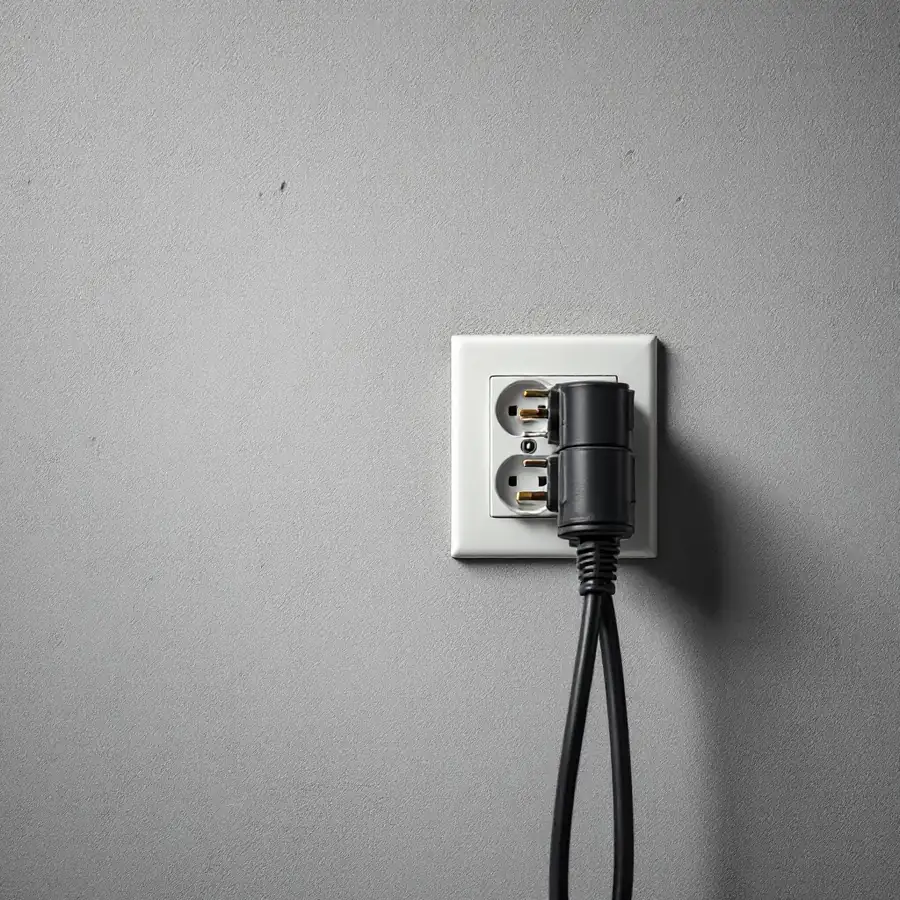
Why does a sump pump have two plugs: on many units the pump and its float switch are separate, and the switch plugs into a piggyback receptacle on the pump's own plug. It looks like a fault and is not. Plug the pair into the wall as a pair. If someone has plugged the pump directly into the wall and left the switch plug hanging, the pump will run continuously, because nothing is telling it to stop.
The high-water alarm
A float higher than the pump's float, wired to a buzzer. It is the cheapest item in this section and it converts every silent failure above into a noise you can hear. If you take one thing from this page and you already have a working pump, take this.
New Installation
Installing a sump pump where there was never one
How to install a sump pump in a basement that has no basin is not a pump job. It is a concrete job with a pump at the end of it.
What the work actually is
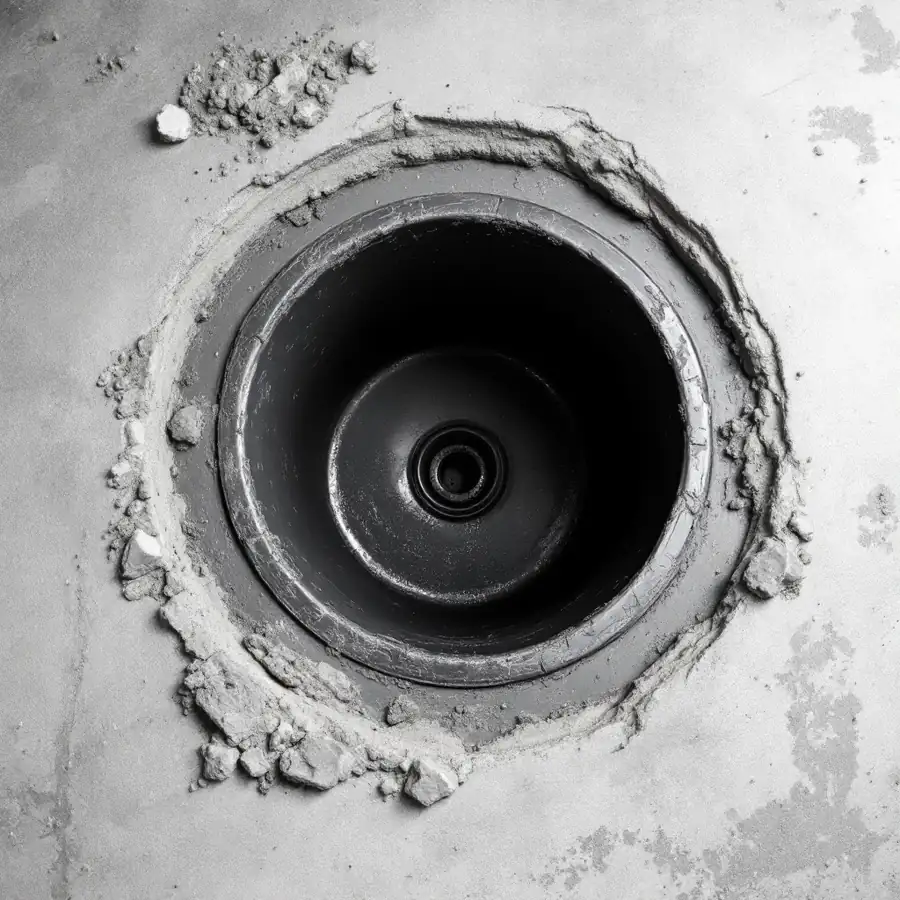
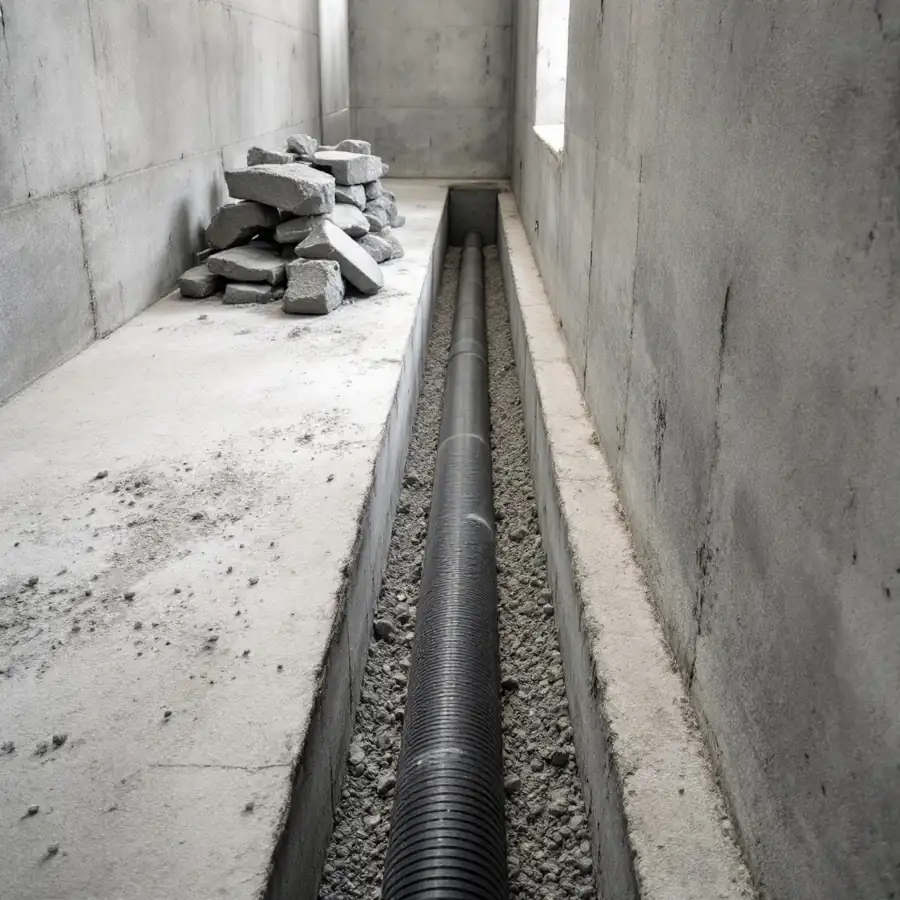
A hole is cut through the slab, usually with a saw and a breaker, at the lowest point of the floor and generally in a corner near an outside wall. Material is dug out below to seat a basin deeper than the slab. The basin goes in, gravel around it, concrete patched back to the floor. A discharge line is run up the wall, through the rim or the wall itself, and out. Electrical is run to the basin. If the house has drain tile that ends nowhere useful, this is also when it gets connected to the new basin, and if it has none, a trench inside the footing is sometimes cut so there is something to feed the pump.
Where permits come in
Cutting a structural slab, adding a circuit, and making a new discharge to the outside are three things building departments have opinions about, and a new basin commonly needs a permit where a like-for-like pump swap does not. It is worth one phone call to the building department with your address before anyone quotes. The same call settles the discharge question in the next section, because the department and the sewer utility usually give the same answer.
Where do it yourself stops
Setting a pump in an existing basin is ordinary homeowner work. Cutting a slab is not the hard part either, for someone with the tools. The two places this goes wrong are the electrical and the discharge. A pump on an extension cord across a wet floor is the single worst thing in this whole subject, and a discharge that dumps against the foundation or into a sewer it should not be in creates a problem larger than the one it solved. Both are worth a licensed trade, and when you want one, we connect homeowners with independent licensed and insured plumbing companies rather than doing the work ourselves.
Where The Water Goes
Where the water is allowed to go, and where it is not
Can a sump pump drain into the sewer is the most asked question in this whole subject and it has a federal answer, not a local preference.
Not the sanitary sewer
The sanitary sewer is sized for what houses produce, not for what the sky delivers. When groundwater is piped into it, the extra volume is called inflow, and the Environmental Protection Agency names the sources by name: “Connections of sources of water such as sump pumps, roof leaders, foundation drains and area drains can overload a sanitary sewer.” An overloaded sanitary sewer backs up, and the agency is blunt about how ordinary that is: “SSOs occasionally occur in almost every sewer system.” This is why cities write ordinances against the connection, why inspectors cut them when they find them, and why the honest answer to is a sump pump connected to the sewer line is that in some older houses it is, illegally, and that finding out is a favour to you as well as to the street. If your basement has ever backed up through a floor drain, our page on the sewer line is the one that covers that direction of water.
The storm sewer, sometimes
A storm sewer is built for exactly this water, and many municipalities allow or require a sump discharge to be piped to it. Many others have no storm sewer on your street at all. Can a sump pump drain into the storm sewer, and can a sump pump drain into the street, are both questions your municipality answers, and the answer is specific to your address rather than to your city.
The yard, most of the time
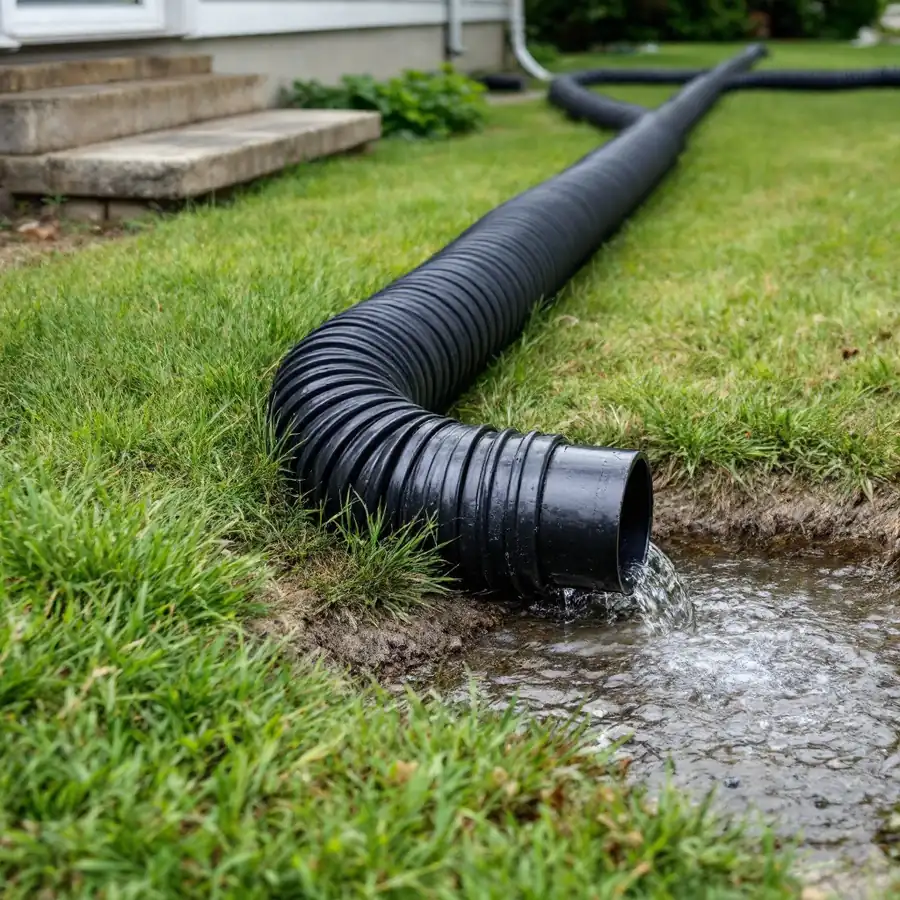
In most houses the water goes onto the ground, well away from the foundation, where the grade carries it off. Where does a sump pump drain to, in practice: a pipe through the wall, a run across the yard, and a release point far enough from the house that the water is not simply walked back to the basin. Too close and you have built a loop: the pump lifts water out, the ground returns it, and the pump runs all night in dry weather.
The neighbour, never on purpose
Discharging onto an adjoining property is the fastest way to turn a plumbing question into a legal one, and in many places it is specifically prohibited. Slope, not distance, decides where the water ends up. Walk the route in the rain once before you decide it is fine.
Backflow, and the one valve people confuse
A sump pump backflow valve and a check valve are not the same thing, though the words get swapped. The check valve keeps the discharge column from falling back into your basin. A backflow device on a sewer line keeps the street from coming into your house. If your worry is water arriving from the sewer rather than from the ground, the valve you are looking for is the second one, and it belongs on the drain line rather than on the pump.
Outside
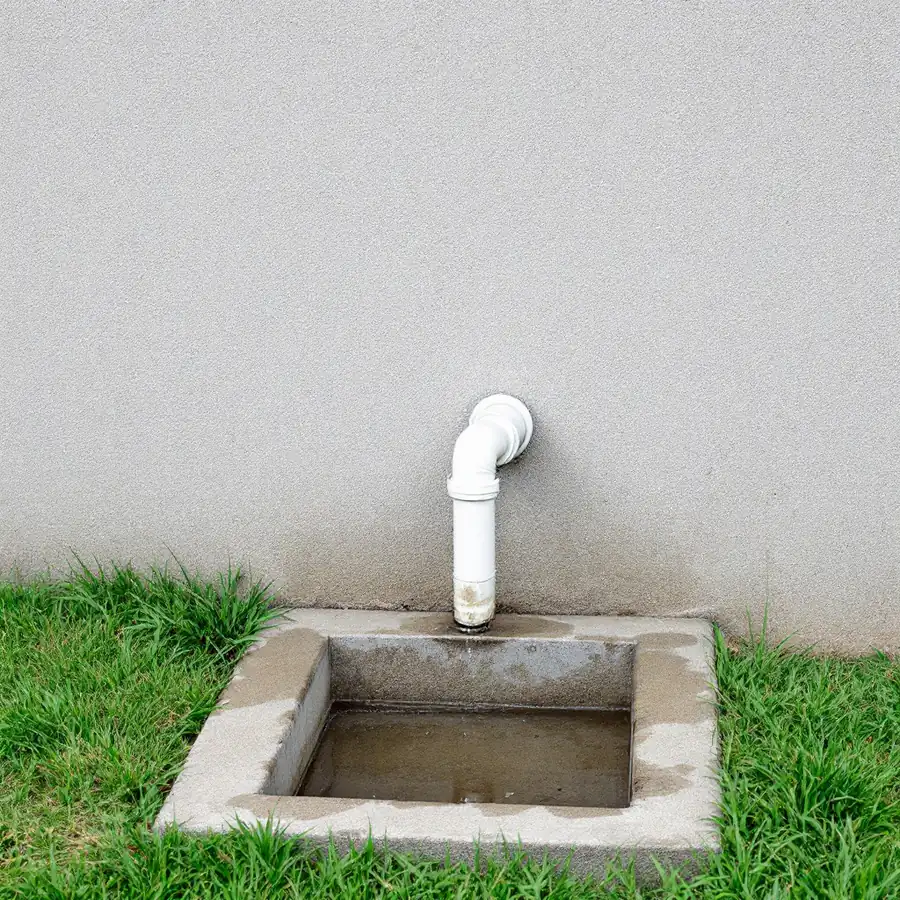
Where the discharge ends up in the yard
Sump pump discharge ideas is a search with a lot of pictures behind it and two constraints that decide all of them: slope, and distance from the wall.
The four arrangements that actually work
| Arrangement | What it needs | How it fails |
|---|---|---|
| Above ground, on a splash block | Nothing but a hard surface at the outlet to spread the flow. | Dumps close to the house, so the water walks back to the basin unless the run is extended. |
| Above ground, extended | A flexible or rigid extension, and somewhere to put it when it comes off. | Ugly, a trip hazard, and it freezes solid if it is left out through a cold winter. |
| Buried to a pop-up emitter | Continuous fall from the wall to the emitter. No exceptions. | Any sag holds water, and held water freezes. A plough berm over the lid does the same thing. |
| Buried to daylight on a slope | A yard that falls away, and a rodent screen on the open end. | Almost nothing, which is why it is the arrangement to want if the ground allows it. |
The dry well, and when it is a mistake
A gravel-filled pit that takes the discharge and lets it soak away. It works in soil that drains and in a spot far enough from the house. In clay, or ten feet from the foundation, it is a way of returning the water to the drain tile you just pumped it out of. If your pump runs in dry weather after a dry well was installed, this is the first thing to suspect.
How to hide a sump pump discharge pipe
Bury it to a pop-up emitter, which hides everything but a green lid. The alternatives people try are worse than the pipe: planting around the outlet holds water at the release point, and boxing it in makes the one part of the system you should be able to inspect invisible. Whatever you do, keep the release point findable, because a discharge that has stopped running is the first thing you check when the basement is wet.

Winter
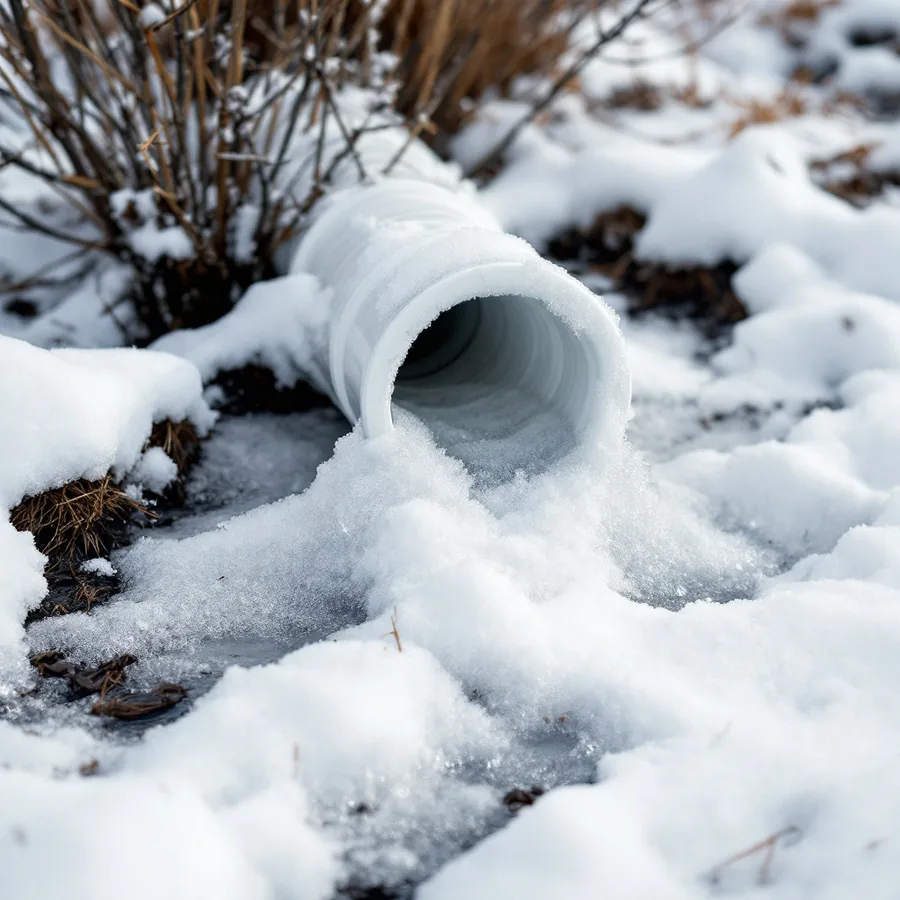
Freezing: the discharge line is the part that fails in winter
A frozen discharge turns a working pump into a pump running against a closed pipe, and the pump does not know.
Water freezes where it stands, so every place the discharge holds water is a candidate: a sag in an extension, the last few inches at an outlet buried in snow, a buried line laid without continuous fall. The failure is quiet. The pump starts, pushes against ice, trips its thermal cutout or simply runs, the basin stays full, and the first sign is water on the floor.
What prevents it
Products sold as a sump pump freeze guard are a relief opening in a housing, and they address the same failure as the fourth row of the table below. None of them beats the first row, which is free.
| Measure | Why it works | When to do it |
|---|---|---|
| Continuous fall on the whole run | Water that cannot stand cannot freeze in place. This is the measure that makes the others optional. | At installation. Retrofitting fall means re-laying the line. |
| A short outdoor run for the season | Less pipe outdoors is less pipe to freeze, and a splash block cannot hold water. | Before the first hard freeze, every year. |
| A relief opening near the wall | If the outdoor section blocks, the water leaves through the opening rather than staying in the basin. | Any time. It is inelegant and it works. |
| Keeping the outlet clear of snow | The tidiest buried system in the country fails when a plough berm buries the emitter. | After every storm that moves snow onto the lawn. |
The winter version of a pump problem is often not a pump problem at all. Our page on pipes covers the other cold-weather failure, which is water under pressure rather than water in a pit.
Electricity
How much electricity a sump pump uses
Does a sump pump use a lot of electricity is a question with a reassuring answer, and one important footnote.
Why the wattage on the box is not your bill
A sump pump is a motor that runs in bursts of seconds. Sump pump wattage tells you the draw while it is running, and running time is what turns draw into consumption. A pump that cycles for a few seconds a dozen times after a storm has consumed almost nothing, whatever the number on the nameplate. The same pump short-cycling day and night because of a failed check valve is a different story, and the first sign of that is usually the noise rather than the bill.
The footnote: starting current
Motors draw much more at the moment they start than while they run, and that is the number that matters for generator sizing rather than for the utility bill. If you are planning to run a pump from a generator, the figure to look for on the nameplate is the locked rotor or starting amperage, not the running watts. A generator sized to the running number will stall on the start.
Does a sump pump need its own circuit
Many jurisdictions expect one, and there is a plain reason beyond the rule: a pump sharing a circuit with a freezer, a shop tool or a dehumidifier is a pump that goes off when something else trips the breaker, and you find out later. Whether a particular receptacle type is required at a basin is a question for your local electrical inspector, because that detail varies and has changed over the years. What is not variable: no extension cord, and the plug within reach of the outlet.
Does a sump pump need electricity
The ordinary kind, yes, entirely. Will a sump pump work without electricity, no. There is one class of backup that does not need any, and it is in the backup section.
The Lid
Lids, covers and the radon question
Should a sump pump cover be sealed depends on something that has nothing to do with plumbing.
What a lid is for
Keeping objects, pets, children and debris out of an open hole with a machine in it, and keeping the humidity of a standing pool of water out of the room. A plain lid with cutouts for the pipe and the cord does both. A sump pump cover does not need to be exotic; it needs to be in place.
When it needs to be sealed
When the basin is part of a radon system, or when radon is a known issue in your area. The basin is a direct opening into the soil gas under your slab, which makes it both a way in for radon and a convenient point to draw from. A radon mitigation system commonly uses a sealed basin lid with a gasket, a grommet around the pipe and the cord, and a vent pipe drawing from the basin to outside the roof line. In that arrangement the seal is not optional, because an unsealed lid short-circuits the suction. If you have radon work in the house, the lid is part of it and a plumber replacing a pump should not simply leave it loose.
Should there be water in the pit
Should a sump pump have water in it, and should the pit be dry, both get asked and the answer is that a few inches of standing water below the float is normal and harmless. A completely dry basin is normal in a dry county. A basin dry because a radon fan is pulling air through it is also normal. What is not normal is water above the float with the pump not running, which is the whole of the triage list.
Other Uses
The same machine in other places
The words sump pump cover several different machines, and buying the wrong one is a common and avoidable mistake.
| Where | What is different about it | Interchangeable with a basement pump? |
|---|---|---|
| Elevator pit | The water it removes may carry hydraulic oil, so it is paired with oil detection or separation rather than piped straight to a storm drain. | No, and the reason is the oil rather than the pump. |
| Sewage and effluent | Moves waste rather than groundwater, from a bathroom below the sewer line. Different solids handling entirely. Sump pump versus ejector pump is not a choice between products: an ejector pump is for waste, a sump pump is for groundwater, and the two basins are usually a few feet apart in the same room. | No, in either direction. |
| Pools | Normally a portable utility pump. Using the basement pump means pulling the pump you depend on out of its basin. | Physically yes, sensibly no. |
| Crawl spaces | The same pump, harder access, usually with a liner over the ground. An untested pump you cannot reach fails unnoticed. | Yes, and everything on this page applies. |
| Portable and rental | A transfer pump for a one-off flood. No float suited to a basin, no permanent discharge, nothing to stop it running dry. | No, not as a permanent installation. |
| Industrial and heavy duty | Larger flows, three-phase power, materials chosen for what is in the water. | No, and the sizing section above does not apply. |
Choosing
Sizing and choosing: horsepower is the least useful number on the box
What size sump pump do I need is answered by how high the water has to go and how fast it arrives, not by the fraction on the label.
The two numbers that matter
Flow and lift, together. A pump's rating is a curve, not a point: it moves a certain volume per minute at a certain vertical lift, and less as the lift increases. The lift in your house is the height from the pump to the highest point of the discharge, plus the friction of the run. A pump that looks generous on paper can be marginal in a deep basement with a long horizontal run, and a modest pump can be more than enough in a shallow basin discharging a few feet away. Sump pump gpm at your lift is the number to ask for. Horsepower describes the motor, not the job, which is why a 1/3 hp sump pump chosen for a shallow basin and a short run can outperform a 1/2 hp sump pump fighting a long lift.
Submersible or pedestal
| Submersible | Pedestal | |
|---|---|---|
| Where the motor sits | In the water, sealed | On a shaft above the basin, in the air |
| Noise in the room | Muffled under a lid | Audible; the motor is in the room |
| Cooling | By the water it sits in, so running dry is harmful | By air, so it tolerates a dry basin better |
| Basin it needs | Wide enough for the body and the float swing | Narrow basin is acceptable; needs headroom above |
| Under a sealed lid | Straightforward | Awkward; the motor needs air and space |
| Typical service life | Shorter on paper, quieter in practice | Often longer, because the motor is never wet |
Housing and switch
A cast iron housing carries heat away from the motor better than plastic, which matters in a pump that runs often and matters very little in one that runs twice a year. The switch is the part worth more attention than the housing: a vertical float needs less room to work than a tethered one and is the better answer in a narrow basin, while a tethered float gives a longer travel and fewer starts in a wide one. Electronic switches remove the moving part and add electronics to a wet hole, which is a trade rather than an upgrade.
Best sump pump, and why we do not name one
We publish no product rankings and we are not paid by manufacturers, so a list of best sump pump brands here would be invention. What we can say about kits is more useful: a sump pump kit is convenient because the parts are matched, and it is a poor deal when it includes a basin you do not need or a check valve you would not have chosen. Buy the pump for your lift and flow, then buy the parts in the small parts section deliberately.
Redundancy
Backup pumps: battery, water powered, generator, or nothing
Are battery backup sump pumps worth it depends on which failure you are protecting against, and there are two very different ones.
The two failures a backup can cover
The power goes out, usually during the storm that is filling your basin. Or the pump dies with the power on, which is the more common of the two and the one a battery does nothing about. A second pump on a higher float covers the second. A battery covers the first. A combination unit covers both, and that is the whole logic of the category.
| Option | Covers | Needs | How it fails |
|---|---|---|---|
| Second pump, mains powered, higher float | Primary pump dying while power is on | Basin room for two, ideally a separate circuit | Silently, unless it is tested; both pumps are on the same power |
| Battery backup, separate pump | Power outage, and primary failure if it is a true second pump | A charger, a battery, and a place for both; testing on a schedule | Dead battery in a working charger; runtime shorter than the outage |
| Battery backup for an existing pump | Power outage only | Compatibility with the pump you have | Everything above, plus a single point of failure: one pump |
| Water powered backup | Power outage of any length | Municipal water pressure; local permission; a backflow arrangement | Loss of water pressure; not allowed everywhere; uses treated water |
| Generator | Outage, and the rest of the house with it | Sizing for motor starting current, fuel, safe siting | Fuel, cold starting, and being outdoors in the weather that caused the outage |
| Nothing | Nothing, and sometimes that is correct | An honest look at the county table and what is in the basement | The one day it was needed |
Runtime, and why hours is the wrong unit
A battery backup does not run for a number of hours. It runs for a number of pump cycles, and how many hours that spans depends on how fast water is arriving. The same battery that lasts two days in a slow seep lasts a few hours in the storm it was bought for. Ask for the specification in cycles or in gallons, and treat any answer given only in hours as marketing.
The consumable nobody remembers
A battery is a part with a service life, and a backup system with a dead battery and a healthy-looking charger light is the most common way this whole category fails. Whatever you install, put the battery on the same schedule as the smoke alarms and test the changeover by unplugging the primary pump on purpose in dry weather. A backup that has never run is a theory.
Do I need a battery backup sump pump
If your power goes out during storms and there is anything in your basement that water ruins, yes. If your power is stable, a second mains pump and an alarm buy you more for the same attention. If your county is in the dry end of the table above and your basement holds a furnace and bare concrete, the honest answer may be no, and the tool below says so out loud.
Work It Out
Build your own backup decision
Three questions, nothing sent anywhere. What comes out is what has to be in the basin, whether a backup is worth it and which kind, the failure to watch for in your situation, and the question to put to whoever quotes. One of the combinations answers that you need nothing, which is the answer a company selling pumps cannot give you.
We are paid the same fixed fee for an introduction whether the answer is a five dollar float or two pumps and a battery, which is why this tool has a setting where the answer is to buy nothing.
Right Now
The sump pump alarm is going off: what it is telling you
A sump pump alarm going off means one of exactly two things, and which one decides what you do in the next ten minutes.
Either the water is too high, or the backup is unhappy
A high-water alarm is a second float above the pump's float. When it sounds, water is above where it should be. That is the urgent one: go and look at the basin. A battery backup sump pump alarm, or a backup unit beeping, is usually the system reporting on itself: battery low, battery disconnected, charger fault, or the backup pump has run. That is not urgent in the same way, and it is not something to silence and forget, because a beeping backup is a backup you do not have.
What to check, in order
- 1Look in the basinIs the water above the float? If the pump is not running with water above the float, go to the triage list.
- 2Confirm water is leaving outsideIf the pump is running and the level is not falling, the discharge is blocked or frozen.
- 3Check the float is freeThe most common cause, and visible from above with the lid off.
- 4Read the backup panelIf it is the backup complaining, find out which of its own faults it is reporting before assuming the primary is fine.
- 5Move what water would ruinBoxes off the floor. This is the step people do last and it is the one with no downside.
Why the alarm is worth having even when it annoys you
Every failure in the five ways they die is silent. The alarm is the only part of the system whose job is to tell you. A backup that beeps for a month while nobody looks is not a false alarm; it is a warning being ignored.
Triage
My sump pump is not working: the checks in the order that finds it
Sump pump not working covers a dozen different symptoms. This is the order that gets to the cause with the fewest steps, and it starts with the boring ones because the boring ones are usually right.
| Symptom | Most likely | Check first | Not this |
|---|---|---|---|
| Silent, water above the float | Float caught, or no power at the outlet | Lid off, lift the float by hand; then the breaker and the outlet | A dead pump, until the float and the power are ruled out |
| Hums, moves nothing | Jammed impeller or seized bearing | Unplug, then look for silt or gravel at the intake | A wiring fault |
| Runs, level does not drop | Blocked or frozen discharge | Go outside and confirm water is coming out | An undersized pump |
| Runs constantly, dry weather | Failed check valve recycling the column | Listen for water falling back after the pump stops | A rising water table |
| Will not shut off | Float stuck up, or the switch plug bypassed at the outlet | The two-plug arrangement at the wall | A pump that is too small |
| Starts and stops every few minutes | Short cycling in a small basin, or a thermal cutout | Where the float sits relative to the basin depth | A fault, necessarily; some basins simply do this |
| Trips the breaker | Shared circuit overloaded, or a failing motor drawing too much | What else is on that circuit | Something you should keep resetting |
| Does not keep up with the rain | Genuinely undersized for the lift, or a partly blocked discharge | The discharge first; capacity second | A reason to buy the largest pump sold |
| Working, but water is still on the floor | The water is not coming from the basin | Where the wet floor starts, relative to the walls | A pump problem at all |
The reset button question
Do sump pumps have a reset button: most do not have one you press. What they have is an internal thermal cutout that resets itself once the motor cools, which is why a pump can appear to fix itself and then stop again. A pump that keeps doing that is telling you it is overheating, and the cause is usually running dry, running against a blocked line, or an impeller it cannot turn freely.
How often should a sump pump run during heavy rain
As often as the water arrives, which in a wet county during a storm can be every couple of minutes for hours. That is not a fault. The judgement is not frequency, it is whether the level falls each time and whether the cycles stop when the weather does. A pump still cycling three dry days later has a check valve problem, not a weather problem.
Who to call for sump pump issues
A plumbing company for the pump, the basin and the discharge. An electrician when the problem is the circuit or the outlet rather than the pump. A basement or foundation contractor when water is entering through a wall rather than rising through the floor, which is the boundary drawn in the section on waterproofing. We are not any of the three: when you want the first, we connect you with independent licensed and insured plumbing companies, and we are paid a fixed fee for the introduction.
Other Ways In
Water in the basement with a working pump: five other doors
Why is water in my basement, when the pump is running and the basin is keeping up, has five usual answers and none of them is the pump.
| Door | What is happening | The tell |
|---|---|---|
| A downspout beside the foundation | A gutter puts a roof's worth of water into the soil against the wall, and the soil passes it on. | Wet wall under or near a downspout, worst after short heavy rain. The cheapest fix on the list and the most commonly skipped. |
| Grade falling toward the house | Soil settles against the foundation over years until the ground slopes inward, and every rain is aimed at the wall. | Water along one whole side rather than at one point. |
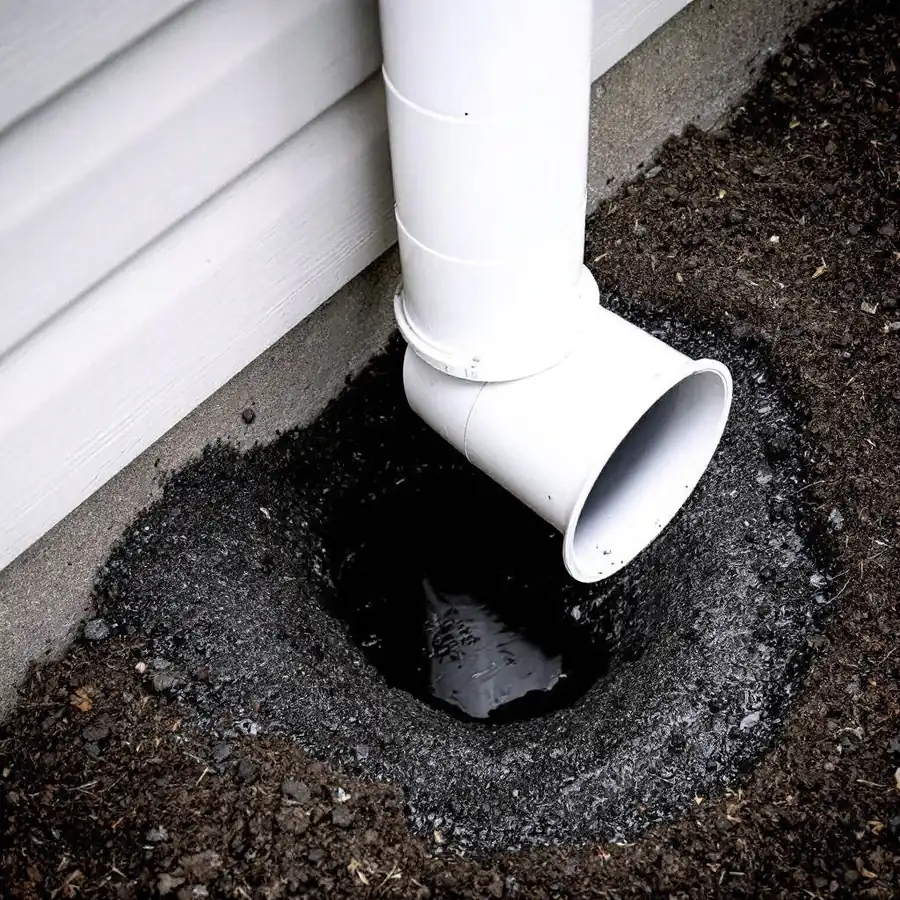
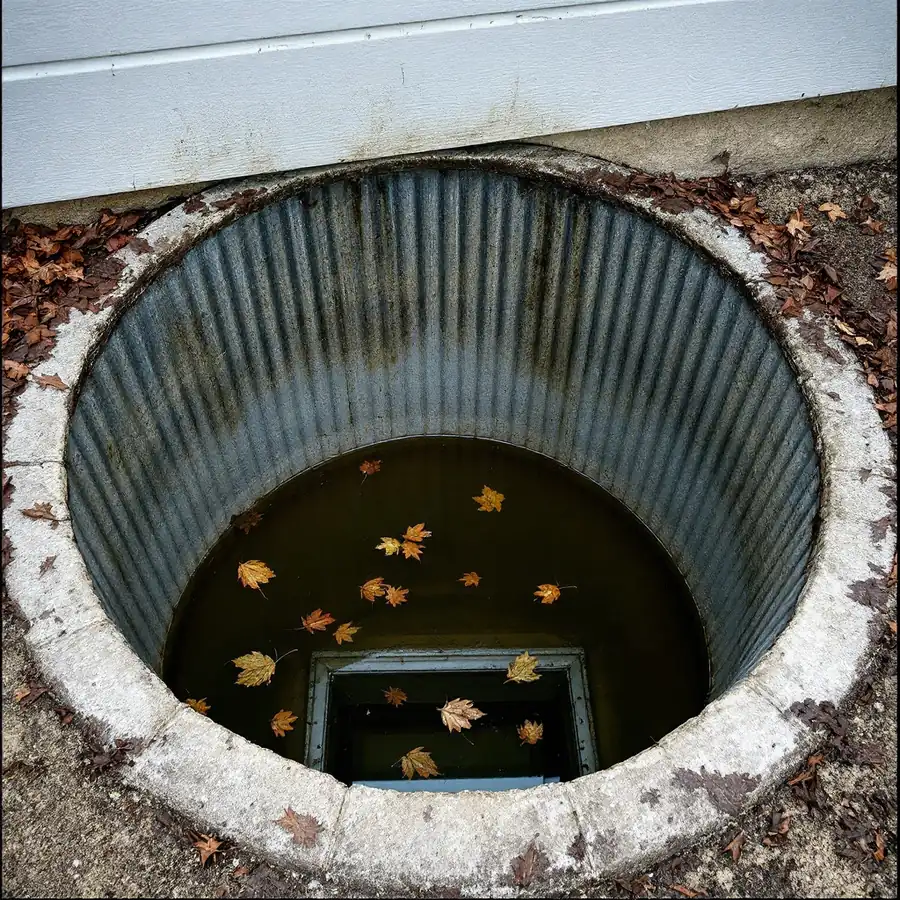
| A window well filling | The well's drain has blocked and the well is now a bucket held against a window. | Water at a window, and a well holding standing water after rain. |
| Up through a floor drain | The water is coming from the sewer rather than from the soil. Different emergency, different fix, covered on our sewer line page. | A wet ring around the floor drain, and it is worst when the street is full. |
| Condensation | Warm humid air meeting cold masonry in summer. No leak anywhere. | Damp everywhere at once in July, dry in January. Solved with air rather than with pumps. |
Where the wet floor starts tells you which of the five you have. A puddle spreading from the basin is the pump. A wet line along the joint between wall and floor all the way round is groundwater under pressure. A stain running down one wall under one window is that window. A wet ring around a floor drain is the sewer. Stand at the dry edge and work backwards.
Two Different Jobs
A sump pump is not basement waterproofing
These are sold together often enough that the difference is worth stating plainly, because they solve different problems and only one of them is a plumbing job.
A sump pump removes water that has arrived. Basement waterproofing changes whether it arrives: interior drain tile cut into the floor around the perimeter to intercept water before it reaches the room, exterior excavation to the footing to seal the wall from outside, crack injection to close a specific path, grading and drainage to keep water away from the building in the first place. A pump is the endpoint of the first of those and is irrelevant to the others.
What follows for a quote: a company proposing interior drain tile is proposing a system whose lowest point is a basin, so a pump belongs in that quote. A company proposing a bigger pump as the answer to water coming through a wall is proposing to pump faster from a puddle that should not be there. And a company quoting exterior work should be able to say what specifically it is sealing and how it found it, because exterior excavation is the most expensive answer in this whole subject and the one least often necessary.
| A sump pump | Basement waterproofing | |
|---|---|---|
| What it changes | Where water goes after it arrives | Whether water arrives at all |
| The work | A machine in a basin, a check valve, a discharge route | Interior drain tile, exterior excavation and sealing, crack injection, grading and drainage |
| Who does it | A plumbing company | A foundation or waterproofing contractor |
| Right answer when | Water rises through the floor or the drain tile ends in a basin | Water crosses a wall, a window well fills, or the grade falls toward the house |
| Sold wrongly as | A bigger pump offered as the fix for water coming through a wall | Exterior excavation quoted without naming what it is sealing or how it was found |
We do not publish price averages for either job, and we do not sell waterproofing. What we do publish is the rest of the plumbing side, starting from our home page.
In FEMA's Own Words
What flood insurance actually pays for in a basement
Almost everything written about this gets it backwards. Here are the federal program's own lists, quoted, with the source beside them.
What counts as a basement
The definition is broader than people expect: “The NFIP defines a basement as any area of a building with a floor that is below ground level on all sides.” The same fact sheet notes that sunken rooms, crawl spaces and the lower levels of split-level houses can fall under it.
The pump is covered. The room is not.
In the list of building items a Standard Flood Insurance Policy covers in a basement, the fact sheet names “Sump pumps, heat pumps, and well water tanks and pumps” outright. In its examples of excluded items it names “Basement improvements (such as finished flooring, finished walls, bathroom fixtures, and other built-ins)” and “Generators and similar items”. Read those together and the shape of the policy is clear: the federal program insures the machinery in your basement and not the finishes, and it does not insure the generator you bought so the machinery would keep running.
| Covered in a basement | Not covered in a basement |
|---|---|
| Sump pumps, heat pumps, and well water tanks and pumps | Personal property (such as couches, computers, or televisions) |
| Furnaces and water heaters | Basement improvements (such as finished flooring, finished walls, bathroom fixtures, and other built-ins) |
| Central air conditioners | Generators and similar items |
| Electrical outlets and switches; electrical junction and circuit breaker boxes | Dehumidifiers that are not integral to the heating and air conditioning system |
| Drywall that is unfinished and un-taped for walls and ceilings | Removal of non-covered items, even when it is needed to reach covered repairs |
| Stairways and staircases attached to the building | Anything not specifically listed in the policy |
The sentence that decides what you should store down there
On contents coverage the fact sheet is unambiguous: “If covered items are stored in a basement, meaning they are not connected to a power source, they are not covered.” A washer and a freezer, plugged in and in use, are covered. The same items in boxes on the floor are not. Shelving is the cheapest insurance decision available in a basement.
What the policy does pay toward cleaning up
More than people assume: “Cleanup expenses can include pumping out trapped floodwater, labor to remove or extract spent cleaning solutions, treatment for mold and mildew, and structural drying of salvageable interior foundation elements.” That is pumping, extraction, mould treatment and structural drying, which is the bulk of the work after a real flood.
Is sump pump failure covered
This is where the confusion lives, and the distinction is between the cause and the object. A flood policy responds to a flood. If a flood damages your pump, the pump is a covered item. If your pump simply fails on a Tuesday and the basement fills with groundwater, no flood occurred, and the federal flood policy is not the instrument for it. Standard homeowners policies generally exclude water backup and sump pump overflow from the base form and sell it as an endorsement instead; whether you have that endorsement is a question for your own declarations page rather than for any page on the internet, and it is worth ten minutes with the document. The same pattern applies to sewer backup, which we cover on the sewer line page.
Upkeep
Testing and maintenance: four checks, and how often
Do sump pumps need maintenance: very little, and the little they need is the difference between a machine that works when asked and one that does not.
Twice a year: the full cycle test
Pour water in until the float lifts. Watch the start, the level falling, the check valve thump, and the stop. Then confirm outside that water came out. Spring, before the wet season, and autumn, before the freeze, are the two useful times.
Twice a year: the float and the intake
Lid off, look. Is the float free of the cord, the pipe and the wall? Is the intake screen clear of silt and gravel? Both are visible in ten seconds and both are the failures most likely to catch you.
Once a year: the basin
Sump pump cleaning is mostly getting silt out of the bottom of the basin, because silt is what packs intakes and stiffens floats. Unplug first. A wet vacuum and a bucket do it. Cleaning tablets and pit cleaners address smell rather than function, and they do nothing for silt.
Once a year: the backup, on purpose
Unplug the primary pump, pour water in, and watch the backup start and finish a cycle. Check the battery's age against whatever the manufacturer says and replace it on that schedule rather than on evidence, because the evidence arrives during a storm.
| Check | How often | What it catches |
|---|---|---|
| Full cycle test with real water | Twice a year, spring and autumn | A seized pump, a dead outlet, a check valve that no longer holds, and a discharge that is blocked outside. |
| Look at the float and the intake | Twice a year, lid off | The two failures most likely to catch you: a float caught on the cord or the wall, and an intake packed with silt. |
| Clear silt from the basin | Once a year | What packs intakes and stiffens floats. Unplug first; a wet vacuum and a bucket do it. |
| Run the backup on purpose | Once a year, in dry weather | A backup that has never run, and a battery that died quietly behind a healthy-looking charger light. |
| Walk the discharge route | Before the first freeze | Sags that hold water, an emitter buried by a plough berm, and an outlet washed into a hollow. |
What not to bother with
Do not run a pump dry to see whether it works; that is the one action on this page that can damage a healthy submersible pump. Do not seal a perforated basin. Do not add a larger pump because the existing one runs often in wet weather; it is supposed to.
The Pit
Smell, silt and what is actually in the pit
Why does my sump pump smell has three common answers and only one of them is a plumbing fault.
A dried-out trap or an old floor drain nearby
If the smell is sewage, the most likely source is not the basin at all. It is a floor drain or a fixture nearby whose trap has evaporated dry, letting sewer gas into the room. A sump pump that smells like sewage is very often a dry trap three feet away. Pour water into the floor drain and see whether the smell goes.
Stagnant water and iron bacteria
Groundwater in a basin that rarely empties goes stale, and in iron-rich water a reddish-orange slime called iron bacteria grows on everything. It is a nuisance rather than a hazard: it stains, it smells earthy, and it packs screens. Cleaning the basin is the answer, and it will come back, because it lives in the groundwater rather than in the pit.
Actual sewage in the pit
If waste is in the basin, something is connected that should not be, and that is the one case here that is urgent. It is also the case where the water in the pit is not groundwater and should not be treated as clean. Is sump pump water clean, in the ordinary case, is best answered as: it is groundwater, it is not drinking water, it has soil and whatever the soil holds in it, and it is not sewage unless something upstream is wrong.
Bugs
A damp basin with a loose lid is an attractive place for insects, and a sealed lid with a proper grommet solves most of it. This is a secondary reason to keep the lid on rather than off.
After
Drying out after the pump failed, and the 48 hour clock
The federal advice here is a deadline rather than a technique, and it is shorter than most people assume.
The Centers for Disease Control and Prevention puts it in one sentence: “Clean up and dry your home quickly after the storm or flood ends- within 24 to 48 hours if possible.” That is the clock. Inside it, most hard surfaces and many soft ones can be saved. Outside it, porous materials that stayed wet are a mould question rather than a cleaning question, and the CDC's guidance is to discard what cannot be cleaned and dried quickly, naming mattresses, carpet and padding, upholstered furniture, pillows, books and paper products among them.
What to do in the first hours
- 1Deal with the electricity before the waterA wet basement with live outlets at floor level is not a place to walk into.
- 2Get the water outIf the pump has failed and the basement is holding water, that is a rental or a call, and it is the step everything else waits on.
- 3Lift what can be liftedAnything porous, off the floor, out of the room.
- 4Move airFans and open doors and windows. Drying is airflow more than it is machines.
- 5Photograph everything before you throw it outWhatever your insurance position turns out to be, the record is easier to make now than to reconstruct later.
Then find out why
A failure that has been fixed without being explained will happen again. Work through the triage table, and if the pump turns out to have been fine, work through the five other doors.
Five Minutes
Two federal checks worth doing before you buy anything
Both are free, both take minutes, and neither appears on any page we measured in either search engine.
Check your pump against the recall database
The Consumer Product Safety Commission publishes every recall it has issued, and the database is searchable by product. For sump pumps it returns four recalls across its whole history, which is a small number and a reassuring one. The most recent, in February 2020, covered pedestal pumps sold under three brand names. About 33,000 units were involved, the stated hazard was that “The sump pumps can overheat, posing a risk of fire”, and the commission recorded that “The firm has received six reports of the recalled sump pumps smoking. No injuries have been reported”. The model and date code are on the nameplate of the pump, which means checking is a matter of reading a label and typing it in.
Look up your own flood map
FEMA publishes the flood map for every mapped community, and it is the official answer to whether your address sits in a mapped flood hazard area. It is not the same question as our county table, and the two are complementary: the map tells you about a designated hazard from rivers and coasts, our count tells you how often a damaging water event has actually been reported where you live. A house outside a mapped zone can still be in a county that reports water thirty times a decade, and that is exactly the case where a homeowner assumes they are fine.
Before You Sign
What to ask before you sign
Seven questions. Each of them tests something specific, and each has a weak answer that tells you as much as a strong one.
| Ask | What it tests | A weak answer |
|---|---|---|
| What flow does this pump give at my lift, measured from the pump to the top of the discharge? | Whether they sized the pump to the house or read the horsepower off the box. | “It's a half horse, it'll be fine.” |
| Is a new check valve included, and where will it sit? | Whether the most common cause of short cycling is being carried over into the new install. | “The old one's fine.” |
| Will there be a union in the discharge above the valve? | Whether the next replacement is minutes or pipework. | “We'll glue it up solid.” |
| Where does the discharge end, in feet from the wall, and can you show me? | Whether the water is being moved or circulated. | “Out the side, same as now.” |
| Does my city allow this discharge arrangement, and does this job need a permit? | Whether they have asked, in a subject where the EPA's position and the local ordinance both apply. | “Nobody bothers with a permit for a pump.” |
| What happens if this pump fails while the power is on? | Whether the redundancy on offer covers the likelier failure or only the dramatic one. | A battery quoted as the answer to every failure. |
| What is the warranty, on the pump and on the labour, in writing? | Whether the company expects to be reachable in five years. | “Lifetime,” with nothing on paper. |
What we do, and what we do not
We are not a plumbing company. We do not install pumps, sell waterproofing, or take a share of any job. We are paid a fixed fee for an introduction, and it is the same fee whether the visit ends in a new float switch or two pumps and a battery, which is why this page can afford a table row that says a quote should be declined. When you want a plumber for a pump, a basin or a discharge, we connect you with independent licensed and insured companies. Who pays us and how is on our about page.
Straight Answers
Sump pump questions, answered
How long do sump pumps last?
The honest unit is cycles rather than years, because a pump in the wettest tenth of counties can run tens of thousands of times a year while one in the driest tenth barely runs at all. Our own count of the federal storm archive puts the median county at 21 water event days in twenty years and the wettest tenth at 60, so two identical pumps in two counties are doing very different amounts of work. Judge yours by how often it runs, by whether the level still falls on every cycle, and by whether it has started making a new noise.
How much does it cost to replace a sump pump?
We publish no averages, because the same phrase covers a straight swap in a sound basin and cutting a new basin into a concrete floor. What a quote is made of is fixed: the pump, the labour, the parts that are not the pump, the electrical, the discharge route, and permit and haul-away. Two quotes for the same pump usually differ because one priced an electrician and a new discharge and the other assumed the existing ones were fine. Ask each which assumption they made.
Does insurance cover sump pump failure?
A federal flood policy responds to a flood. FEMA's basement fact sheet lists sump pumps among the covered building items, so a pump damaged by a flood is covered; a pump that simply fails on a dry day is not a flood, and that policy is not the instrument for it. Standard homeowners policies generally exclude water backup and sump pump overflow from the base form and offer it as an endorsement. Read your own declarations page rather than any article, including this one.
Why is my sump pump running constantly?
In dry weather, almost always a check valve that no longer holds, so the column of water in the discharge pipe falls back into the basin after every cycle and the pump pumps the same water again. Second most likely is a float stuck in the up position, or a pump plugged straight into the wall with its switch plug left hanging. During a storm in a wet county, constant running is normal and is not a fault.
Can a sump pump drain into the sewer?
Not into the sanitary sewer. The EPA names sump pumps directly among the connections that can overload a sanitary sewer
, which is why municipalities prohibit it and inspectors cut such connections when they find them. A storm sewer is built for this water and many cities allow or require the connection to one. Which applies at your address is a question for your municipality, and it is worth asking before anybody quotes a discharge route.
Does a sump pump need its own circuit?
Many jurisdictions expect one, and there is a practical reason as well as a rule: a pump sharing a circuit with a freezer or a shop tool goes off when something else trips the breaker, and nobody finds out until the basement is wet. Whether a particular receptacle type is required at a basin varies locally and has changed over the years, so it is a question for your electrical inspector. What does not vary: no extension cords.
How often should a sump pump run?
As often as water arrives. After a storm in a wet county that can be every couple of minutes for hours, and that is healthy. The test is not frequency, it is whether the level drops on each cycle and whether the cycling stops when the weather does. Still cycling three dry days later means the check valve.
Should there be water in my sump pit?
A few inches below the float is normal and harmless. A dry basin is normal in a dry county, and also normal where a radon fan is drawing air through the pit. The condition that matters is water sitting above the float with the pump not running.
What size sump pump do I need?
Nearly every unit sold for a basement is an automatic sump pump, meaning it carries its own float switch and needs nothing from you to start. The two numbers that decide which one is flow and lift, and they only mean anything together. Measure from the pump to the highest point of the discharge, add the run, and ask for the pump's flow at that lift. Horsepower describes the motor rather than the job, and a pump with a bigger number on the label can move less water in your basement than a smaller one chosen for the lift.
Do I need a battery backup sump pump?
If your power goes out during storms and there is anything in your basement that water ruins, yes. If your power is stable, a second mains-powered pump on a higher float covers the likelier failure, which is a pump dying with the lights on. If your county is in the dry end of our table and the basement holds a furnace and bare concrete, the honest answer may be no.
Will a sump pump work without electricity?
An ordinary one, no. A battery backup runs for a number of pump cycles rather than a number of hours, so its useful life in an outage depends on how fast water is arriving. A water powered backup runs off municipal water pressure with no battery at all, which removes the consumable and adds three conditions: adequate pressure, local permission, and the fact that it uses treated water to move groundwater.
How do I know if I have a sump pump?
Look for a round or square lid set into the lowest floor of the house, usually in a corner, with a plastic pipe rising out of it and a cord running to a nearby outlet. In a crawl space it may be an open hole with a pump standing in it. If there is no basin anywhere, the house was built without one, which is the normal case for most American homes.
What does a sump pump sound like, and why is mine so loud?
A submersible pump under a closed lid is a muffled hum for a few seconds and then a single thump as the check valve seats. That thump is normal. Loudness usually comes from one of three things: a pedestal pump, whose motor is in the room with you; a discharge pipe vibrating against a joist; or a check valve that slams rather than closing. A grinding or screeching noise is a different matter and means the bearing or the impeller.
How long can a sump pump run continuously?
Not indefinitely, and the reason is cooling. A submersible pump is cooled by the water it stands in, so it copes with long runs while the basin keeps filling and suffers when it runs against a blocked line or a dry pit. Most units have a thermal cutout that stops the motor before it burns, which is why a pump that stops and restarts a few minutes later is usually overheating rather than following the float.
How often should a sump pump run during heavy rain?
In a wet county during a storm, every couple of minutes for hours is normal and healthy. What matters is whether the level falls on each cycle and whether the cycling stops when the weather does. A pump still cycling three dry days later is recycling the same water through a failed check valve.
Who do I call for a sump pump problem?
A plumbing company for the pump, the basin and the discharge. An electrician when the fault is the circuit or the outlet rather than the pump. A foundation or basement contractor when water is entering through a wall rather than rising through the floor. We are none of the three: we are a referral service, and we connect homeowners with independent licensed and insured plumbing companies for the first of them.
How do I hide the sump pump discharge pipe?
Bury it at a continuous fall to a pop-up emitter, which leaves nothing visible but a small green lid in the lawn. The alternatives people try are worse than the pipe: planting around the outlet holds water exactly where you wanted it gone, and boxing the outlet in makes the one part of the system you need to be able to inspect invisible. Whatever you do, keep the release point findable, because a discharge that has stopped running is the first thing to check when the basement is wet.
Is a sump pump the same as waterproofing?
No. A pump removes water that has already arrived at the lowest point of the house. Waterproofing changes whether it arrives, through interior drain tile, exterior sealing, crack injection, grading or drainage. A larger pump is not an answer to water coming through a wall, and a company offering one is treating the puddle.
Where This Comes From
Sources and method
- Our own count of water events by county — aggregated from NOAA National Centers for Environmental Information, Storm Events Database, bulk detail files, county-coded records only, event types Flash Flood, Flood and Heavy Rain, 2006 to 2025. 3,254 counties, 151,562 reported events.
- The definitions the archive is filled in against — National Weather Service Instruction 10-1605, Storm Data Preparation, July 26, 2021, sections 14, 15 and 21.
- Flooding as a daily national threat — National Weather Service, Flood Safety.
- What flood insurance covers and excludes in a basement — FEMA, National Flood Insurance Program: What Does Flood Insurance Cover in a Basement?, January 2022, and the companion Basement Flooding infographic, October 2021.
- Sump pumps as a source of inflow into sanitary sewers — U.S. Environmental Protection Agency, NPDES: Sanitary Sewer Overflow (SSO) Frequent Questions.
- The 24 to 48 hour drying window and what to discard — Centers for Disease Control and Prevention, Guidelines for Cleaning Safely After a Disaster, page updated August 26, 2026.
- How many American homes have a basement — U.S. Energy Information Administration, Residential Energy Consumption Survey 2024, table HC2.3, preliminary data release March 2026.
- Sump pump recalls — U.S. Consumer Product Safety Commission, recall 20069, February 6, 2020, and the full recall database at saferproducts.gov.
- Your own flood map — FEMA, Flood Maps.
Our editorial standards explain how we source and check what we publish. Every quotation on this page was read on the government document linked beside it on the day of publication. The county counts are our own aggregation of a federal archive, and the limitations we know of are stated in the section that presents them: they are counts of reported events, they describe counties rather than houses, and counties differ enormously in size. We publish no price averages and no product rankings. We are a referral service rather than a plumbing company. Last updated .
Before you call anyone
The flat-fee match — we are paid for the introduction, not for the size of your job
Most plumbing advice is written by the company that wants to do the work. That is not a failing of the people who read it; it is a defect in who is talking: the diagnosis, the estimate and the invoice come from one party, and no amount of care on your side fixes that.
We are built the other way round. We do not repair, install or sell anything, so the payment reaches us when you are connected to a licensed, insured plumbing company — the same amount whether you need a two-dollar flapper or a new water heater. Nobody here has a reason to talk you into the larger number. You can check that rather than take it on trust: how we make money is written down, and this site keeps telling readers when not to buy. Why does not everyone work this way? Because a flat fee leaves money on the table every time the job turns out to be big.
Waiting is the one thing that actually costs money. A water heater that is leaking from the tank does not get better and does not wait for a convenient week; the water it lets go finds the floor, the drywall and whatever is stored below. A drain that backs up once backs up again, and the second time it is sewage. And if it turns out to be a flapper or a reset button, say so on the call. We will tell you, and that call earns us nothing.
Not for you if: you want a price over the phone — nobody honest gives one without seeing the pipe; you need a guarantee of arrival within the hour — we cannot promise that for a company we do not run; the building is commercial; or you would rather do it yourself, in which case the pages on this site are written so that you can.