Leaking Pipe
Leaking pipe — pressure or drain is the first question, and it is the only one that decides whether tonight is an emergency
A pipe is leaking somewhere in the house: under a sink, behind a wall, in the basement, under the floor, or from something you cannot see but can hear. Every page on the subject goes straight to tape and clamps. This one starts with the question a plumber asks on the phone before anything else — does it leak all the time, or only when something drains? — because the answer says whether the pipe is under pressure, whether the main shut-off is the next thing you touch, and whether the visit is tonight or Monday. Then: the sink leak that is almost never the pipe, the glued joint that was never glued, how a leak in a wall or under a slab is found without demolition, what holds until morning and what only looks like it does, the federal weather service on thawing a frozen pipe, the EPA on the solder in a house built before 1986, and what the federal flood program says, in its own words, about a broken pipe.
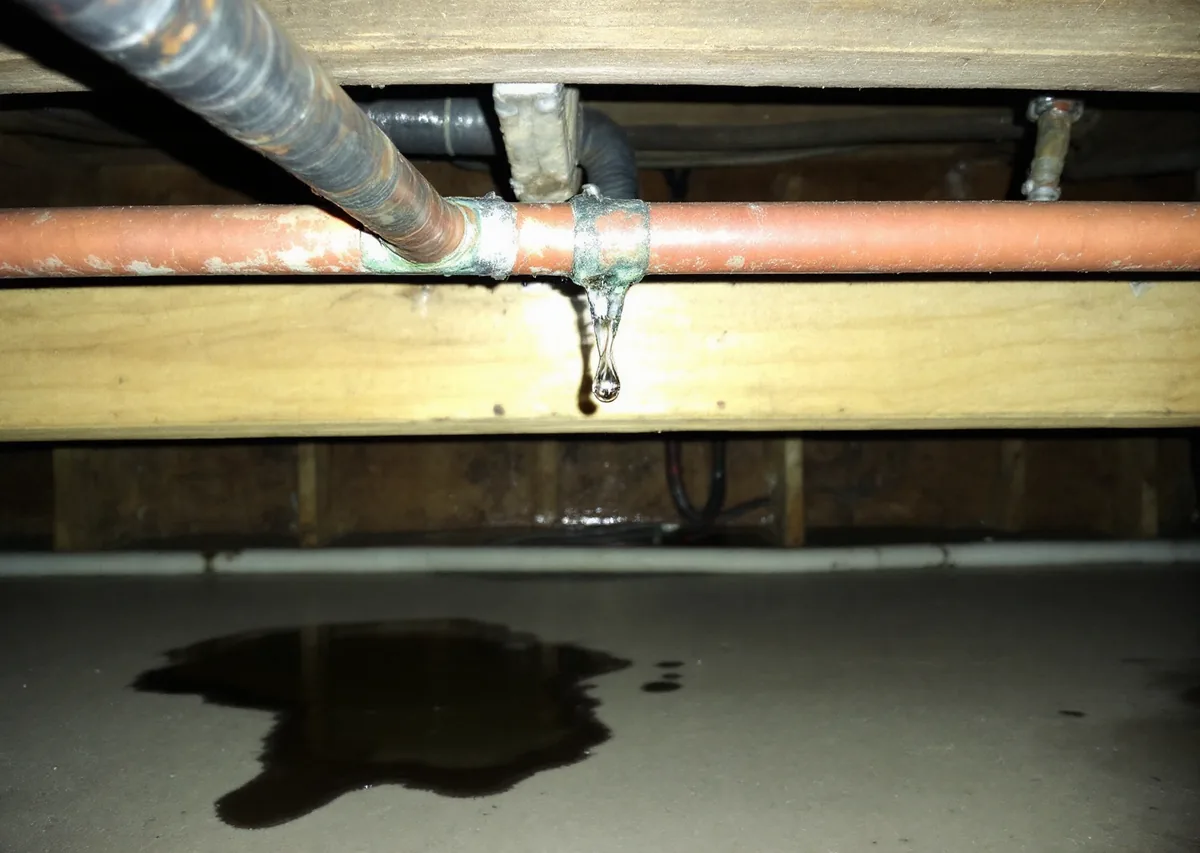
Pressure pipe or drain pipe: the first question, and the only urgent one
A house has two kinds of pipe. Supply pipes carry water under pressure from the street to every tap, hot and cold, and they are under that pressure every minute whether a tap is open or not. Drain pipes carry water away by gravity, and they hold nothing between uses. A leaking pipe belongs to one or the other, and the way to tell is the timing.
- It leaks constantly. A drip or a run that continues with every tap closed, that is there in the morning and still there at night, that stains a ceiling a little more each day. That is a supply pipe: a water pipe leaking under pressure, hot or cold. It will not stop, it leaks while you sleep, and the main shut-off is the next thing to touch. A hot water pipe leaking behaves the same and is easier to find, because the spot is warm.
- It leaks only when something drains. A drip under the sink when the basin empties, a wet ceiling after a shower, a puddle after a flush. That is a drain pipe or a fixture seal: no pressure, no flow between uses, nothing to shut off. A bucket, and a call in the morning at the regular rate.
- Why it matters for the next hour. A supply leak inside a wall or under a floor can move a great deal of water before it is found, and the only thing that stops it is closing the main. A drain leak moves only what you send down it, and stopping is as simple as not using the fixture.
- Why it matters for the bill. A supply leak in a finished wall is found with instruments and opened once; a drain leak is remade at a joint. The sections below take each place a pipe leaks in the order people search for them, and the tool sorts yours by these two questions and a third.
Right Now
The first five minutes
In order, and none of it needs a tool.
Close the nearest valve
Under a sink or behind a toilet there is a small shut-off on each supply line; close it if the leak is on that line. If the leak is in a wall, a ceiling, a basement run or under a floor, close the main shut-off, which is where the water enters the house — a basement wall, a crawlspace, a utility room, or a box near the street — and then open a low tap to let the pressure out of the pipes. If the main will not turn, do not force it; a seized main valve is a plumber's first job and the water utility can close the curb stop.
Catch and dry
A bucket under the drip; towels on the floor; anything porous moved out of the water. The section on the clock below says why the drying matters as much as the plumbing.
Photograph it
The drip, the stain, the wet cabinet, with something for scale, before anything is touched. If there is a claim later, this is the evidence of what was sudden.
Note the timing
Constant, or only when something drains. Which fixture. Hot or cold, if you can feel it. Those three facts on the phone shorten the visit.
What not to do
Do not tighten a corroded joint; it shears. Do not put a flame near anything. Do not seal a leak into a wall with caulk, which hides it. Do not run the water heater with the main closed if the hot line is the one leaking; a tank with no supply and a burner on is a different problem.
The Commonest
Under the sink: it is almost never the pipe
A pipe under the sink leaking is the most searched leak in a house, and the answer is that the pipe is fine. What leaks is a connection, and connections under a sink are designed to be undone by hand.
The slip nuts
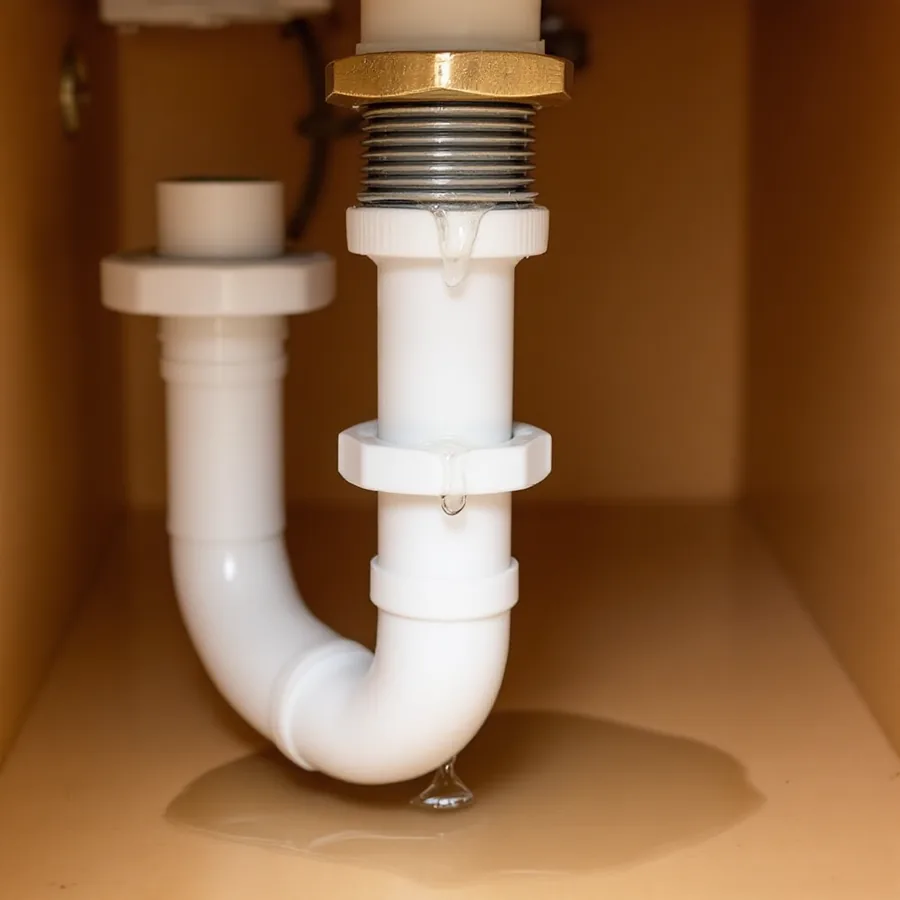
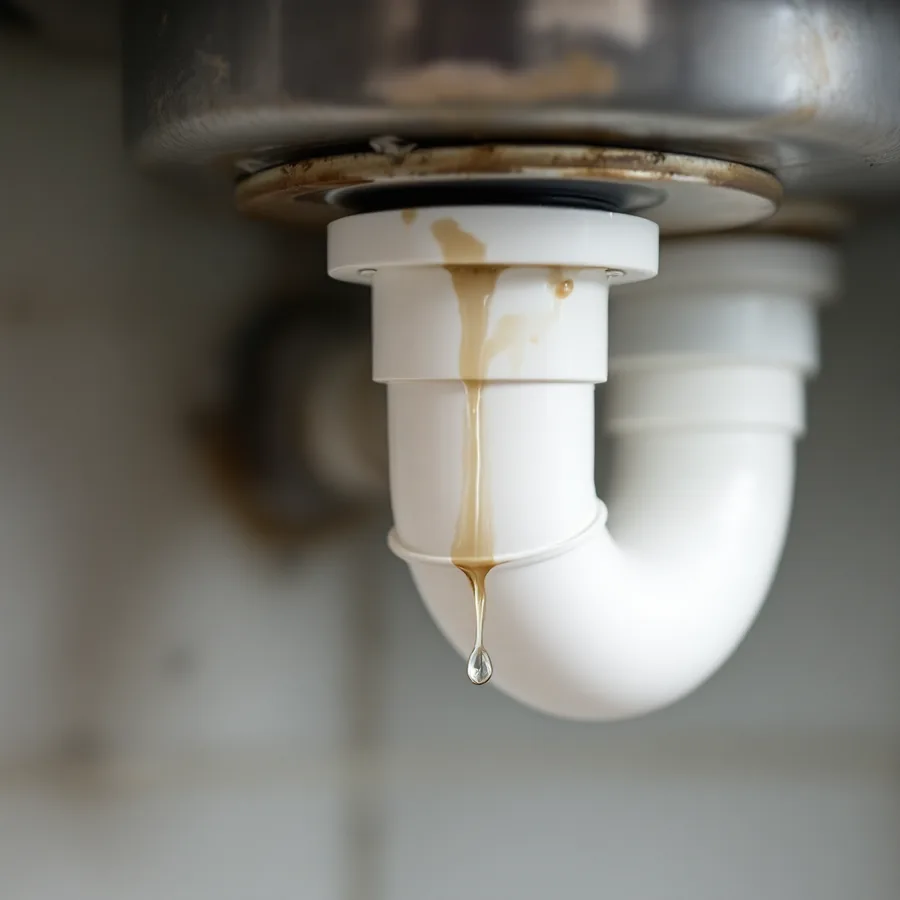
The trap and the tailpiece under a sink join with large plastic or chrome nuts that squeeze a tapered washer against the pipe. A sink drain pipe leaking at the connection is one of those nuts loose, cross-threaded, or holding a washer that was put in backwards or has hardened. Hand-tighten a quarter turn first. If it still weeps, undo it, look at the washer — taper toward the joint — reseat it, retighten by hand. No tools; a wrench cracks the nut.
The supply lines
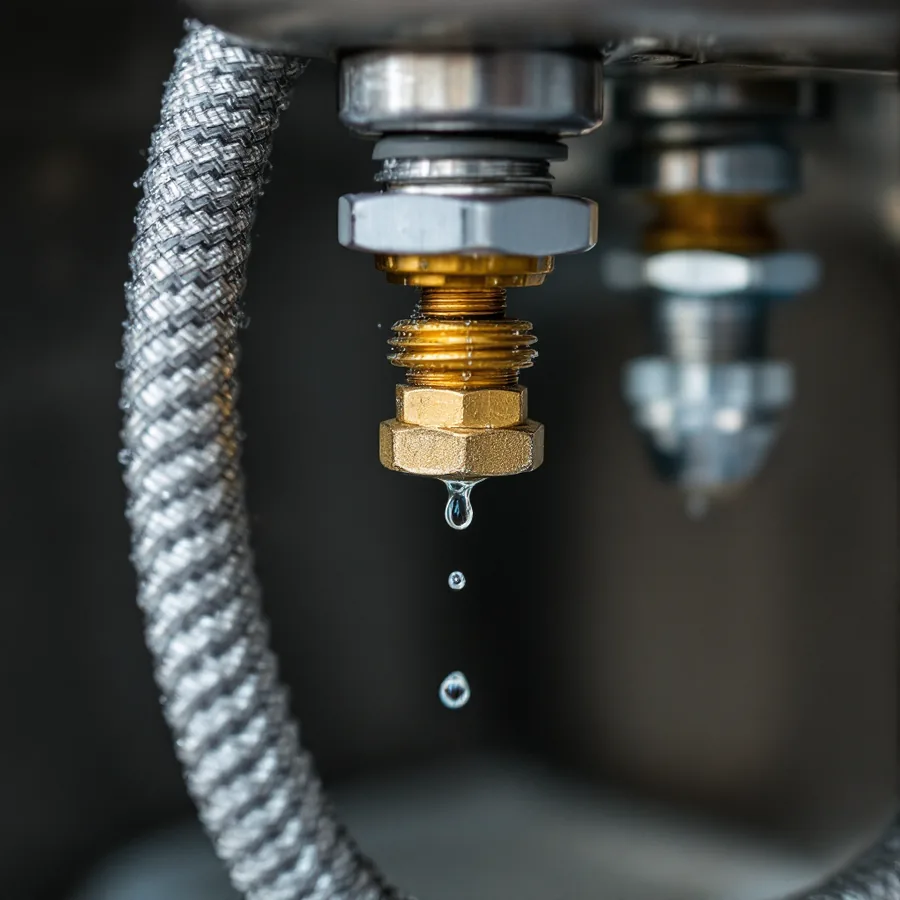
Two braided or plastic lines from the shut-off valves to the tap. A leaking pipe under the bathroom sink that leaks constantly, not only when the basin drains, is one of these, or the valve it connects to. The nut at either end is tightened gently; a line that still weeps is replaced with a new braided one, a hardware-store part sized by its two ends. A valve that drips from its stem when opened is packing, and a plumber's small job.
The kitchen: the disposal and the dishwasher hose
A kitchen sink pipe leaking adds two places: the rubber gasket where the disposal mounts to the sink, which leaks around the flange when the mounting ring has loosened, and the dishwasher drain hose where it clamps to the disposal or the tailpiece. Both are a screwdriver. A disposal leaking from its body, rather than its connections, is a disposal at the end of its life.
How to fix a leaking pipe under the sink, in order
Empty the cabinet. Dry every joint with a cloth. Run the tap and fill the basin, then let it drain, watching for the first bead. Constant with the tap off: supply line or valve. Only when draining: slip nut, washer or disposal gasket. Hand-tighten, reseat, replace the washer or the line. If the pipe itself is wet along its length, which is rare, it is a cracked trap or tailpiece and a new one costs little.
Plastic Drains
Drain pipes and glued joints: PVC, ABS and the joint that was never glued
A PVC pipe leaking at a glued joint is a joint that was not glued, or was glued wrong. Solvent cement does not leak; it welds. What leaks is what it was not applied to.
How a solvent joint works
Primer softens the plastic; cement dissolves the surfaces and the pipe is pushed home with a quarter turn; the surfaces fuse. Done right it is one piece of plastic. A joint that was dry-fitted and forgotten, cemented without primer, pushed in without the turn, or moved before it set is a joint held by friction, and it leaks the first time water sits in it.
Why it is not re-glued
Cement will not enter a joint that is already assembled. A PVC drain pipe leaking at a joint is cut out — the fitting and a short length of pipe on each side — and a new fitting is welded in with couplings. It is a morning's job at no pressure, and it is the one plastic repair a careful homeowner can do, with the right cement for the pipe: ABS and PVC take different products and a transition cement between them.
The drain pipe that leaks elsewhere
A drain pipe leaking along its length is a crack, usually from being stepped on, frozen with water in it, or over-tightened at a strap. It is cut out the same way. A drain that leaks at a rubber coupling is a loose band clamp, which is a screwdriver.
Behind The Wall
Shower and toilet: where the pipe is behind the wall
A shower pipe leaking or a toilet pipe leaking shows up in the room below, and each has a small number of places it can be.
The shower
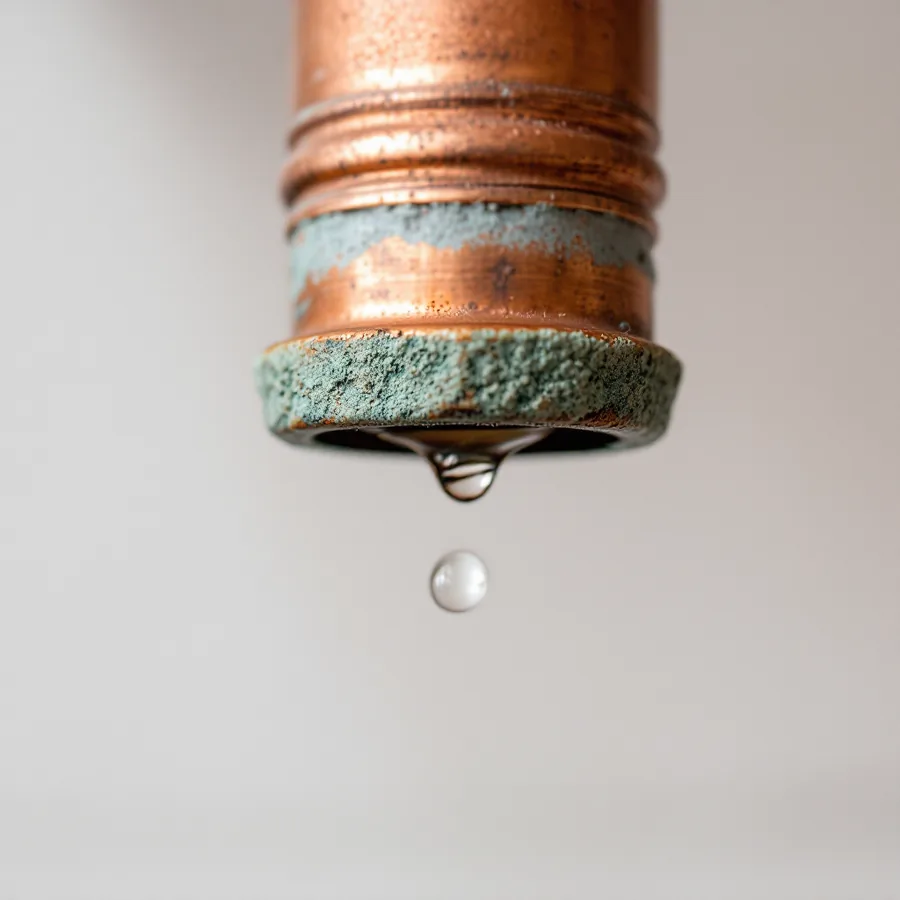
The shower arm, where it threads into the fitting in the wall, leaks behind the tile when the thread seal has failed and drips into the ceiling below every shower. The valve body behind the handle leaks constantly if it is on the supply side, or only when running if it is the cartridge. A tub spout that diverts to the shower leaks back into the wall when the diverter is worn. A shower pan or a tile grout leak is not a pipe at all and shows only when the shower is used. The timing test from the top of this page sorts these: constant is the valve's supply side; only when running is the arm, the spout, the cartridge or the pan.
The toilet
A toilet leaks at four places. The supply nut under the tank: constant, and hand-tightened or the line replaced. The tank-to-bowl bolts and gasket: only after a flush, and a new gasket. The wax ring where the bowl meets the floor: water at the base after a flush, sometimes a smell, and a lifted toilet with a new ring and a look at the flange, which if it is broken or set below the floor will leak again with any ring. The fill valve overflowing into the tank: not a leak at all, and the reason a toilet runs.
The ceiling stain
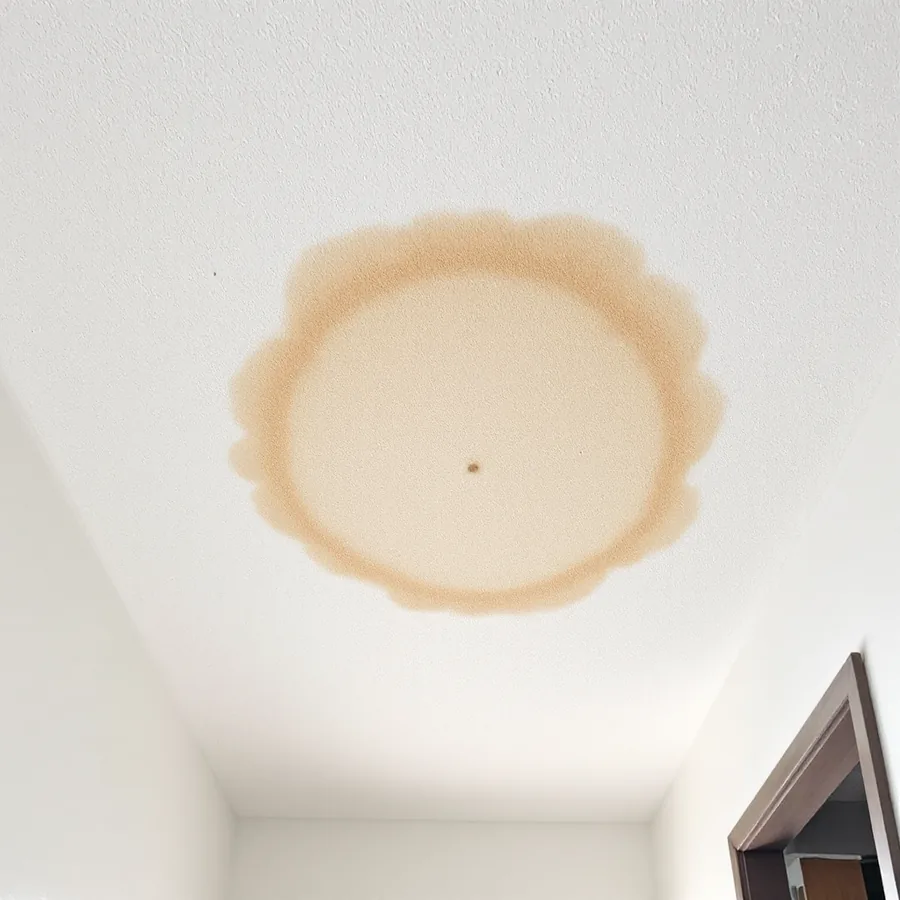
A stain on a ceiling under a bathroom is the sign, not the leak. It forms where water collects on the drywall, which is often not under the leak. The fixture directly above, used while somebody watches the stain, is the test; and a stain that grows with nothing running is a supply pipe and the main shut-off.
Finding It
In the wall and under the floor: finding a leak without opening everything
The cost to repair a leaking pipe in a wall is mostly the wall. How a plumber finds the leak decides how much wall.
The pressure test and the meter
With every tap closed, the water meter should be still. If it turns, water is leaving the system somewhere. Close the main, and the leak is on the house side if the meter stops; isolate the hot line at the heater, and it is on the hot side if the movement stops. A pressure gauge on a hose bib, with the main closed, drops if a supply line is leaking. Ten minutes of this halves the house before a single instrument comes out of the truck.
Acoustic, thermal, tracer gas
How does a plumber find a water leak underground or in a wall: a listening device amplifies the hiss of water escaping under pressure and locates it along the pipe; a thermal camera shows a hot line leaking as a warm patch on a floor or a wall and a cold line as a cool one; where neither works, a harmless tracer gas is put into the drained line and a sniffer follows it to the surface. A moisture meter on the wall then marks where to cut. None of these opens anything.
One hole
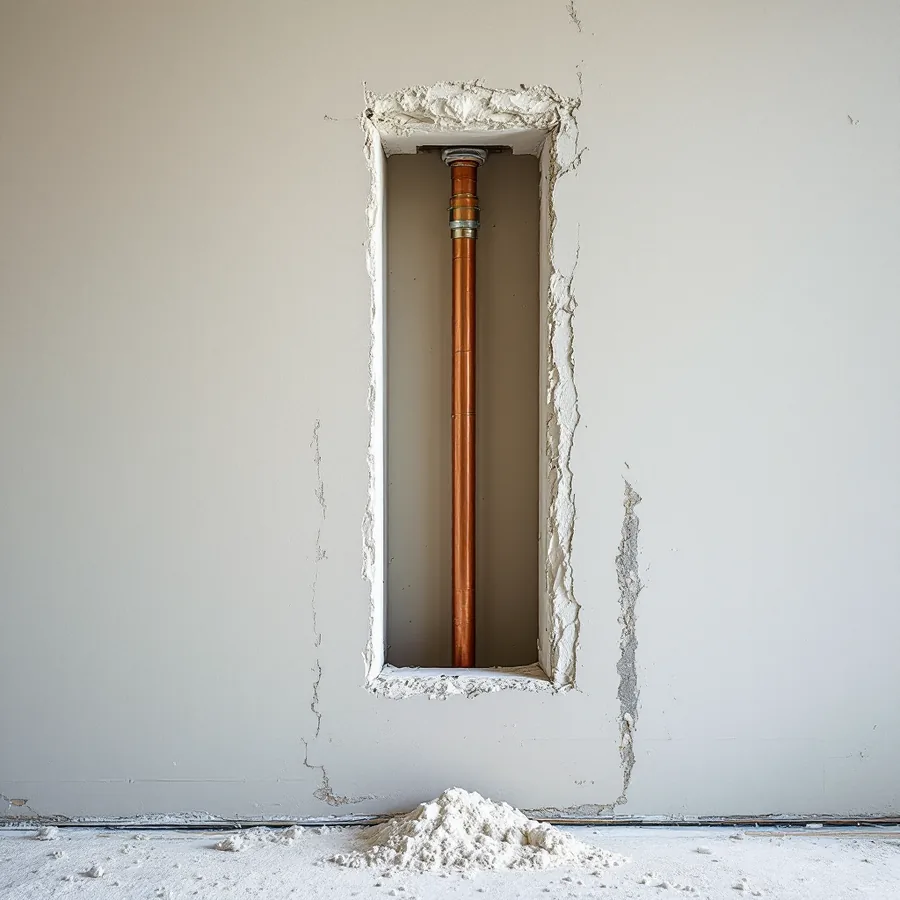
A leak located this way is opened in one place, repaired, and the wall is patched once. A leak looked for with a saw is opened in several. Pipe leaking in a basement, where the pipe is usually exposed, needs none of this and is the cheapest leak in the house to reach; the same pinhole in a finished wall upstairs is the same pipe repair with a wall around it, and the cost of the wall is a decorator's bill, not a plumber's.
The access panel
Where a wall is opened for a valve or a joint that may need reaching again, an access panel instead of a patch is a small cost and a large favour to the next leak.
Under Concrete
Under the slab: the leak you cannot see
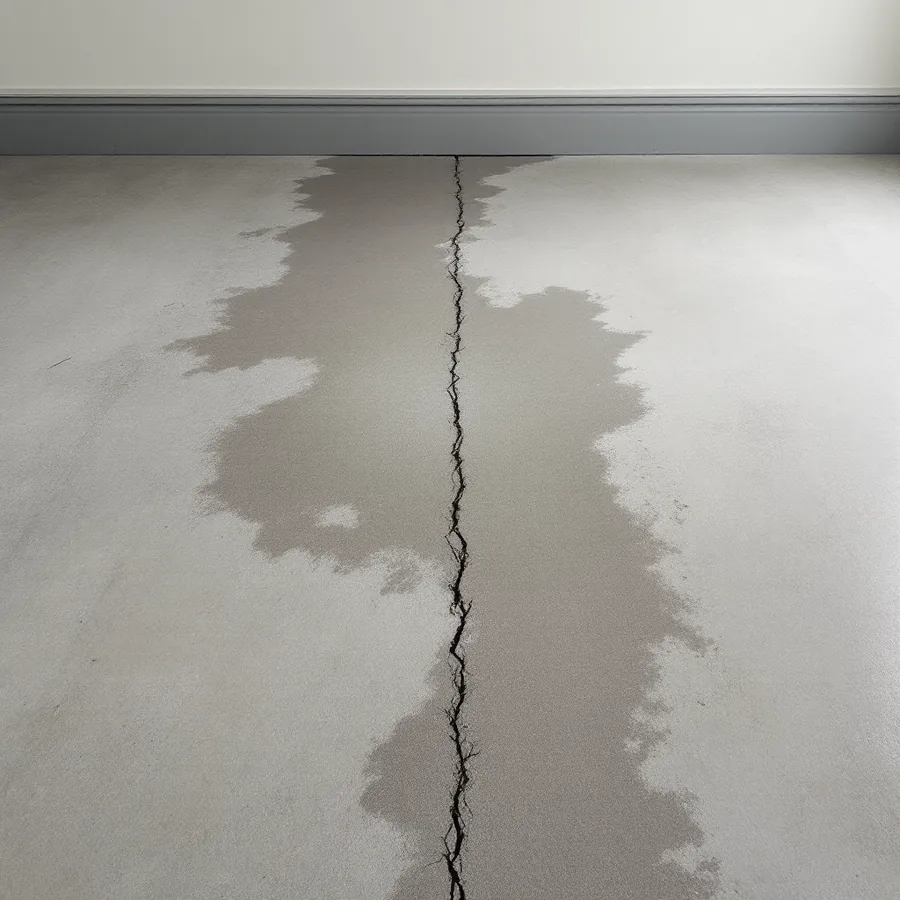
A leaking pipe under concrete is the one leak on this page that nobody finds by looking. It is found by its signs, then by instruments, and then the question is whether to open the floor at all.
The signs
A water bill that has risen with no change in use. A meter that turns with every tap closed. The sound of running water with nothing on. A warm patch on a floor, which is the hot line. A damp patch, a lifting floor covering, a crack that stays wet, or the sudden growth of one patch of lawn beside the house. A water heater that runs more than it used to, feeding a hot line that never stops losing water.
Finding it
The meter test and the hot-side isolation first, because they halve the search. Then acoustic listening along the line, thermal imaging for a hot line, and tracer gas where the slab is thick or the line deep. The result is a point on the floor with a depth, and a plumber who proposes to break the floor without one is proposing to look for a pipe with a hammer.
Repair, or reroute
The repair at the point is breaking the slab, exposing the line, replacing the section, and pouring the patch. The alternative, in many houses, is to abandon the leaking run under the slab and run a new line overhead, through the attic or along walls, which opens no concrete and takes the next slab leak out of the question. Which is better depends on the pipe: a single failure on sound copper is a spot repair; a second or third leak on the same run is a run that is failing, and rerouting it is the honest quote.
Work It Out
Sort your leak
Three questions, nothing sent anywhere. What comes out is whether this is a pressure leak or a drain leak, what to do in the first five minutes, what is yours to fix, what holds until morning and for how long, and the question to ask before anybody opens anything.
Our fee for an introduction is the same whether the answer is a washer reseated by hand or a slab opened, which is why this tool has a row for what is yours to do.
Until Morning
Temporary fixes: what holds until morning and what only looks like it does
How to stop a leaking pipe with water in it, honestly: you cannot, for long. What you can do is hold a small leak for hours, on the right kind of pipe, with the right thing, and know the difference.
The repair clamp
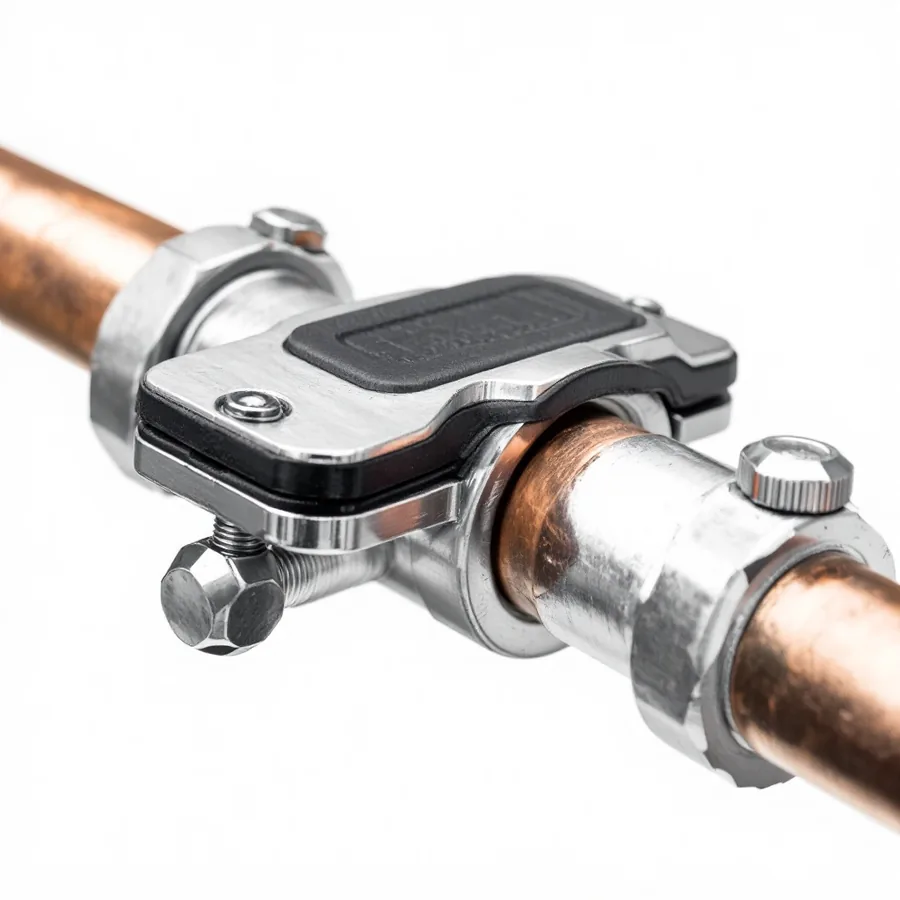
A two-piece metal clamp with a rubber pad, sized to the pipe's diameter, tightened over a pinhole or a short split. On copper or steel under pressure it holds a small leak for a night or a weekend, and it is the one temporary fix worth keeping in a drawer. It does not seal a fitting, a joint or a corroded section, and it does not seal well on plastic.
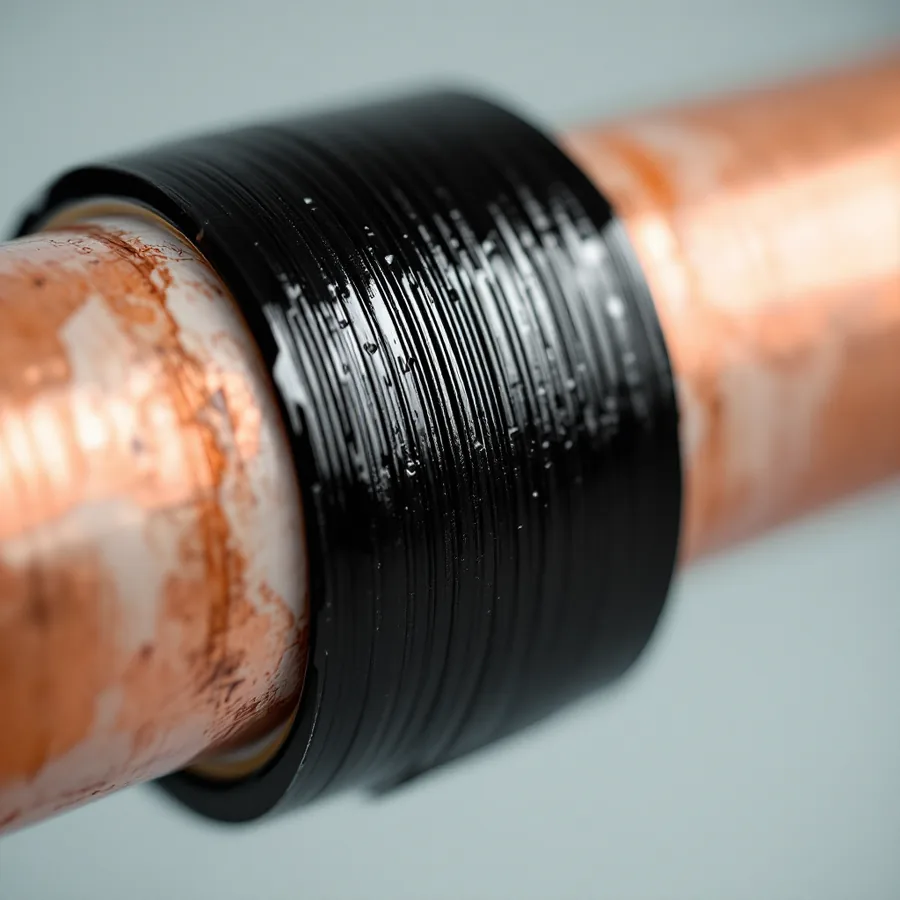
Self-fusing silicone tape
Stretched tightly around a weeping pipe, it bonds to itself and holds low pressure and small weeps for a while. Tape for a leaking pipe is this, not cloth tape or electrical tape, which hold nothing. It buys hours on a pinhole; it buys nothing on a spraying split.
Epoxy putty
Kneaded and pressed over a small hole on a dry, clean, depressurised pipe, it hardens and holds a small leak for longer than tape. It needs the water off and the pipe dry to work, so it is for a leak you have already stopped, not for one you are trying to.
How to fix a leaking pipe joint without replacing it
On a compression or slip joint: undo it, reseat or replace the washer, retighten. That is a real repair, and it is the only joint that is fixed without replacing anything. On a soldered, glued, crimped or threaded joint: it is not. A leaking solder joint is reheated and remade or cut out; a glued joint is cut out; a crimp fitting is cut out; a threaded steel joint that leaks is a thread that has corroded, and it is replaced. Anything wrapped around a leaking joint of those kinds is a delay, and the joint is leaking into the wall behind the wrap.
What none of them are
A repair. Every temporary fix on this page is measured in hours, and every one of them is on a pipe that a plumber will cut out on the visit. How to seal a leaking pipe permanently is the next section.
The Repair
Repairing a leaking pipe: what the plumber does, by material
How to repair a leaking pipe is a different procedure for each material in the house, and every one of them ends with the leaking section gone.
Copper
The section with the pinhole or the failed joint is cut out and a new piece is fitted with couplings, soldered or, increasingly, pressed with a tool that crimps a fitting onto the pipe without heat. A press fitting is the repair of choice inside a finished wall, because there is no flame near framing. A house whose copper is pinholing in several places at once has a water-chemistry problem or a pipe at the end of its life, and the conversation moves from a repair to a repipe.
Flexible plastic tubing
Cross-linked polyethylene tubing rarely fails along its length. It fails at a fitting that was not fully crimped or expanded, and occasionally where a rodent has bitten it. The fitting is cut out and a new one is made with the crimp or expansion tool for that system. It is fast, and it is a plumber's tool rather than a hardware-store one.
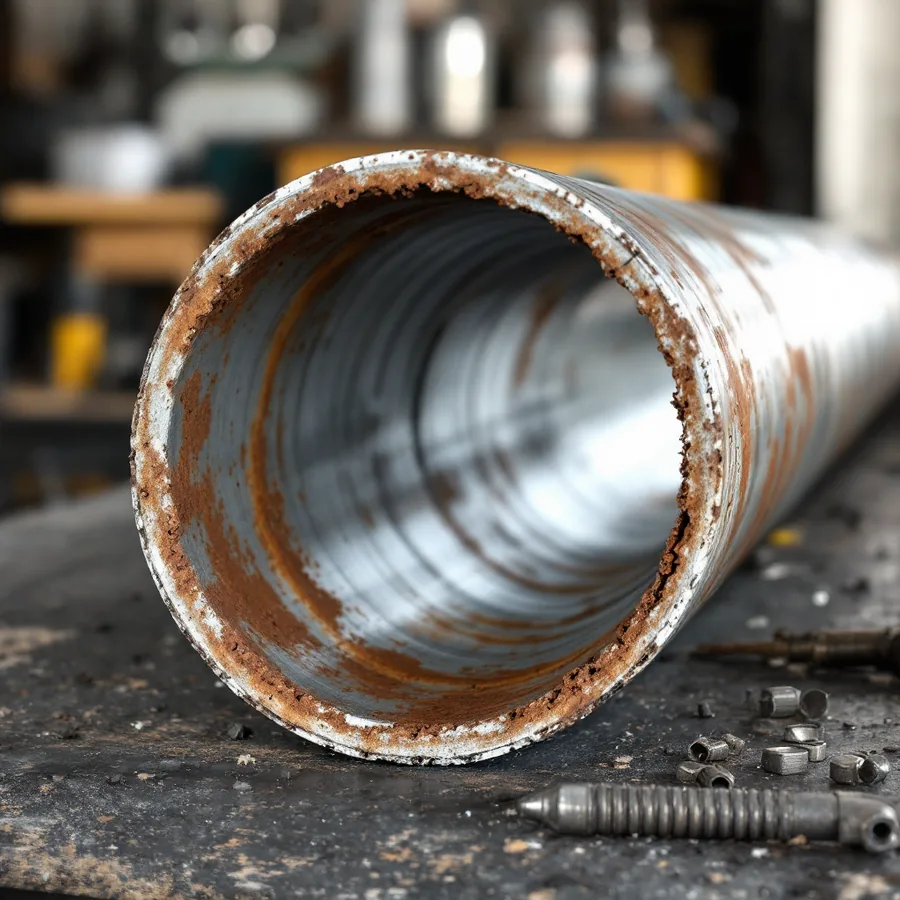
Galvanized steel
Old grey threaded pipe, corroding from the inside, leaks at joints where the wall has thinned to the thread. The joint is not tightened; it is unscrewed, with the risk that the next joint along shears, and the run is replaced, usually with copper or plastic tubing from a transition fitting. One galvanized leak is nearly always the first of several, and a repipe of the run is the honest quote.
Rigid plastic supply
Chlorinated PVC supply lines, common in some regions, leak at glued joints for the same reasons as drain plastic and become brittle with age. The section is cut out and re-welded. Brittle CPVC that cracks when touched is a repipe.
What the repair is not
A tightening of anything that has corroded. A wrap of anything around a joint. A sealant inside the pipe. Every product sold to fix a leak from the inside is a delay, and the section on the clock below says what the delay costs.
Older Houses
Old pipes and lead: the EPA on houses built before 1986
A leak in an old house is a leak and, sometimes, a second question that the repair is a chance to answer.
What the EPA says
“Lead pipes are more likely to be found in older cities and homes built before 1986.” And, on how lead reaches the tap: “Lead can enter drinking water when plumbing materials that contain lead corrode, especially where the water has high acidity or low mineral content that corrodes pipes and fixtures.” In most houses the pipes themselves are not lead; the agency's next sentence names where the lead usually is: “Among homes without lead service lines, the most common problem is with brass or chrome-plated brass faucets and plumbing with lead solder.”
What that means for a repair
A soldered copper joint in a house built before 1986 was, more often than not, made with lead solder, which has been prohibited for drinking water since. A leaking joint of that age that is remade is remade lead-free, and the repair is a chance to ask what solder is being used. A galvanized run being replaced is a chance to look at the service line where it enters the house. Neither is the plumber's fault to raise; both are yours to ask, and the EPA's page linked below says how to have the water tested.
The repipe conversation
A house whose pipes leak at several places in a year is a house whose pipes are done. Galvanized steel from the mid-century, thin-walled copper in aggressive water, grey polybutylene tubing from the late 1970s to the mid-1990s that fails at its fittings: each is replaced as a run or a house rather than a joint at a time, and the third leak is the moment to price it calmly rather than the fifth to price it wet.
Winter
Frozen and burst: thawing by the federal weather service, and what a plumber can do the same day
Can a plumber fix frozen pipes, and can a plumber fix a burst pipe the same day? Yes to both, in the order that stops the water first.
Thawing, in the National Weather Service's words
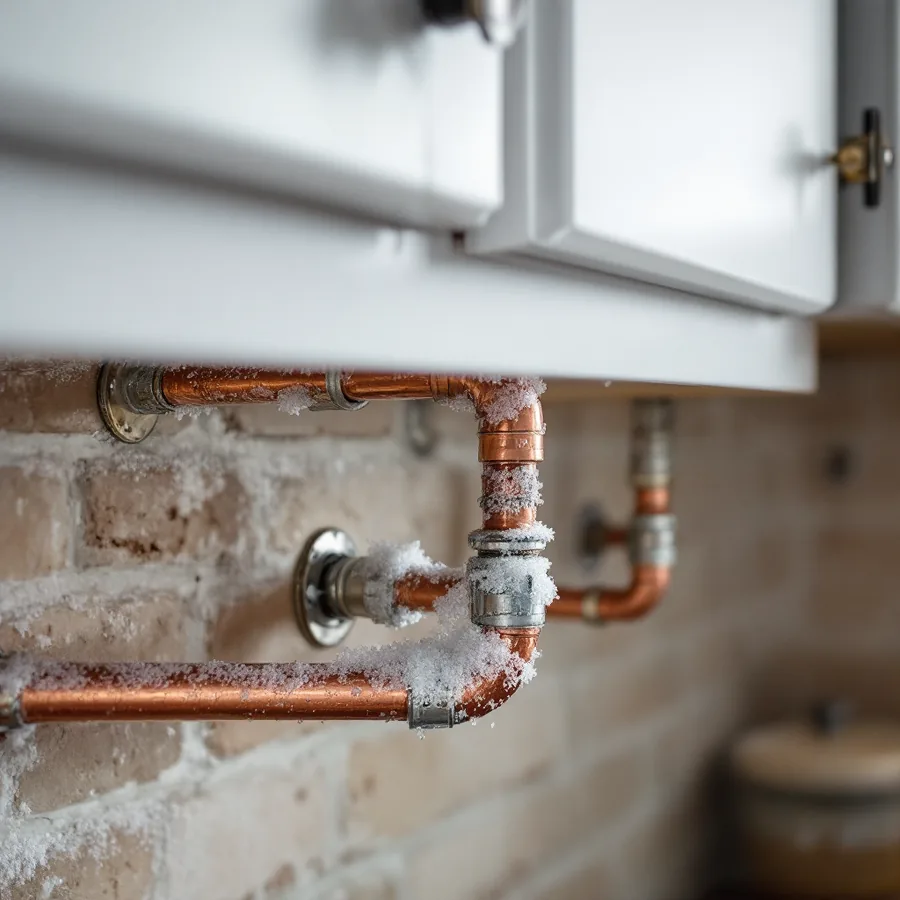
The service's cold-weather guidance is short and specific. “If they are frozen, first turn on the faucet. Water will drip as you warm the pipes.” “Heat the pipes using a space heater, heating pad, electric hair dryer, or hot water on a cloth.” And the one rule that matters most: “Never use an open flame.” Start at the tap end and work toward the frozen section, so that melting water has somewhere to go. If the pipe has already split, the leak begins as it thaws, which is why the main shut-off is closed before thawing begins and opened afterward with somebody watching.
Preventing it, in the same words
“When you're expecting very cold temperatures, leave water taps on a drip to prevent freezing.” “Allow heat to reach your pipes by leaving cabinet doors open.” Moving water freezes later than still water, and a cabinet against an outside wall is the coldest place a pipe runs inside a house.
The burst pipe, and the same day
A pipe that has frozen and split is a supply leak the moment it thaws: close the main, open a low tap, and call. A plumber can find the split, cut it out and repair it the same day in most cases, because the location is usually obvious and the repair is the copper or tubing procedure above. What takes longer is a split inside a finished wall that has to be located, and a cold snap that has burst pipes across a whole town, when every plumber is on the road. The water that came out, and drying what it reached, is a separate problem from the pipe, and the section on the clock says why it cannot wait for the plumber.
The Water
The water, the mould and the clock
Two federal figures, one about what a leak wastes and one about how long the wet material can wait.
What a slow leak wastes
The EPA's WaterSense program: “The average family can waste 180 gallons per week, or 9,400 gallons of water annually, from household leaks.” A weeping joint under a sink is part of that number, and it is also the cheapest part of it to end, which is the point of the under-sink section above.
How long the wet material has
The EPA's guide to mould in the home: “If wet or damp materials or areas are dried 24-48 hours after a leak or spill happens, in most cases mold will not grow.” That is the window for the cabinet floor, the drywall, the subfloor and the carpet that the leak reached. It runs from the moment the water arrived, not from the plumber's visit, and it is why towels, a fan and moving what is wet out of the way come before the phone call. The same guide on the other half: “If you clean up the mold, but don't fix the water problem, then, most likely, the mold problem will come back.” The pipe is the water problem; the drying is the other job, and neither substitutes for the other.
The Policy
Insurance: what the federal flood program says about a broken pipe
Does home insurance cover leaking pipe damage: the answer has a structure, and one federal sentence that removes a common misunderstanding.
Not a flood
The National Flood Insurance Program defines a flood as “A general and temporary condition of partial or complete inundation of two or more acres of normally dry land area or of two or more properties (one of which is your property)”, and says of a burst pipe directly: “Water damage from a source inside a residence (like a broken pipe or water heater) may be covered by a homeowners or renters policy -- but not by flood insurance.” A household with a flood policy because it is in a flood zone has no cover for a leaking pipe under that policy.
The homeowners policy, as a structure
The usual shape, which varies by insurer and by state and is not a promise about yours: sudden and accidental water damage from a pipe — a burst, a fitting that let go — is generally covered for the damage the water did to the house, less the deductible. The pipe itself, and the repair of it, generally is not. Damage from a leak that went on for weeks or months, that could have been noticed and was not, is generally excluded as gradual, which is what the photograph in the first five minutes is for. The leaking pipe in wall homeowners insurance question turns on the same distinction, plus one more: the cost of opening the wall to reach a covered leak is often covered, and the cost of repairing the pipe found there is often not.
What to do before calling the insurer
Stop the water, photograph everything, keep the failed part when the plumber removes it, and get the plumber's written finding of what failed and why. The word “sudden” on that paper is worth more than anything else on it.
Money
What it costs to repair a leaking pipe, and what moves it
No national averages, by policy. What is being priced when a pipe is repaired, so that a quote can be read.
- Access is most of it. An exposed pipe in a basement is the visit and a fitting. The same pipe in a finished wall is the visit, the locating, the opening, the fitting, and somebody else's bill for the wall. Pipe leaking in basement cost and cost to repair a leaking pipe in wall are the same pipe repair with a wall between them.
- Pressure or drain. A supply repair is a shut-off, a drain-down and a pressure test afterward; a drain repair is a cut and a glue at no pressure. The second is shorter.
- The material. Copper is cut and soldered or pressed; tubing is cut and crimped; galvanized is unscrewed with the risk of the next joint, and often becomes a run. Old material costs more to repair because it fails again.
- Locating. A pressure test and a meter check are minutes. Acoustic, thermal and tracer-gas locating are a service of their own, priced separately, and worth every dollar against a second hole in the wall.
- After hours. Multiplies the visit, not the fitting. A supply leak with the main closed can usually wait for morning; the section on what an emergency actually is says how to split the call.
- The slab. Locating, then either the floor opened and patched or the line rerouted; two quotes for the same leak, and the reroute is often the smaller one over ten years.
Before Anyone Opens A Wall
What to ask before anyone opens a wall
Five questions that separate a company that found the leak from one that is looking for it.
| Ask | What it tests | A weak answer |
|---|---|---|
| Is this a supply leak or a drain leak, and how do you know? | Whether the first question on this page was asked. | “We’ll see when we open it.” |
| How will you locate it before cutting, and how many places will you open? | Whether instruments or a saw are doing the finding. | “We’ll start where the stain is.” |
| What is the pipe, and is this one failure or a run that is failing? | Whether a repair or a repipe is the honest quote. | A price for the joint with no word on the rest. |
| On a house from before 1986: what solder are you using, and did you see any lead? | Whether they know the EPA's point about old joints. | “Doesn’t matter for a repair.” |
| Will you write down what failed and why, and leave me the part? | Whether there will be evidence for a claim. | “It just went.” |
What we do, and what we do not
We are not a plumber and we do not dry houses. We are paid a fixed fee for an introduction — the same for a washer under a sink and a slab reroute — which is why this page spends its first sections on the leaks that need nobody. When you want somebody to find the one that does, we connect you with independent licensed and insured plumbing companies. Who pays us and how is on our about page, and the rest of what we publish starts from the home page.
Straight Answers
Leaking pipe questions, answered
How do I stop a leaking pipe with water in it?
Close the nearest shut-off, or the main, and open a low tap to relieve the pressure; that is the only thing that stops water in a pressure pipe. A repair clamp with a rubber pad holds a pinhole in copper or steel for a night once the pressure is back on; self-fusing silicone tape holds a weep for hours. Neither is a repair, and neither works on a corroded joint or on plastic.
Does tape fix a leaking pipe?
Self-fusing silicone tape holds a small weep on a metal pipe for hours. Cloth, electrical and plumber's thread tape hold nothing. Any tape on a leaking joint is a delay while the joint leaks behind it; a leaking joint is remade or cut out.
Does home insurance cover a leaking pipe?
Not flood insurance: NFIP says water damage from a source inside a residence, like a broken pipe or water heater, may be covered by a homeowners policy but not by flood insurance. A homeowners policy generally covers sudden and accidental water damage to the house and not the pipe repair itself, and generally excludes damage from a leak that went on for weeks. Photograph everything, keep the failed part, and get the plumber's written finding.
Can a plumber fix a frozen pipe?
Yes, and the National Weather Service's thawing guidance is what a homeowner can do first: open the faucet, warm the pipe with a hair dryer, a heating pad or hot cloths, and never use an open flame. Close the main before thawing a pipe that may have split, because the leak begins when the ice melts. A plumber locates and cuts out a split section the same day in most cases.
How does a plumber find a leak underground or in a wall?
A meter test with every tap closed, then isolating the hot side, then instruments: a listening device for the hiss of escaping water, a thermal camera for a hot or cold line, tracer gas where those cannot reach, and a moisture meter to mark the cut. A leak found this way is opened in one place.
Why is my pipe under the sink leaking at the connection?
Because a slip nut is loose or its washer is worn or backwards, or a supply-line nut has weeped. Hand-tighten a quarter turn; if it still leaks, undo it, reseat the washer with its taper toward the joint, and retighten by hand. A supply line that keeps weeping is replaced with a new braided one.
Should I repair the pipe or repipe the house?
One pinhole in sound copper, one bad crimp on tubing, one unglued plastic joint: repair. A galvanized joint that leaks, copper pinholing in several places in a year, grey polybutylene tubing failing at its fittings: the run or the house, priced calmly after the second leak rather than urgently after the fifth.
Where This Comes From
Sources
- A broken pipe is not a flood, and the definition of a flood — FEMA, National Flood Insurance Program: What is a Flood?.
- Lead pipes, lead solder and houses built before 1986 — U.S. Environmental Protection Agency, Basic Information about Lead in Drinking Water.
- Thawing a frozen pipe — National Weather Service, Essential Tasks After it Warms Up.
- Preventing frozen pipes — National Weather Service, Emergency Preparedness: Winter Weather.
- What household leaks waste — EPA WaterSense, statistics and facts.
- The 24 to 48 hour drying window — U.S. Environmental Protection Agency, A Brief Guide to Mold, Moisture and Your Home.
Our editorial standards explain how we source and check what we publish. Every quotation on this page is taken from the federal page linked beside it; the description of homeowners cover is a structure, not a statement about any policy; and we publish no price averages. We are a referral service rather than a plumber. Last updated .
Before you call anyone
The flat-fee match — we are paid for the introduction, not for the size of your job
Most plumbing advice is written by the company that wants to do the work. That is not a failing of the people who read it; it is a defect in who is talking: the diagnosis, the estimate and the invoice come from one party, and no amount of care on your side fixes that.
We are built the other way round. We do not repair, install or sell anything, so the payment reaches us when you are connected to a licensed, insured plumbing company — the same amount whether you need a two-dollar flapper or a new water heater. Nobody here has a reason to talk you into the larger number. You can check that rather than take it on trust: how we make money is written down, and this site keeps telling readers when not to buy. Why does not everyone work this way? Because a flat fee leaves money on the table every time the job turns out to be big.
Waiting is the one thing that actually costs money. A water heater that is leaking from the tank does not get better and does not wait for a convenient week; the water it lets go finds the floor, the drywall and whatever is stored below. A drain that backs up once backs up again, and the second time it is sewage. And if it turns out to be a flapper or a reset button, say so on the call. We will tell you, and that call earns us nothing.
Not for you if: you want a price over the phone — nobody honest gives one without seeing the pipe; you need a guarantee of arrival within the hour — we cannot promise that for a company we do not run; the building is commercial; or you would rather do it yourself, in which case the pages on this site are written so that you can.