Water Heater Leaking
Water heater leaking, where the water comes from decides what it is
Top, side, the overflow pipe, or the bottom. Those four places are four different problems with four different answers, and one of them is not a leak at all. This page is built the way a good plumber looks at the heater: from the location first, then the cause, then whether it is a fitting or a new tank. It also spends a section on the part nobody in the search results covers, why the water on the floor can be a burn hazard, in the federal agency's own numbers.
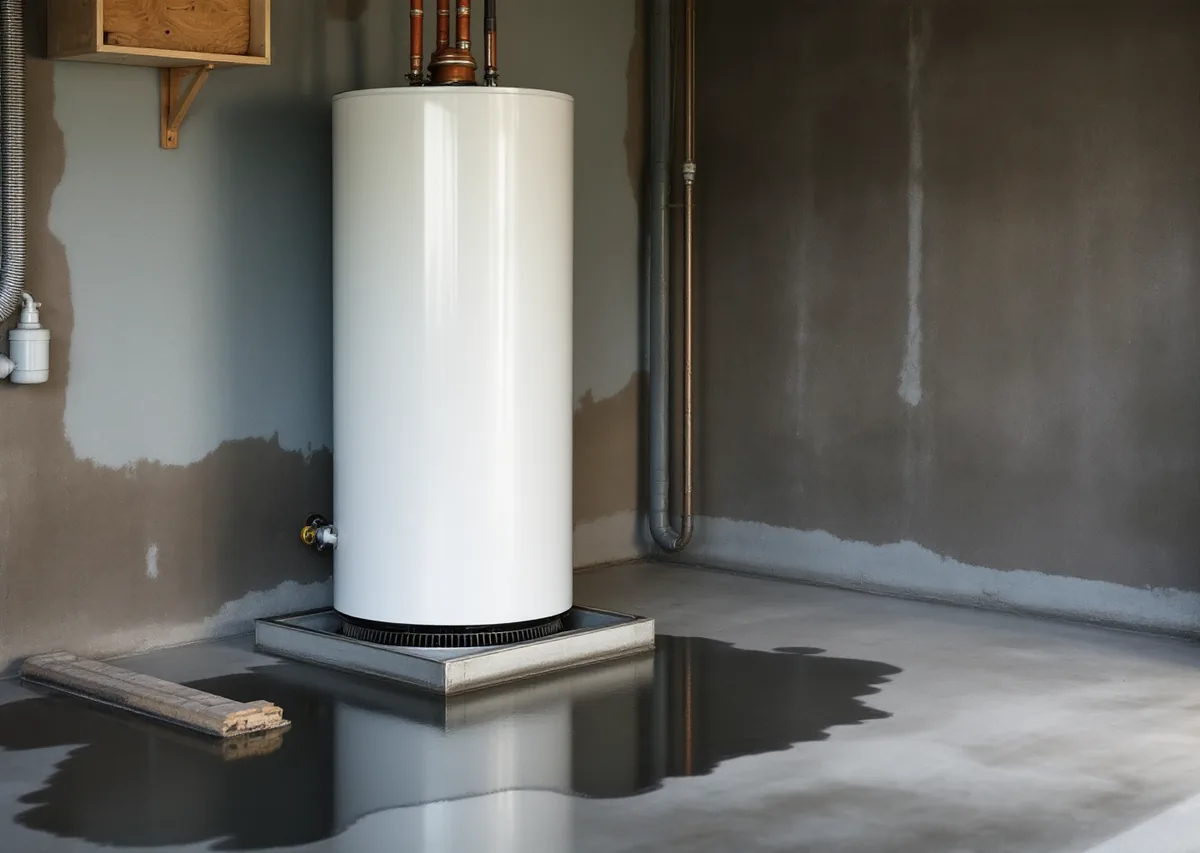
Where the water is coming from decides everything
A water heater is a steel tank with fittings on top, two valves on the side, a burner or elements at the base, and a drain at the bottom. Every one of those can let water out, and they do it for completely different reasons at completely different prices. Search results list eight or ten causes in a row and leave you to match them to your puddle; the faster method is to dry the heater with a towel, watch where the first drop reappears, and read the section for that place.
- Top. Fittings and connectors. Water runs down the outside of the tank and pools at the base, which is why a top leak is so often mistaken for a tank leak. Usually a small repair.
- Side. The relief valve or the drain valve. Both are made to let water out, so both can weep. Usually a valve.
- The overflow pipe. Not a leak. The relief valve doing its job because the tank is over temperature or over pressure. A diagnosis, and the one place where fixing the wrong thing is dangerous.
- Bottom. Either the drain valve running down, or the tank has rusted through. The second one has no repair, and telling the two apart is the whole job.
From The Top
Leaking from the top: the fittings, and usually a repair
Four things enter or leave the tank through its top, and every one of them is a threaded joint that can weep.
The cold inlet and the hot outlet
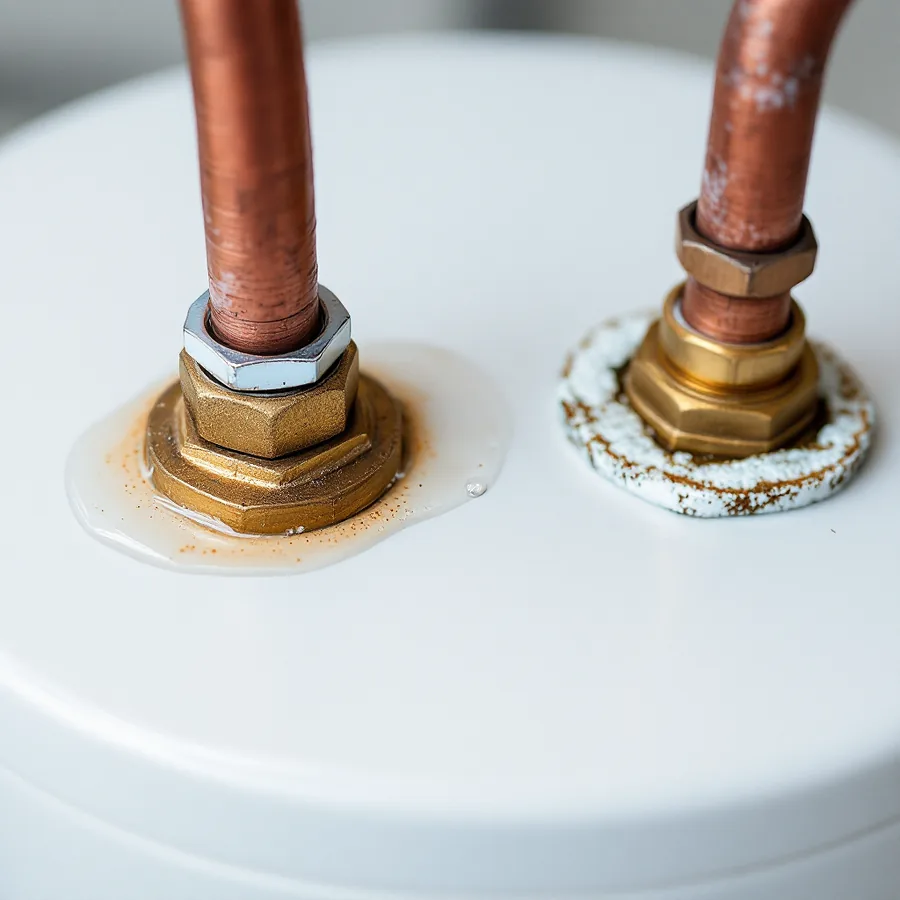
Two pipes, one bringing cold water in and one taking hot water out, each joined to the tank with a nipple and usually a flexible connector or a union. A drip here is the commonest top leak and the cheapest: a fitting is re-made or replaced. The tell is water on the top of the tank, or a white or green crust of mineral around a joint where a slow weep has been evaporating for months.
The dielectric nipples
Where copper pipe meets a steel tank, a plastic-lined nipple keeps the two metals from corroding each other. When it fails, the corrosion it was preventing arrives at the joint and it leaks. Replacing it is routine; the price of the part is small and the labor is the drain-down.
The anode rod port
A hex head on top of the tank covers the sacrificial anode, a rod that corrodes so the tank does not. A weep at that port is a gasket, and if the rod has to come out to fix it, this is the moment to ask how much rod is left, a consumed anode is the reason tanks rust from the inside.
The flue, on a gas heater
Water running down a gas heater from the top can also be condensation inside the flue on a cold start, or rain coming down a chimney that is not capped. Neither is the heater's fault, and both look like a top leak until you follow the water upward.
From The Side
Leaking from the side: the relief valve and the drain valve
Two valves, both designed to open. The question is whether one is weeping at its seat, or opening on purpose.
The temperature-and-pressure relief valve
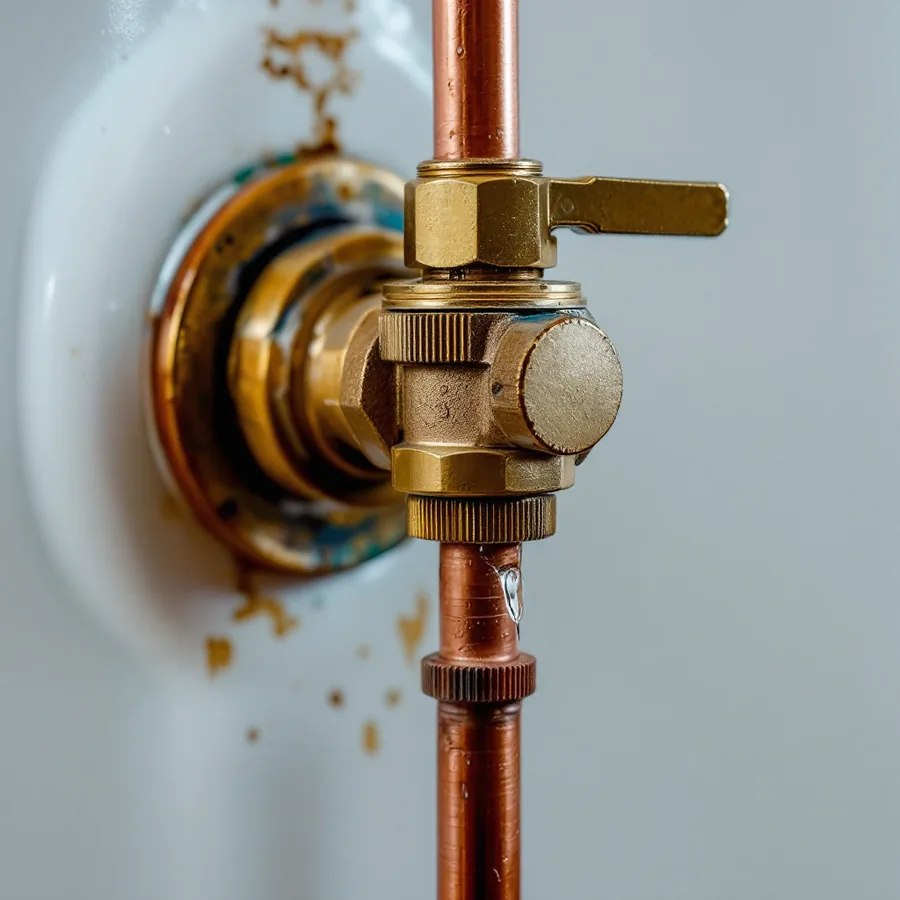
Part way up the side, with a lever and a pipe running down from it. If it drips from the body of the valve while nothing else is happening, the seat is worn and the valve is replaced, it is not a part that gets repaired. If water is coming out of the pipe below it in a run rather than a drip, that is a different matter with its own section next.
The drain valve
Near the bottom of the side, a small tap for emptying the tank. On many heaters it is plastic, and plastic drain valves weep after a few years or after the first time somebody opens one to flush the tank. It is replaced with a brass one; it is inexpensive; and a weep here running down the side is the single most common thing mistaken for a tank leak at the bottom.
The test that separates them
A dry paper towel under each valve. Whichever wets first is the leak. If neither wets and the puddle is still growing, the water is coming from somewhere the towels are not, and the bottom section applies.
What never to do to either valve
Cap the drain valve with a hose cap if you must, briefly. Never cap, plug or screw down the relief valve. It is the only thing between an overheating tank and a pressure the tank was not built for, and a tank that cannot relieve pressure fails in the worst way a tank can fail.
The Overflow Pipe
The overflow pipe is not a leak, it is a warning
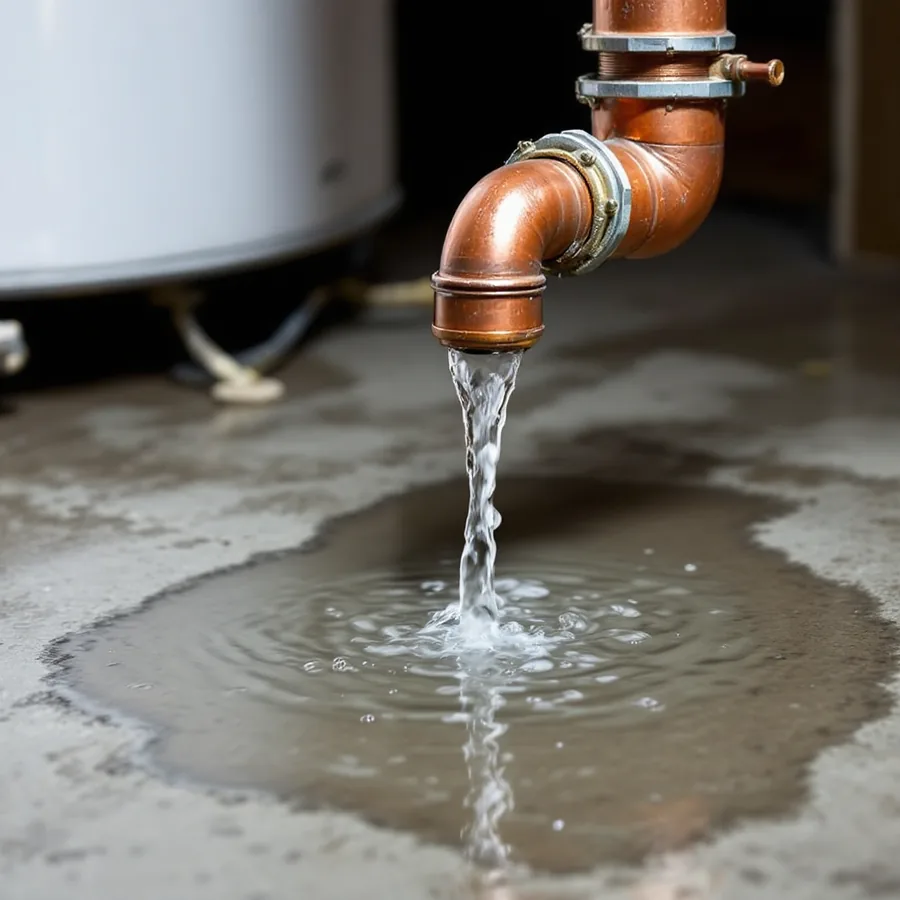
The pipe running down from the relief valve is called the overflow pipe by almost everyone who searches for it. Water coming out of it means the valve opened, and the valve opens for two reasons only.
Reason one: temperature
The relief valve opens if the water inside approaches boiling. A thermostat set too high, or a thermostat that has failed and keeps heating, gets a tank there. CPSC's guidance for household water heaters is a setting of 120 degrees Fahrenheit; a tank running far above that is both a scald hazard at every tap and a candidate for opening its own relief valve.
Reason two: pressure
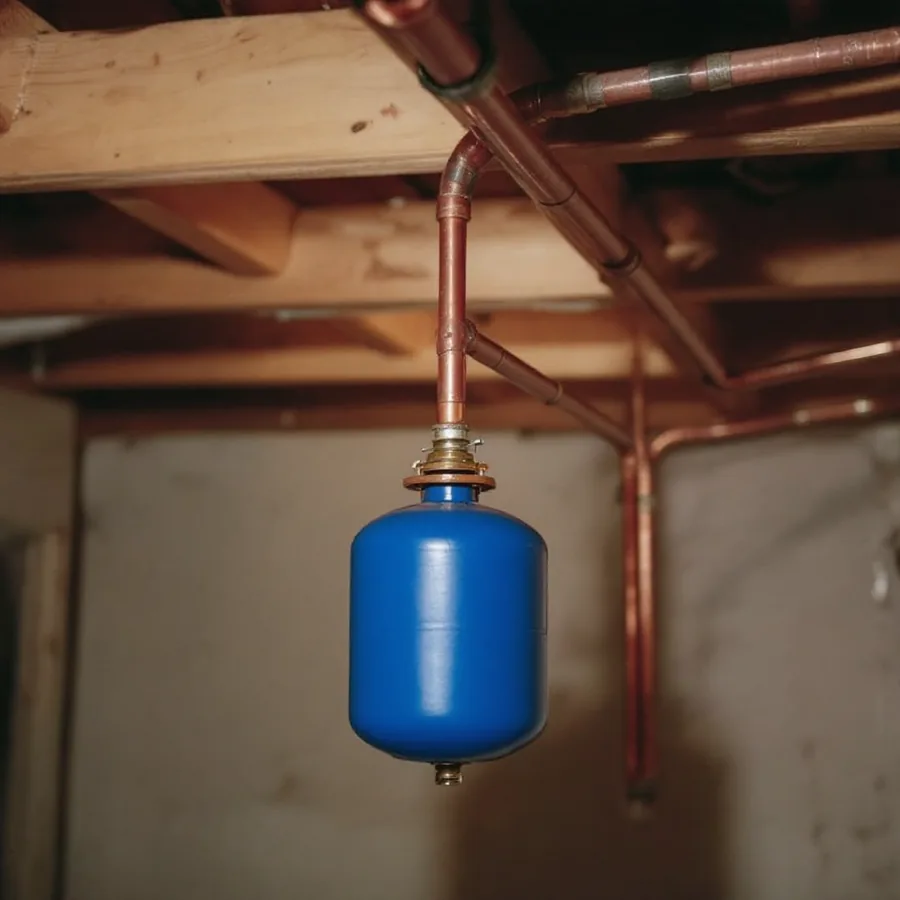
Water expands when it is heated. In an older house that expansion pushed back into the street main. In a house with a check valve or a pressure regulator on the supply, most newer houses, and any house that has had a backflow device fitted, there is nowhere for it to go, and the pressure rises every heating cycle until the relief valve lets some out. The fix is an expansion tank, a small bladder tank on the cold line that gives the expanding water somewhere to go. It is not expensive and it is missing from a remarkable number of installations.
Why replacing the valve does not fix it
A new relief valve on a system that is over pressure opens exactly as the old one did, because it is doing what it is for. If a plumber replaces the valve without asking about pressure, the thermostat or an expansion tank, the water will be back in the pipe within the week and the invoice will still be real.
The other cause worth naming
A failed pressure-reducing valve on the house supply lets full street pressure into the house, and the relief valve on the heater is often the first place it shows. If taps have started hammering or the shower is suddenly fierce, the heater is reporting a house-wide problem.
From The Bottom
Leaking from the bottom: what it almost always means
The most-searched version of this problem, and the one with the least room for optimism.
First, rule out the drain valve
A weeping drain valve runs down the side and pools underneath, and from across the room that is indistinguishable from a tank leak. The paper-towel test in the section above settles it in an hour. If the drain valve is dry and water is still appearing at the base, read on.
Then, the tank
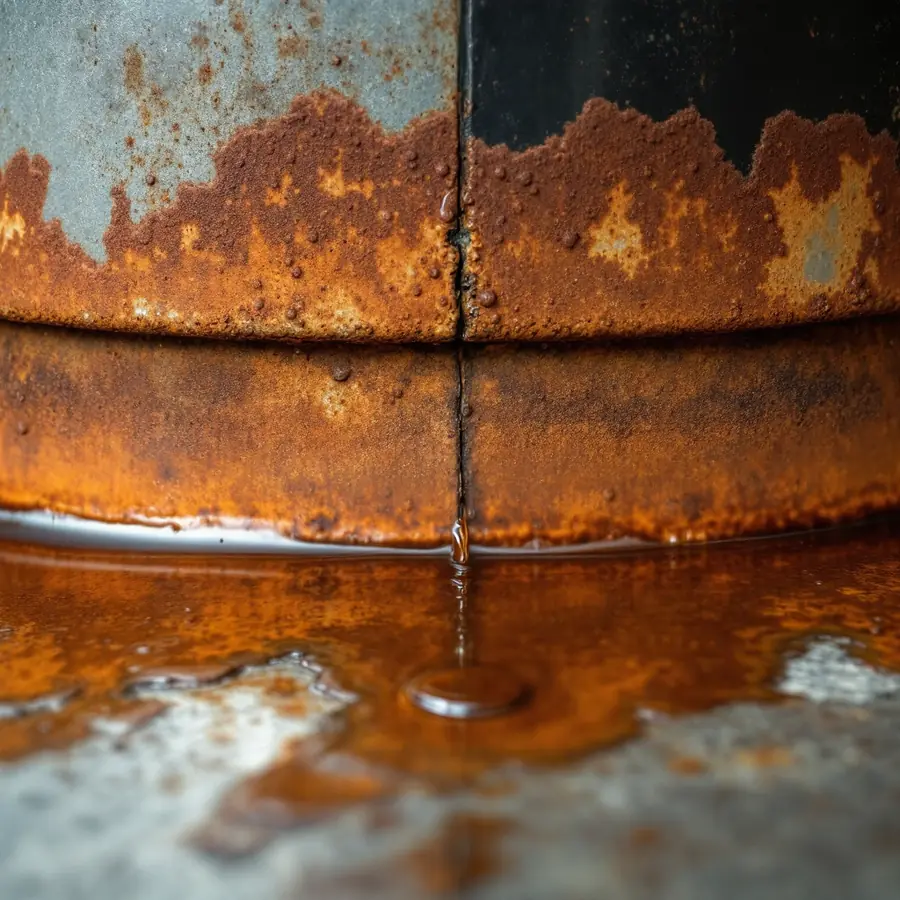
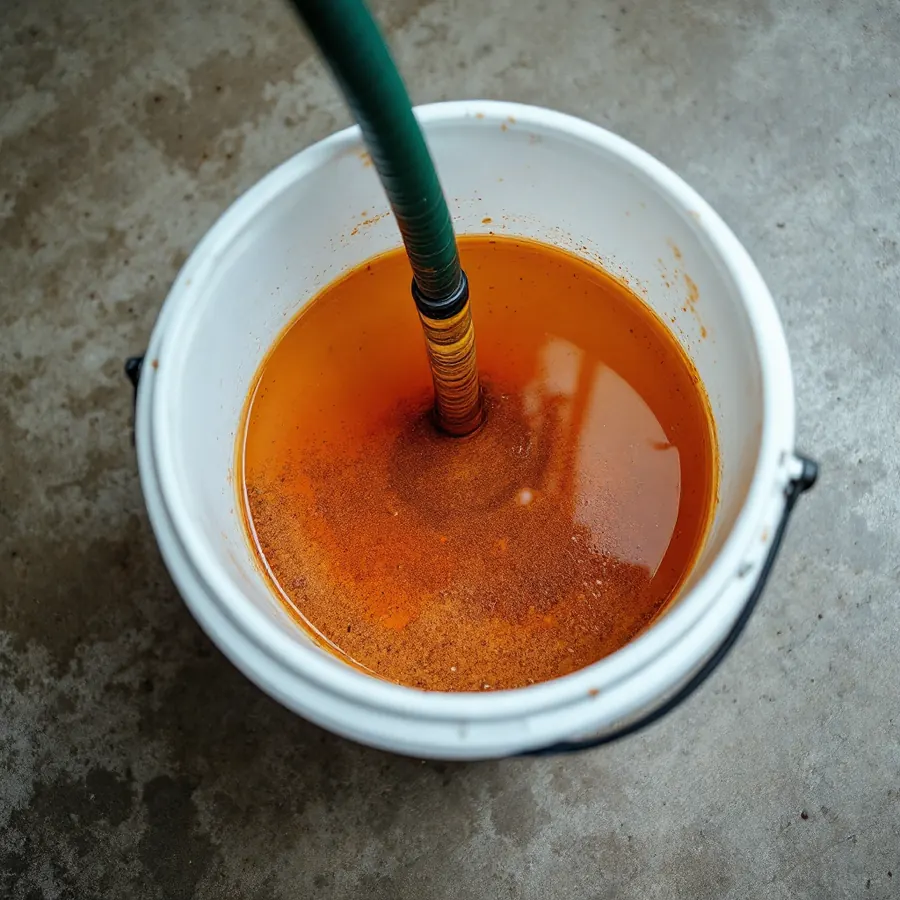
A water heater is a steel tank with a glass lining, protected from the inside by the anode rod. When the anode is consumed the steel corrodes, sediment on the bottom accelerates it, and eventually the tank weeps through a seam or the base. The water finds its way out through the insulation and appears at the bottom of the outer jacket with no dry source above it. Rust-coloured water, or a rusty ring where the puddle dries, confirms it.
There is no repair for this
A rusted-through tank is not patched, sealed or welded. Products are sold to do exactly that, and the honest description of them is a delay: they stop the drip for a while and the tank fails properly later, usually at a worse time and often with more water. The decision at this point is which replacement, not whether. What moves that number is on our cost section below and on the replacement cost page.
What to do the moment you know
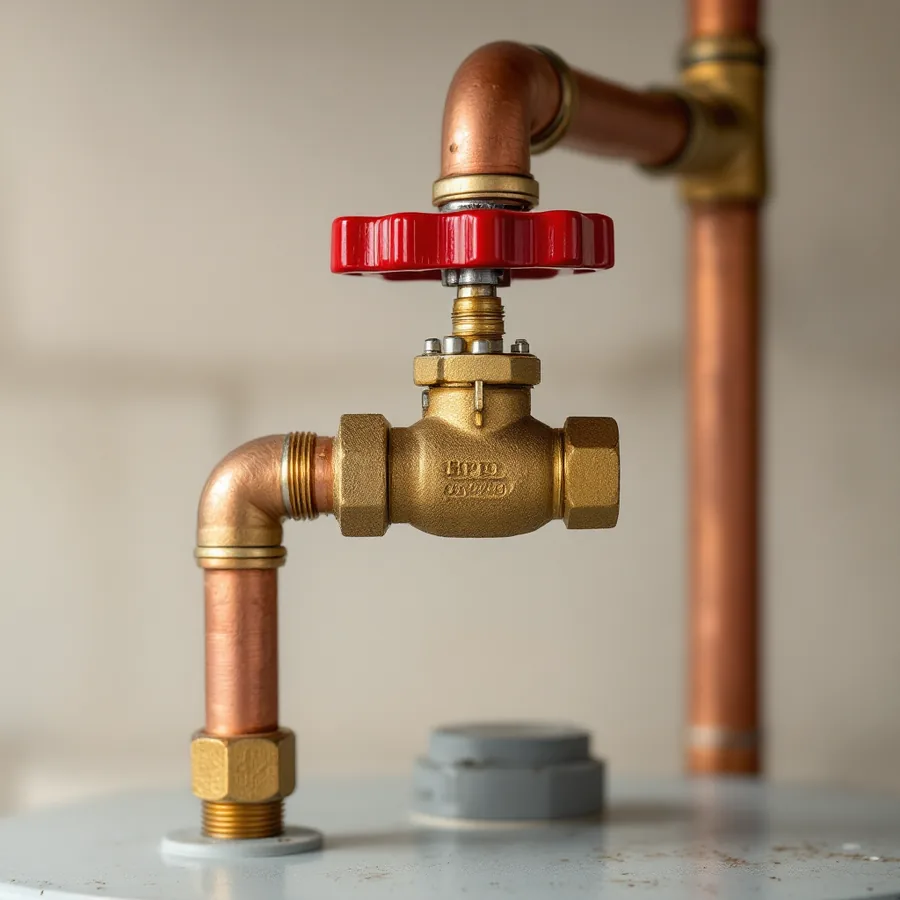
Shut the cold-water supply valve on top of the heater. Shut the gas control or the breaker. Then look at what is under and around the tank, because the section after next has a clock in it.
The Question Asked Directly
Is a leaking water heater dangerous?
Usually a water problem rather than a safety one, with three exceptions that are worth knowing precisely, in the federal agency's own figures.
The water itself is hot
The Consumer Product Safety Commission's scald guidance: “Most adults will suffer third-degree burns if exposed to 150 degree water for two seconds. Burns will also occur with a six-second exposure to 140 degree water or with a thirty second exposure to 130 degree water. Even if the temperature is 120 degrees, a five minute exposure could result in third-degree burns.” Water leaving a tank set high is in that range, and a leak from a fitting can spray rather than drip. The agency's note on who is hurt: “The majority of injuries and deaths involving tap water scalds are to the elderly and children under the age of five.” If the heater is in a closet a child can open, or a laundry room an older relative uses, that is the reason to treat a hot leak as urgent rather than inconvenient.
The relief valve is the safety device, not the fault
A discharging relief valve is the heater preventing the dangerous outcome, not causing one. The dangerous condition is a valve that has been capped, plugged or has seized shut, on a tank that is over temperature or pressure. That is rare, and it is also the reason the answer to “can I just plug that pipe” is always no.
Gas and electricity near water
A gas heater with water in the burner compartment can lose its pilot, and on older units the flame arrestor and burner corrode. An electric heater with water running down its side has 240 volts a few inches away, and a leaking element gasket looks exactly like a tank leak from the outside. Both are reasons to shut the fuel or the breaker before anything else, and both are reasons the repair is a technician's rather than yours.
What it is not
A leaking tank does not explode. The failure mode of a rusted tank is a leak that grows, not a rupture; the explosive failure people have read about is the capped-relief-valve case above, and it requires the safety device to have been defeated first.
Work It Out
What your leak is
Three questions, nothing sent anywhere. The first one is where, because that is the question a good plumber asks first and a bad quote skips.
Our fee for an introduction is the same whether the answer is a drain valve or a new tank, which is why this tool is allowed to say “a small repair” when that is what it is.
Right Now
What to do in the first ten minutes
In order. None of it needs a tool, and all of it is worth doing before anyone is called.
What not to do
Do not plug the relief valve pipe. Do not apply a sealant to the tank. Do not turn the thermostat up to “use up” the hot water. And do not run the heater with the cold supply shut, an electric element in an emptying tank burns out in minutes.
The Clock
The forty-eight hour clock on the floor
The leak is the plumbing problem. What the water does to the house afterwards is the expensive one, and it runs on a federal timetable.
The figure
EPA's mould guidance: “If wet or damp materials or areas are dried 24-48 hours after a leak or spill happens, in most cases mold will not grow.” That is the window. A tank that has been weeping unnoticed for a week is already past it; one found this morning is not.
What is under a water heater
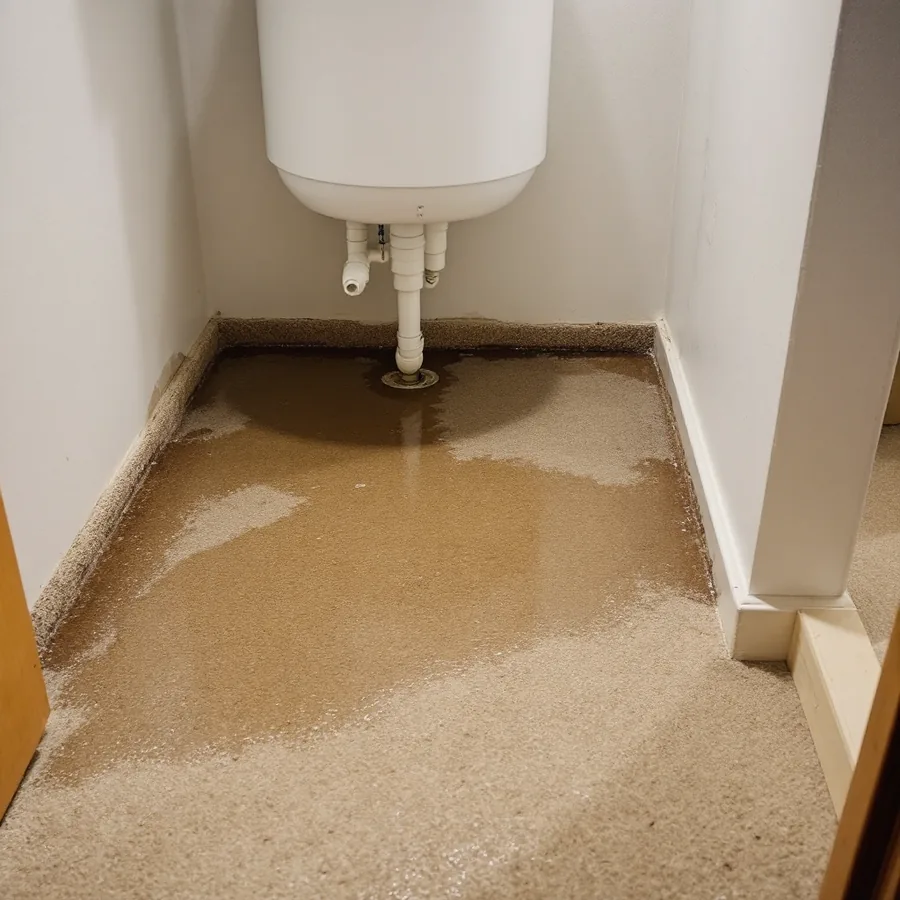
Depending on the house: a concrete garage floor, which shrugs it off; a plywood subfloor under a closet, which does not; drywall at the base of the walls, which wicks water upward and holds it; carpet and pad, which hold water longest of all. The order to dry things in is the reverse of how well they cope.
The pan, and why it was there
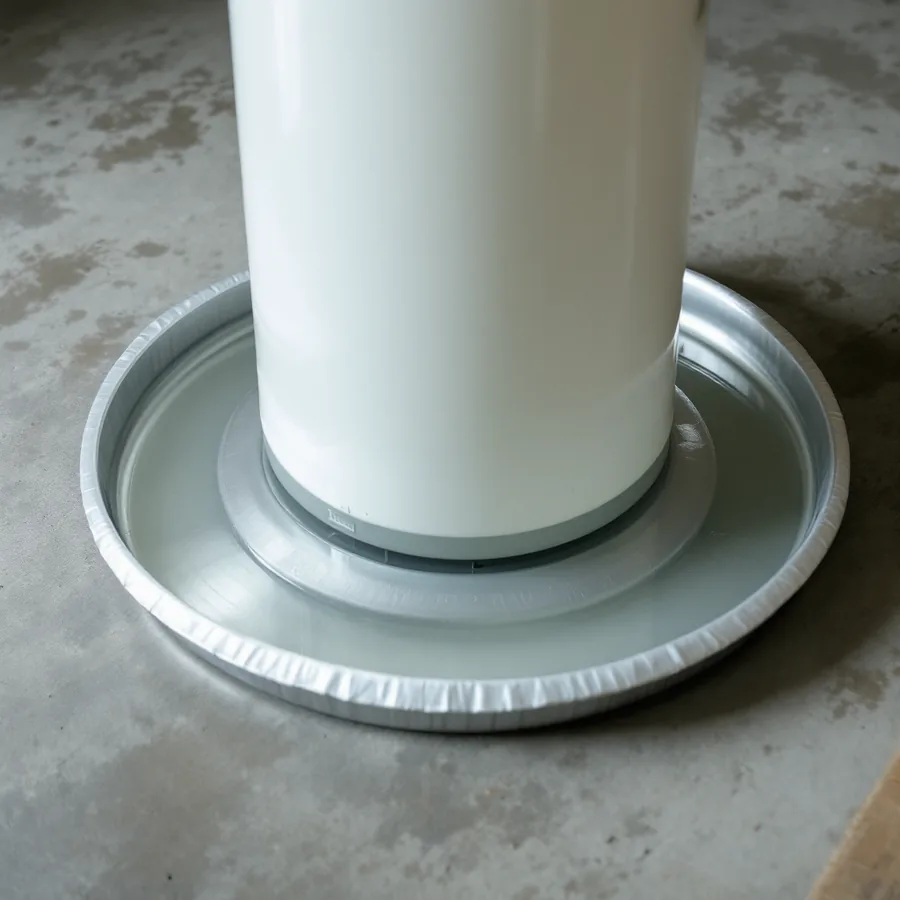
Many heaters sit in a shallow metal or plastic pan with a drain line. The pan catches a slow leak and the line takes it away, if the line is connected to something and not blocked. A pan with standing water in it and a dry floor is the pan working; a pan overflowing is a pan whose drain was never finished, and it is worth asking about on the replacement.
Fix the water, then the mould
EPA again: “If you clean up the mold, but don't fix the water problem, then, most likely, the mold problem will come back.” The order matters. A heater that keeps leaking under a dried and treated floor produces the same floor in a month.
Or Not A Leak
Condensation, or a leak: how to tell
A cold tank in a humid room sweats, and a gas heater condenses inside its own flue on a cold start. Both put water on the floor, and neither is a plumbing fault.
When condensation is likely
A heater in a humid basement or garage, in summer, or a tank that has just refilled with cold water after heavy use. A gas heater on a cold morning drips from the flue for a few minutes as the first flue gases condense, then stops. The water is clean, appears all over the tank rather than from one place, and goes away when the tank warms up.
The dry test
Dry the tank and the floor completely, let the heater run through a heating cycle, and look again. Condensation returns as a film or scattered beads; a leak returns as a drop from one place. An hour settles it, and it is the test to do before calling, because a company that arrives to a sweating tank charges the same for the visit.
When it is both
A very humid room sweating a tank every day keeps the base of the heater wet, and a wet base rusts the jacket and the burner compartment. That is not an emergency, but it shortens the life of the heater and it is an argument for a dehumidifier in the space rather than for a new tank.
Two Kinds Of Heater
Gas or electric: where each one leaks, and what is different
Same tank, same fittings, same valves. The differences are at the base, and they change what to shut off first.
Electric: the element gaskets
An electric heater has two heating elements screwed through the side of the tank behind access panels, each sealed with a gasket. A failed gasket weeps from behind the panel, runs down inside the jacket, and appears at the bottom looking exactly like a tank leak. It is not; it is a gasket, and it is a repair. The panel has 240 volts behind it, so the breaker goes off before the panel comes off, and the work belongs to somebody who does it routinely.
Gas: the burner compartment and the flue
A gas heater has no elements to leak, but it has a burner compartment at the base that water reaches first, a pilot that water extinguishes, and a flue up the middle that condenses on a cold start. Water in the burner compartment corrodes the burner and the flame arrestor; a heater that has been standing in its own leak for a while often needs those parts even after the leak is fixed. Shut the gas control before anything else.
What is the same
The tank, the relief valve, the drain valve, the inlet and outlet, and the anode rod. Everything on this page above applies to both; only the base differs.
The Part That Prevents All Of This
The anode rod: why tanks rust, and the one part that stops it
Every tank leak from the bottom has the same history, and it starts with a part most owners have never seen.
What it does
A rod of magnesium or aluminium hangs inside the tank from the top. It corrodes in preference to the steel, that is the whole point of it, and while it lasts, the tank does not rust. When it is consumed, the steel takes over, and the bottom leak on this page is what that looks like a few years later.
Why nobody checks it
It is under a hex head on top of the tank, it needs the water shut off and pressure released to pull, and on many installations there is not enough headroom above the heater to lift it out in one piece. So it is not checked, it is consumed, and the tank follows. Segmented rods exist for low headroom; the inspection takes a plumber a few minutes on a service visit if it is asked for.
What it means for the decision
A tank that is leaking from the bottom has already lost its anode, that is why it is leaking, and inspecting the rod at that point tells you nothing you do not know. A tank that is not leaking, in its middle years, is the one where a new rod is the cheapest life extension in plumbing. The smell of rotten eggs from the hot tap is often the anode reacting with the water, not a leak, and it has its own fix.
Or Something Nearby
Leaks that are not the heater: the pipes around it
Water heaters stand where the pipes converge, which means a fair share of puddles under them come from somewhere else.
The usual neighbours
A washing machine supply hose in the same closet, a water softener drain, a condensate line from a nearby furnace, a shut-off valve packing nut on the cold line above the heater, or a pinhole in a copper pipe in the wall behind it. All of them run to the lowest point, and the lowest point is usually the heater's pan.
How to tell
Dry everything and put a paper towel on the floor at the base of each pipe and hose, and one around the base of the tank. The first towel to wet names the source. If the towel under the tank stays dry while a puddle grows beside it, the heater is innocent.
What it changes
A leaking supply hose is a five-minute job and a part from any hardware store. A pinhole in a wall is a plumber and a small opening in the drywall. Neither is a water heater problem, and a company that replaces the heater to fix a leaking hose beside it has solved nothing. The general subject of leaking pipes, burst, frozen, slab and pinhole, gets its own page on this site; for now the rule is the same: find the source before deciding anything.
The Decision
Repair or replace: the honest split
Most of the time the location has already decided it. The rest of the time, age decides it.
| Leak location | Usually | Repair or replace |
|---|---|---|
| Top fittings | Inlet, outlet, connector, anode port, nipple | Repair at any age, unless the tank is old enough that the visit should be a replacement quote instead |
| Side valves | Drain valve weeping, relief valve dripping at the seat | Repair: the valve is replaced. Relief valve running rather than dripping is a system problem, not a valve |
| Overflow pipe | Relief valve discharging on temperature or pressure | Diagnose: thermostat, expansion tank, pressure regulator. Neither repair nor replace until the cause is named |
| Bottom, from the tank | Rusted-through tank | Replace. No repair exists that lasts, and sealants delay the same failure to a worse day |
| Bottom, from the drain valve | Worn plastic drain valve | Repair, and the cheapest one on this page |
Where age tips it
A tank in its second decade that develops any leak is usually better replaced than repaired, because the next leak is close and the repair buys months. A tank under six years with a leak from the body is a warranty conversation before it is a plumbing one: photograph it, find the data plate, and read what the manufacturer promised.
The federal advice, applied
ENERGY STAR: “Plan ahead for your next water heater replacement and you will have time to research and select the best technology for your situation before it's an emergency.” A tank leaking from the bottom is that emergency. The reason to know the age of your heater before it leaks is that the choice between a standard tank, a heat pump water heater and a tankless unit is a real one with real running-cost differences, and it is a choice nobody makes well standing in a puddle. What each of those costs to buy and to run is on the cost section below and, line by line, on the replacement cost page.
Money
What it costs, and what moves the number
No national averages, by policy. What is actually being priced when a leak is fixed, so that a quote can be read rather than compared.
- A fitting or a valve is a service call plus a small part. The visit is most of the price. Two things move it: whether the tank has to be drained to do the work, and whether it is after hours.
- A discharging relief valve is a diagnosis, then a part. An expansion tank is a modest addition; a pressure-reducing valve on the house supply is a larger one. Neither is the heater's fault and neither is optional once the cause is known.
- A tank replacement is the tank, the labor, and what the code now requires. Expansion tank, seismic strapping in some states, a drain pan and line where there was none, a permit and inspection in most jurisdictions. A quote that omits those is a quote that will grow.
- The water damage is a separate bill. Drying, subfloor, drywall. It is why the forty-eight hour section matters more than the plumbing one, and why a pan and a working drain line are cheap insurance on the new heater.
Context for the small leaks people put off: EPA's estimate for an ordinary household is that The average family can waste 180 gallons per week, or 9,400 gallons of water annually, from household leaks. A weeping drain valve is a small part of that number, and it is also the easiest part of it to end.
Before Anyone Touches It
What to ask before anyone touches it
Four questions that separate a company that looked from one that quoted.
| Ask | What it tests | A weak answer |
|---|---|---|
| Where exactly is it leaking from? | Whether anyone looked before pricing. The location is the diagnosis. | A price before a place. |
| If the relief valve is discharging, what is the pressure and is there an expansion tank? | Whether the cause is being fixed or the messenger replaced. | “We’ll put a new valve on.” |
| Is this the tank, or the drain valve running down it? | The difference between the cheapest repair and a replacement. | “It’s leaking from the bottom, so it’s the tank.” |
| Does the replacement quote include the pan, the expansion tank and the permit? | Whether the number is the number. | “Those are extra if the inspector asks.” |
What we do, and what we do not
We are not a plumber and we do not sell water heaters. We are paid a fixed fee for an introduction, the same for a drain valve and a new tank, which is why this page can afford to tell you when the answer is a two-dollar part. When you want somebody to look at the heater, we connect you with independent licensed and insured plumbing companies. Who pays us and how is on our about page, and the rest of what we publish starts from the home page.
Straight Answers
Water heater leak questions, answered
Why is my water heater leaking?
It depends entirely on where. From the top it is a fitting; from a valve on the side it is that valve; out of the overflow pipe it is the relief valve doing its job because the tank is over temperature or pressure; from the bottom it is either the drain valve running down or the tank rusted through. Dry the heater and watch where the first drop reappears, that is the diagnosis.
What should I do if my water heater is leaking from the bottom?
Shut the cold supply valve on top of the heater, then the gas control or the breaker. Then check whether the drain valve is the source by holding a dry paper towel under it. If the drain valve is dry and water is still appearing at the base, the tank has rusted through and the decision is a replacement, not a repair. Move anything stored on the floor: EPA's guidance is that materials dried within 24 to 48 hours usually do not grow mould.
Is a leaking water heater dangerous?
Usually a water-damage problem rather than a safety one, with three exceptions. The water is hot: CPSC reports third-degree burns from two seconds at 150 degrees and six seconds at 140, and most scald injuries are to the elderly and children under five. A gas heater with water in the burner compartment and an electric heater wet near 240 volts are both reasons to shut the fuel or breaker first. And a relief valve that has been capped or plugged on an overheating tank is the one genuinely dangerous case, which is why the answer to plugging the overflow pipe is always no.
Why is water coming out of the overflow pipe?
The temperature-and-pressure relief valve has opened, because the tank is either over temperature or over pressure. Usual causes are a thermostat set too high, thermal expansion with no expansion tank on a closed system, or a failed pressure regulator on the house supply. Replacing the valve alone does not fix it; naming the cause does.
Can a leaking water heater explode?
A rusted tank leaks; it does not rupture. The explosive failure people have read about requires the relief valve to have been defeated on a tank that is over temperature or pressure. Leave the relief valve alone and that case does not arise.
Can I still use the water heater while it is leaking?
If it is a fitting or a valve weeping and the leak is contained, briefly, yes. If it is the tank, no: the leak grows, the water goes into the floor, and on an electric heater a dropping water level exposes the elements. Shut it down and treat it as the replacement it is about to become.
Can a leaking water heater be repaired?
Fittings, connectors, the drain valve and the relief valve are all repaired or replaced as parts. A tank that has rusted through is not repaired; sealants sold for the purpose delay the same failure. The location tells you which case you are in.
Does homeowners insurance cover a leaking water heater?
Policies commonly treat the sudden water damage differently from the worn-out heater that caused it: the appliance is usually yours to replace, the damage from a sudden failure is often claimable, and slow seepage that went unnoticed often is not. Photograph everything on the day you find it, and read your own policy rather than a general answer.
Where This Comes From
Sources
- Scald temperatures, burn times, and who is most at risk, U.S. Consumer Product Safety Commission, Publication 5098, Avoiding Tap Water Scalds.
- Drying within 24 to 48 hours, and fixing the water problem first, U.S. Environmental Protection Agency, A Brief Guide to Mold, Moisture and Your Home.
- Planning a replacement before it is an emergency, ENERGY STAR, heat pump water heaters.
- Household leak volumes, EPA WaterSense, statistics and facts.
- Water heater product categories and certification, ENERGY STAR, water heaters.
- Water efficiency programme, EPA WaterSense.
Our editorial standards explain how we source and check what we publish. Every quotation on this page is taken from the federal page linked beside it, and we publish no price averages. We are a referral service rather than a plumber. Last updated .
Before you call anyone
The flat-fee match — we are paid for the introduction, not for the size of your job
Most plumbing advice is written by the company that wants to do the work. That is not a failing of the people who read it; it is a defect in who is talking: the diagnosis, the estimate and the invoice come from one party, and no amount of care on your side fixes that.
We are built the other way round. We do not repair, install or sell anything, so the payment reaches us when you are connected to a licensed, insured plumbing company — the same amount whether you need a two-dollar flapper or a new water heater. Nobody here has a reason to talk you into the larger number. You can check that rather than take it on trust: how we make money is written down, and this site keeps telling readers when not to buy. Why does not everyone work this way? Because a flat fee leaves money on the table every time the job turns out to be big.
Waiting is the one thing that actually costs money. A water heater that is leaking from the tank does not get better and does not wait for a convenient week; the water it lets go finds the floor, the drywall and whatever is stored below. A drain that backs up once backs up again, and the second time it is sewage. And if it turns out to be a flapper or a reset button, say so on the call. We will tell you, and that call earns us nothing.
Not for you if: you want a price over the phone — nobody honest gives one without seeing the pipe; you need a guarantee of arrival within the hour — we cannot promise that for a company we do not run; the building is commercial; or you would rather do it yourself, in which case the pages on this site are written so that you can.