Plumber Cost
How much does a plumber cost — the wage is public, the rate is not, and the gap between them is the answer
Every page that answers “how much does a plumber cost” answers with a national hourly average and a table of jobs, and every one of those numbers was invented by averaging invoices from places you do not live. There is exactly one figure on this subject that is public, federal and current: what a plumber is paid. This page starts there, with the Bureau of Labor Statistics, and then builds upward through everything the billed hour has to carry that the wage does not — the truck, the insurance, the licence, the idle hours, the warranty visits — through the three ways plumbing is priced, the service call, the word “emergency,” and the lines on an invoice, so that a quote can be read rather than compared to a number nobody measured.
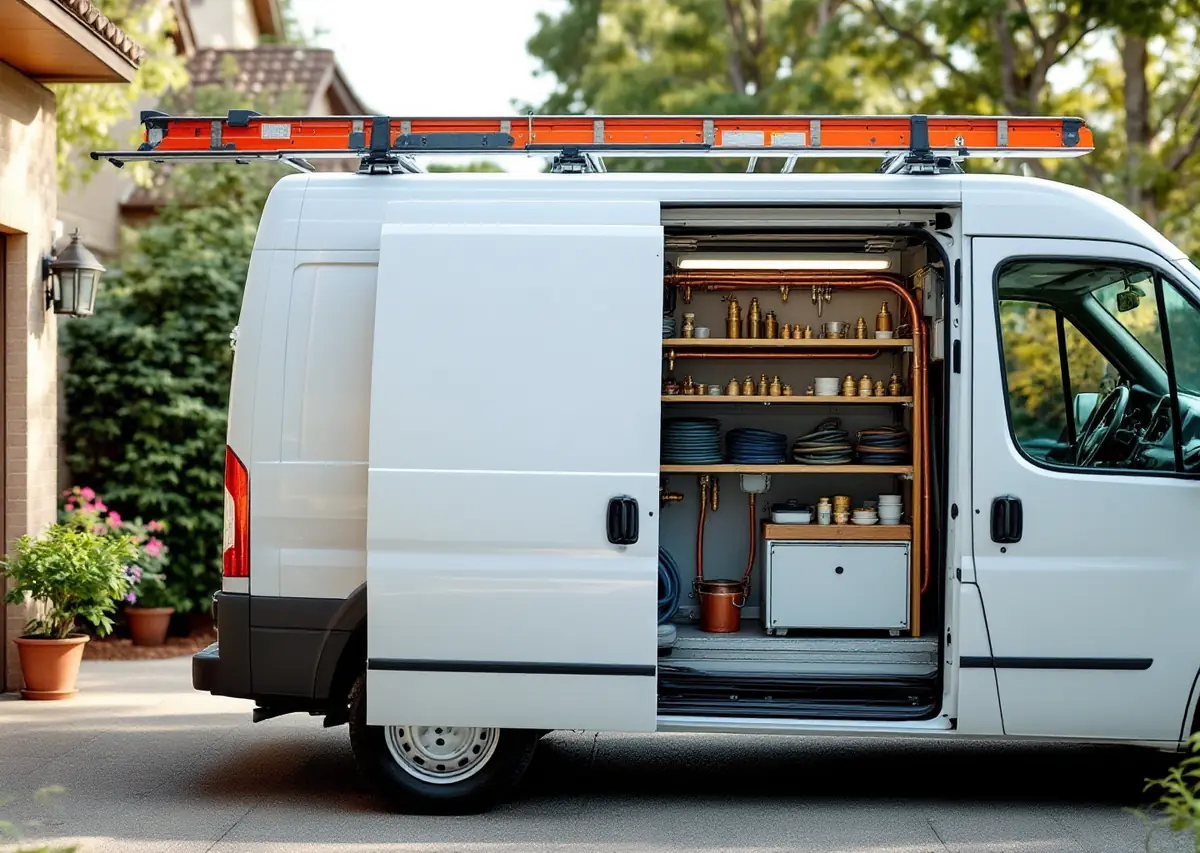
How much does a plumber cost: the number is a rate, a model and a job
A plumbing repair cost is three things multiplied together. A rate, which is what the company charges for a licensed person's time and is built on that person's wage. A pricing model, which is how the company turns the rate into a number on your invoice: by the hour, from a flat-rate book, or as a diagnosis followed by an estimate. And a job, which decides how much time, how many parts, and what else the code requires around them. Change any of the three and the total changes, which is why a single figure for “plumber cost” describes nobody's invoice.
- The rate has a public floor: the federal wage data for the trade, quoted in full below. Everything above the floor is the company's overhead and margin, and the section on the billed hour lists what it is.
- The model decides what you are told before the visit and what you can compare afterward. Each of the three is legitimate; each is read differently, and the tool on this page reads them.
- The job is the part most pages price and the part least worth pricing nationally, because a washer in a tap and a camera down a sewer line share a rate and nothing else.
- Why we publish no number. We are paid a fixed fee for an introduction, the same for a flapper and a repipe. A national average would help neither you nor us; a reading of your quote helps both.
The Public Figure
What a plumber makes: the one figure that is public
How much does a plumber make is searched more often than how much one costs, and unlike the cost, it has a federal answer.
The median
The Bureau of Labor Statistics, in its Occupational Outlook Handbook: “The median annual wage for plumbers, pipefitters, and steamfitters was $63,800 in May 2025”, or $30.67 per hour. That is the wage of the person in the middle of the trade, nationally, before overtime.
The spread
The same page: “The lowest 10 percent earned less than $44,150, and the highest 10 percent earned more than $108,420.” The bottom of that range is apprentices and rural markets; the top is master plumbers, union scale in expensive cities, and owners who pay themselves a wage. How much a plumber makes a year, per hour, or a month is that range divided by the hours; the median annual figure and the median hourly figure above are the same number expressed two ways.
What the wage is not
It is not what you pay. A company that billed you the wage would close in a month. The wage is the floor of the labor line on your invoice and the least of what the company has to cover with it, which is the subject two sections down.
Why it is rising
The Handbook projects employment in the trade to grow “projected to grow 7 percent from 2025 to 2035, much faster than the average for all occupations”, with “About 42,000 openings for plumbers, pipefitters, and steamfitters are projected each year, on average, over the decade.” A trade with more openings than entrants pays more each year, and its billed rate follows.
Who Arrives
Apprentice, journeyman, master, union: who is standing in your kitchen
The rate you pay is the same whichever of these arrives. What differs is what they may do and who is responsible for it.
The apprentice
The Handbook: “Most plumbers, pipefitters, and steamfitters learn on the job through an apprenticeship”, typically a 4- or 5-year apprenticeship of paid work and classroom instruction, and “Apprentices earn less than fully trained plumbers, pipefitters, and steamfitters.” How much an apprentice plumber makes is the bottom of the federal range. An apprentice on your job works under a licensed plumber's supervision, and a company that sends one alone to a gas or a sewer job is a question, not a saving.
The journeyman
A plumber who has completed the apprenticeship and passed the licensing examination, and who may work unsupervised. Most of the trade, and most of the people who arrive at a house, are journeymen. How much a journeyman plumber makes is near the median.
The master
A journeyman with additional years and a further examination, licensed to pull permits, design systems and supervise others, and usually the person whose licence number is on the company's truck. How much a master plumber makes is toward the top of the range, and on most residential jobs the master is the name on the permit rather than the hands on the wrench.
The union plumber
Paid on a negotiated scale with benefits, most often on commercial and industrial work; residential service companies are more often non-union. How much a union plumber makes is at or above the upper part of the federal range in most cities. On a residential invoice the distinction rarely appears.
The licence
The Handbook again: “Most states and some localities require plumbers to be licensed.” The licence is what the rate buys that a handyman's rate does not: an examined person, a bond, insurance the state checks, and a board to complain to — the state licensing board for the work, and for the business practices the state consumer protection office, which USA.gov describes plainly: “They can help with complaints against businesses, investigating scams and fraud, and more.” The licence is also what it costs to become a plumber in time rather than in money: years of a registered apprenticeship, the paid earn-while-you-learn path the Department of Labor administers, at the lower wage rather than tuition.
Wage To Rate
From the wage to the rate: what the billed hour has to carry
A plumber hourly rate is a multiple of the plumber's wage in every market in the country. What the multiple pays for is a list, and the list is the same at every honest company.
The truck
Bought or leased, insured, fuelled, maintained, and stocked with parts that sit on shelves until a job needs them. The stock is why a service plumber fixes most small faults on the first visit; the stock is also capital parked in a vehicle.
The insurance
General liability for the house the plumber works in, and workers' compensation for the plumber, both required for a licensed company in most states and both priced by the risk of a trade that works with water, gas and 240 volts in other people's houses.
The licence and the training
Licence fees, continuing education, the bond, and the years of apprenticeship wage that produced a journeyman.
The office
Somebody answered your call, scheduled the visit, ordered the part, filed the permit and sent the invoice. A one-person company does those things at night and prices them into the day.
The idle hours
Driving between jobs, quoting jobs that do not happen, waiting for a supply house, the afternoon with no calls. A plumber bills perhaps half the hours they are paid for, and the billed half carries the other.
The warranty visits
A part that fails within the warranty is replaced for free, and the visit to replace it is paid for by every other invoice.
The margin
What keeps the company open and lets it replace the truck. A company with no margin is a company that will not be there when the warranty visit is needed.
What that adds to
A billed hour several times the wage, higher for a small company in a spread-out area than a large one in a dense city, and higher in a market where the federal wage itself is high. How much a plumber charges per hour is that arithmetic done for their business; what the average hourly rate for a plumber is in your town is that arithmetic done for a town, and nobody has done it honestly for the whole country.

Three Ways To Price
The three pricing models, and how to read each
The same rate reaches your invoice by one of three routes. None is a trick; each is read with a different question.
Hourly
A service-call or trip charge, then time from arrival billed by the hour or part-hour, then parts. Transparent about time and opaque about the total until the job is done. The questions are when the clock starts, what the minimum is, whether the trip charge is applied to the first hour, and what the parts markup is. A plumber who works fast is cheaper by the hour; a slow one is not, and you cannot tell which you have until the invoice.
Flat rate, from a price book
The company has a book, often software, with a fixed price for each task: replace a fill valve, clear a tub drain, install a disposal. You are quoted the book price before work begins and it does not change with the time taken. Most of the national service brands price this way. It is fair when the item is named exactly and vague when it is not, and the question is always what the item includes and what would change it to a different item once the wall is open. Two flat-rate quotes can be compared only when both name the item.
Diagnosis, then estimate
A diagnostic fee to find the fault, a written estimate for the repair, and your decision. The fee is sometimes credited against the repair. This is the model for anything that cannot be priced from a phone description — a leak in a wall, a heater that does nothing, a drain that keeps coming back — and its value is the written finding, which a second company can price against. Its weakness is a diagnosis that ends in a price for a whole system with no failed part named, which was a sales call with a fee.
The First Line
The service call: what the first hour is for
How much is a plumber service call: it is the line that pays for the truck arriving, and the question is what it buys.
What it is
A fixed charge for coming to the house, sometimes called a trip charge, a dispatch fee or a minimum. It covers the drive, the diagnosis and, at many companies, the first block of time. On a small job it is most of the invoice, which is why a dripping tap costs what it costs: the tap was cheap and the visit was not.
Applied, or on top
At some companies the service call is applied to the work: if you proceed, it disappears into the labor line. At others it is charged on top. Neither is wrong; the second is more expensive on a small job, and the difference is a single question before booking.
The first hour
An hourly company usually bills a minimum of an hour from arrival whatever the job took. The way to make that hour worth the rate is to have the plumber look at everything while they are there: the running toilet, the slow drain, the shut-off valve that will not turn. Three small faults on one visit share one service call.
Nights And Weekends
Nights, weekends and the word emergency
How much does an emergency plumber cost: the same plumber, at a premium that is legitimate for the visit and not for the part, and usually avoidable for the repair.
What the federal data says about the hours
The Handbook describes the work schedule plainly: “Most plumbers, pipefitters, and steamfitters work full time, including nights and weekends”, and “They are often on call to handle emergencies.” Being on call is part of the trade, and the after-hours premium is what pays a person to be reachable at two in the morning. It multiplies the visit and the labor; it does not multiply the price of a valve.
What is an emergency
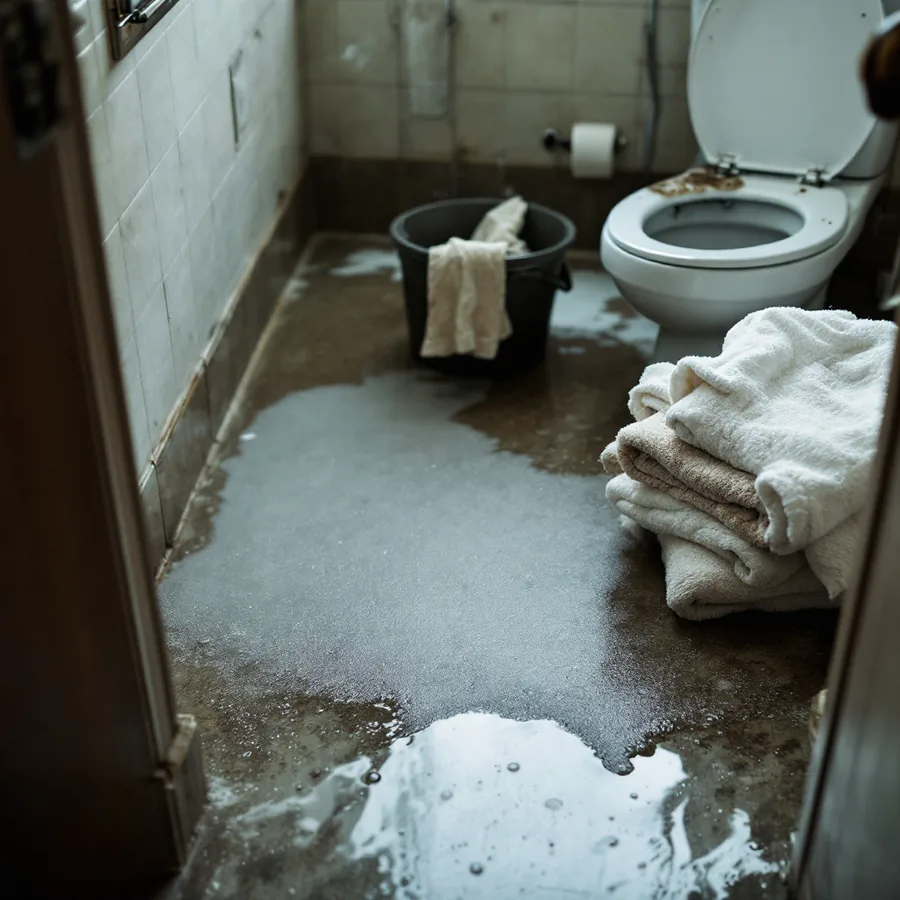
Water that cannot be stopped: a burst pipe with the main shut-off seized, a sewage backup, a gas smell, no water at all in a house with a baby. Those are calls for tonight. A dripping tap, a running toilet, a slow drain, a water heater that stopped this evening in a house with a kettle: those are calls for tomorrow at the regular rate, and a company that books them as emergencies is charging for its own convenience.
Cutting the emergency in half
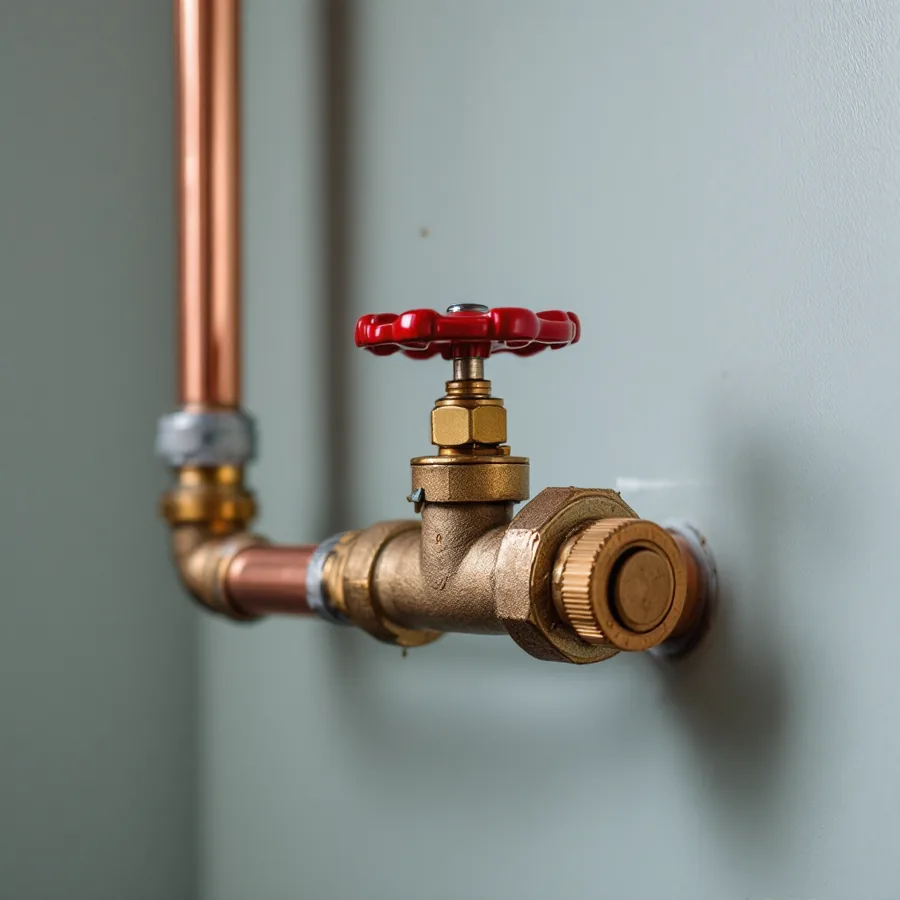
Most after-hours calls can be split into two visits: stop the water tonight, repair tomorrow. Closing the main shut-off is the emergency, and it is free; a plumber who comes at midnight to close a valve and cap a pipe, and returns on a weekday to do the repair at the regular rate, has cost you one premium visit instead of a premium job. Ask for exactly that when you call.
The Common Calls
What the small jobs are made of
The jobs most often searched by price, each broken into the lines that make its number, so that a quote for one can be read.
How much a plumber costs to fix a pipe
The visit, then the access and the fitting. A pinhole in an exposed copper run under a sink is a service call and a short repair; the same pinhole inside a finished wall is the visit, the opening of the wall, the repair, and a drywall bill that is not the plumber's. A frozen or burst pipe adds the water on the floor, which is a separate trade's bill. What moves the number is where the pipe is, not what it is made of.
How much a plumber charges to replace a toilet
The toilet itself, if the company supplies it, at the company's price. The labor to remove the old one, replace the wax ring or seal, set and level the new one, connect the supply, and test. What grows it: a flange that is broken or set too low, which is a repair before the toilet can be set; a shut-off valve under the toilet that will not close, which is replaced first; a floor that has rotted around the flange. Haul-away of the old toilet is a line, included or not. Installing a toilet you bought yourself is the same labor without the fixture line, and some companies decline to warrant a fixture they did not supply.
How much a plumber charges to snake a drain
The visit, then the cable: a short hand or small-machine cable through a fixture drain is the first block of time; a larger machine from a cleanout on a branch or a main line is a job priced as a job. What you poured in before calling changes the price and sometimes the willingness. The full breakdown, and how to keep most of these clogs in your own hands, is on the clogged drain page.
The water heater
Five lines — the unit, the labor, the code items, the permit and haul-away, and any conversion extras — each of which is walked through, with a tool that writes them out for your house, on the replacement cost page.

Work It Out
Read your plumber's invoice
Three questions, nothing sent anywhere, no prices. What comes out is what the number is made of under your company's pricing model, what has to be on the quote, the question to ask before they come, and where the federal wage sits in your number.
We are paid the same fixed fee for an introduction whatever the invoice comes to, which is why this tool tells you when an emergency can wait until morning.
Two Quotes
Why two honest plumbers quote two different numbers
Not because one is cheating. Because the multiple between the wage and the rate is built differently at every company.
Overhead
A company with a fleet, a dispatcher and a warehouse carries more per billed hour than a plumber with one van and a phone. The first can come today and stock the part; the second may be cheaper and next week.
The area
A company that covers a wide rural area spends more of its day driving, and the billed hours carry the miles. A dense city has the opposite arithmetic and a higher federal wage.
The flat-rate book
Two companies' books price the same task at different numbers because they assumed different average times and different parts. Neither is wrong; only the named item can be compared.
The warranty
A longer warranty on parts and labor is a promise of free future visits, and it is priced into today's invoice. A company with no warranty is cheaper today.
The lowest number
The FTC's advice is two sentences long: “Consider only contractors who are licensed and insured.” And: “Don't automatically choose the lowest bidder.” The lowest of two quotes is often the one that has not yet met the code items, the permit or the haul-away, and the cheapest company is sometimes the one whose licence cannot be checked.
What is on the truck
A company that stocks the part fixes the fault in one visit at one service call; one that has to order it charges two.
Who is sent
A master plumber's hour and an apprentice's hour are billed at the same rate at most companies, but a company that sends two people to a one-person job may bill both. Ask.

Line By Line
The glossary of lines on a plumbing invoice
Every line a plumbing invoice can carry, what it is for, and when it should not be there.
Service call, trip charge, dispatch fee
The fixed charge for arriving. One per visit, never per task. Ask whether it is applied to the work.
Diagnostic fee
The charge for finding the fault, under the diagnosis-then-estimate model. It should end in a written finding, and it is sometimes credited against the repair.
Labor
Time at the rate, or the flat-rate item. If hourly, the start time and the minimum should be stated. If two people, whether both are billed.
Minimum charge
The least an hourly visit will cost, usually one hour plus the service call. It is why small jobs are grouped.
Parts
At the company's price, which is above the retail shelf and pays for the stock, the sourcing and the warranty. A part with no description cannot be checked; ask for the description.
Markup
Rarely shown as its own line; it is inside the parts price. A quote that lists parts at retail and a separate markup is unusual and at least transparent.
Permit and inspection
Required by most jurisdictions for water heaters, gas work, repipes and sewer work; not for a washer. A company that offers to skip a required permit is offering you an uninspected job.
Disposal and haul-away
Removing the old fixture, heater or debris. Included or a stated fee; never discovered on the invoice.
After-hours, weekend, holiday
A multiplier on the visit and the labor for work outside business hours. Legitimate, and avoidable for the repair half of most emergencies.
Travel or mileage
Charged by some rural companies beyond a radius. Ask the radius before booking.
Drain-down
Time to drain a tank or a system before a part can be reached. It is why elements, anodes and dip tubes cost more than their price suggests.
Access
Opening a wall, a ceiling, a floor, or a cabinet; moving what is in the way. Priced as time, and reduced by clearing the area before the visit.
Code items
What the inspector will expect around a replacement: valves, expansion tanks, pans, straps, discharge lines. Listed on a good quote; added on the day on a poor one.
Warranty
Not a charge but a term. Parts and labor, for how long, and whether it transfers. In writing.
Estimate versus quote
An estimate is a guess that may change; a quote is a price. Know which the paper is before signing it. The Federal Trade Commission's consumer advice on hiring any contractor sets the floor for what the paper should carry: “Get multiple estimates. A written estimate should include a description of the work to be done, materials, completion date, and the price.”
Sales tax
On parts in most states, on labor in some. It is the one line that is nobody's decision.
Courtesy
Tipping, water and access: what a plumber actually wants from you
How much to tip a plumber is searched every day, and the answer is shorter than the search.
Tipping
Not expected. Plumbing is a licensed trade billed at a rate that already carries the company's overhead and the plumber's wage, and most companies neither expect nor solicit tips. A tip offered for an exceptional job in awful conditions is a kindness and is usually accepted; its absence is never noticed. This is a norm, not a statistic, and we cite no source for it.
What is actually worth more than a tip
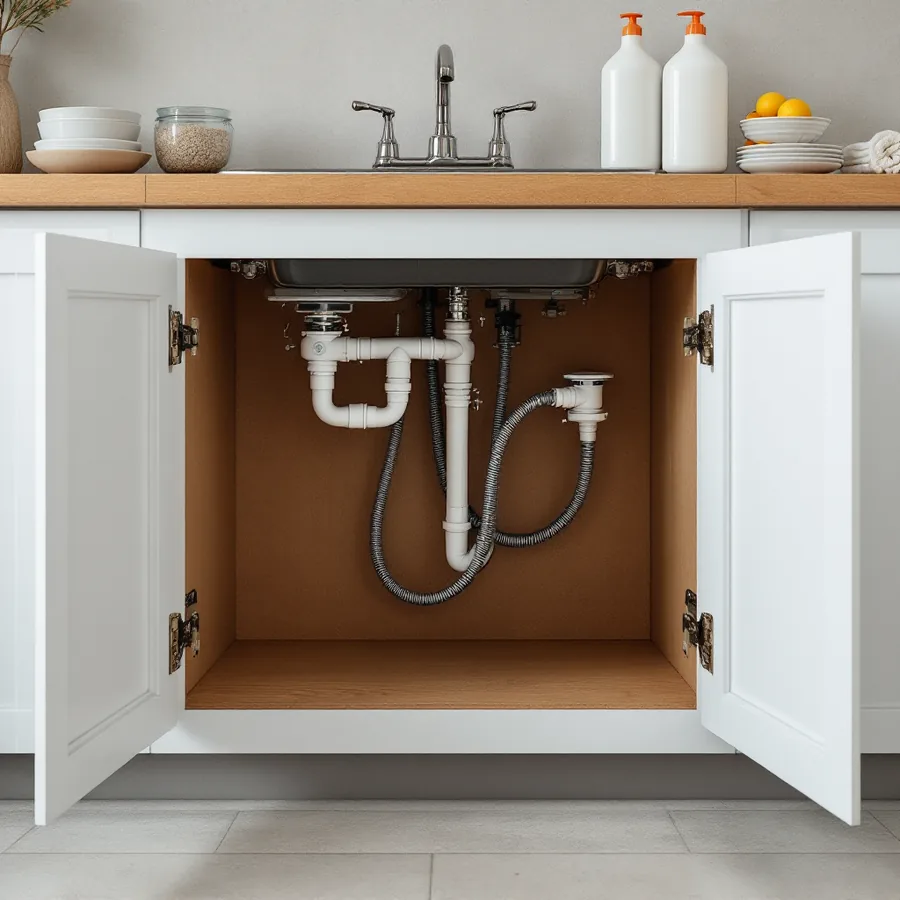
The cabinet under the sink emptied before arrival. The path to the water heater clear. A description of the fault written down, with when it started and what has been tried. Knowing where the main shut-off is. Water, if it is hot out. And a written review, which is the currency small companies actually live on.
Before The Truck Arrives
What to ask before the truck arrives
Five questions on the phone that decide what the invoice looks like.
| Ask | What it tests | A weak answer |
|---|---|---|
| Do you price by the hour, from a book, or by diagnosis and estimate? | Which questions to ask next; whether a total can exist before the visit. | “Depends on the job.” |
| What is the service call, and is it applied to the work? | Whether a small job costs one line or two. | “We’ll let you know when we get there.” |
| Is this after-hours, and can you stop the water tonight and repair tomorrow? | Whether the premium is buying a visit or a job. | “It’s all emergency rate after five.” |
| Is the company licensed and insured, and will the person who comes be a licensed plumber? | What the rate is buying that a handyman's is not. | A licence number that cannot be given. |
| What is the warranty on parts and labor, in writing? | Whether today's price includes tomorrow's visit. | “We stand behind our work.” |
What we do, and what we do not
We are not a plumber and we set no prices. We are paid a fixed fee for an introduction — the same for a washer and a repipe — which is why this page can afford to say that most emergencies are a closed valve tonight and a weekday visit tomorrow. When you want a licensed company to quote a job, we connect you with independent licensed and insured plumbing companies. Who pays us and how is on our about page, and the rest of what we publish starts from the home page.
Straight Answers
Plumber cost questions, answered
How much does a plumber charge per hour?
A multiple of the plumber's wage, which the Bureau of Labor Statistics puts at a median of $30.67 an hour nationally. The multiple pays for the truck, insurance, licensing, the office, idle hours, warranty visits and margin, and it is larger for a small company in a spread-out area and in cities where the wage itself is high. We publish no hourly average; ask the company its rate, its minimum and when the clock starts.
How much is a plumber service call?
A fixed charge for arriving, which on a small job is most of the invoice. Ask whether it is applied to the work if you proceed and whether it includes a first block of time. Three small faults on one visit share one service call.
How much does an emergency plumber cost?
The same plumber at an after-hours multiplier on the visit and the labor, not on the parts. The federal data describes the trade as working nights and weekends and often on call, so the premium is legitimate. Most emergencies can be cut in half: stop the water tonight, repair tomorrow at the regular rate. A drip, a running toilet or a slow drain is not an emergency at all.
How much does a plumber make?
The Bureau of Labor Statistics reports a median of $63,800 a year, or $30.67 an hour, in May 2025, with the lowest 10 percent under $44,150 and the highest 10 percent over $108,420. Apprentices earn less than fully trained plumbers; masters and union scale in expensive cities sit at the top. It is the floor of the labor line on your invoice, not the rate.
Should I tip a plumber?
Not expected. The rate already carries the wage and the company's overhead. A tip for an exceptional job in bad conditions is a kindness; an emptied cabinet, a clear path, a written description of the fault and a review are worth more.
Does a master plumber cost more than a journeyman?
At most residential companies the billed rate is the same whoever is sent; the master's licence is on the permit and the truck. What a master plumber makes is toward the top of the federal range, but that is the company's cost, not a different line on your invoice.
Why did two plumbers quote such different prices for the same job?
Different overhead, different service areas, different flat-rate books built on different average times, different warranties, and whether the part was on the truck. Compare the named item and the warranty, not the total, and ask each what would change the number once the work starts.
Where This Comes From
Sources
- Median wage, hourly wage, the 10th and 90th percentiles, apprentices' pay, work schedules, licensing, training and job outlook — U.S. Bureau of Labor Statistics, Occupational Outlook Handbook: Plumbers, Pipefitters, and Steamfitters.
- The structure of a water heater replacement quote — our replacement cost page, built on Department of Energy, IRS and BLS sources.
- What a drain call costs and what moves it — our clogged drain page, built on EPA and National Library of Medicine sources.
- What a sewer line quote is made of — our sewer line page, built on EPA, FEMA and NIOSH sources.
- Licensed and insured contractors, written estimates and the lowest bidder — Federal Trade Commission, Consumer Advice: How To Avoid a Home Improvement Scam.
- Where to complain about a business — USA.gov, State consumer protection offices.
- Registered apprenticeship, the path into the trade — U.S. Department of Labor, Apprenticeship.gov.
- Occupational employment and wage statistics for the trade — U.S. Bureau of Labor Statistics, Occupational Employment and Wage Statistics: Plumbers, Pipefitters, and Steamfitters.
Our editorial standards explain how we source and check what we publish. Every wage figure on this page is quoted from the federal page linked beside it; we publish no billed-rate averages and no job-price tables. We are a referral service rather than a plumber. Last updated .
Before you call anyone
The flat-fee match — we are paid for the introduction, not for the size of your job
Most plumbing advice is written by the company that wants to do the work. That is not a failing of the people who read it; it is a defect in who is talking: the diagnosis, the estimate and the invoice come from one party, and no amount of care on your side fixes that.
We are built the other way round. We do not repair, install or sell anything, so the payment reaches us when you are connected to a licensed, insured plumbing company — the same amount whether you need a two-dollar flapper or a new water heater. Nobody here has a reason to talk you into the larger number. You can check that rather than take it on trust: how we make money is written down, and this site keeps telling readers when not to buy. Why does not everyone work this way? Because a flat fee leaves money on the table every time the job turns out to be big.
Waiting is the one thing that actually costs money. A water heater that is leaking from the tank does not get better and does not wait for a convenient week; the water it lets go finds the floor, the drywall and whatever is stored below. A drain that backs up once backs up again, and the second time it is sewage. And if it turns out to be a flapper or a reset button, say so on the call. We will tell you, and that call earns us nothing.
Not for you if: you want a price over the phone — nobody honest gives one without seeing the pipe; you need a guarantee of arrival within the hour — we cannot promise that for a company we do not run; the building is commercial; or you would rather do it yourself, in which case the pages on this site are written so that you can.