Water Heater Repair
Water heater repair — half of it is not a repair, and this page starts with that half
No hot water, water that is only ever warm, a tank that runs out in ten minutes, a noise from the closet, a smell from the tap. Every one of those sends people to a page written by a company that wants the call. This one is written by a service paid the same whether the answer is a reset button or a technician, so it begins with the five minutes that end a surprising share of these problems — and then explains, part by part, what the other half actually is.
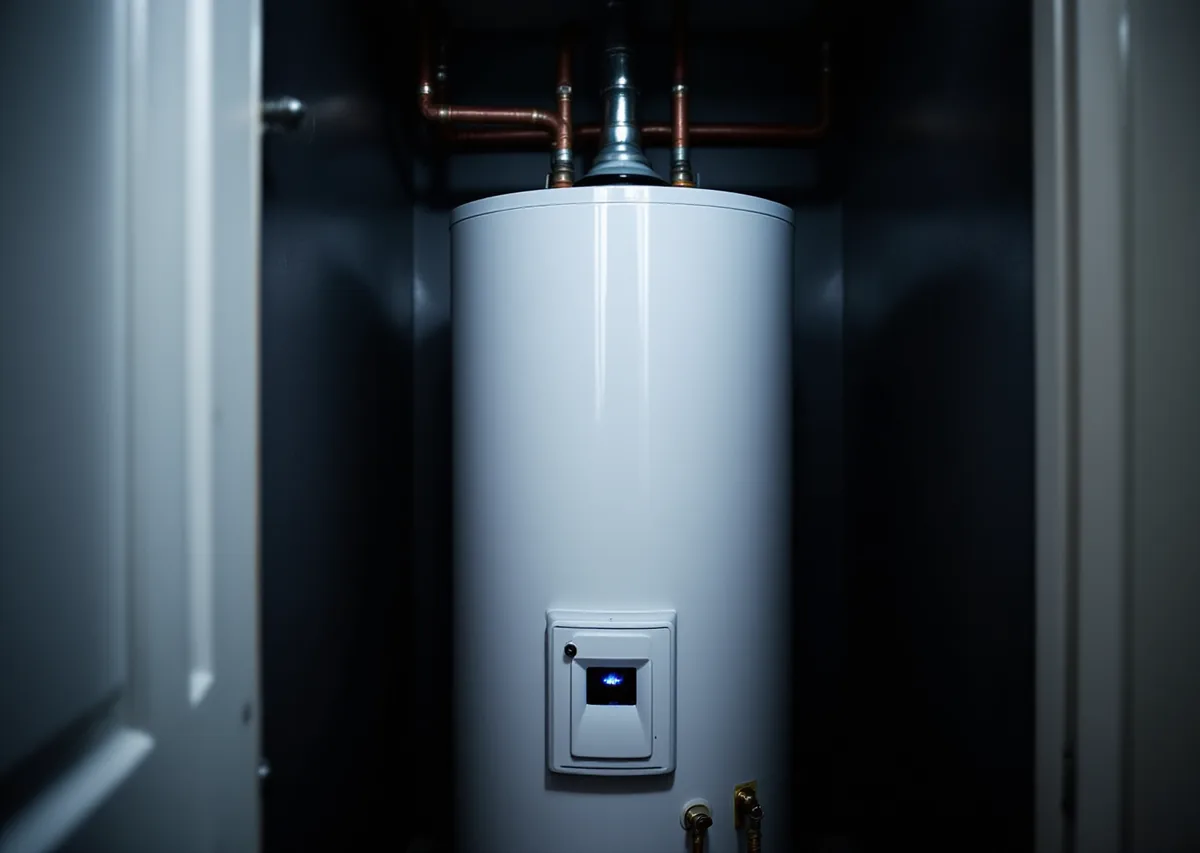
Half of water heater repair is not a repair
A plumber arriving at a heater with no hot water checks the same five things you can, in the same order, before touching a tool. A tripped breaker, a pilot that has gone out, a high-limit reset button that has tripped, a gas valve turned to vacation, a cold-water shut-off somebody closed. Those five account for a large share of “my water heater is not working” calls, they cost nothing to check, and a company that charges a service call to press a button has not done anything you could not have. The rest of this page is for what remains after those five, which is where the real repairs live.
- Electric: the breaker and the red button. A double-pole breaker at the panel, then the high-limit reset behind the upper access panel. If either has tripped, ask why before you restore it; the answer is in the sections below.
- Gas: the pilot and the control. A pilot window or a status light near the base. A control knob that somebody turned down. A gas supply valve on the pipe that was closed during other work.
- Both: the thermostat and the shut-off. A thermostat turned down for a holiday and never turned back. A cold-water valve on top of the tank that was closed and half-opened.
- What none of those fix. A pilot that will not stay lit, a reset that trips again within a day, water that is warm but never hot, a tank that runs out fast. Each of those is a part, and each has a section.
Gas
Gas heater, no hot water: the five things to check
In order, and with the line drawn at the point where a gas appliance stops being homeowner territory.
The pilot
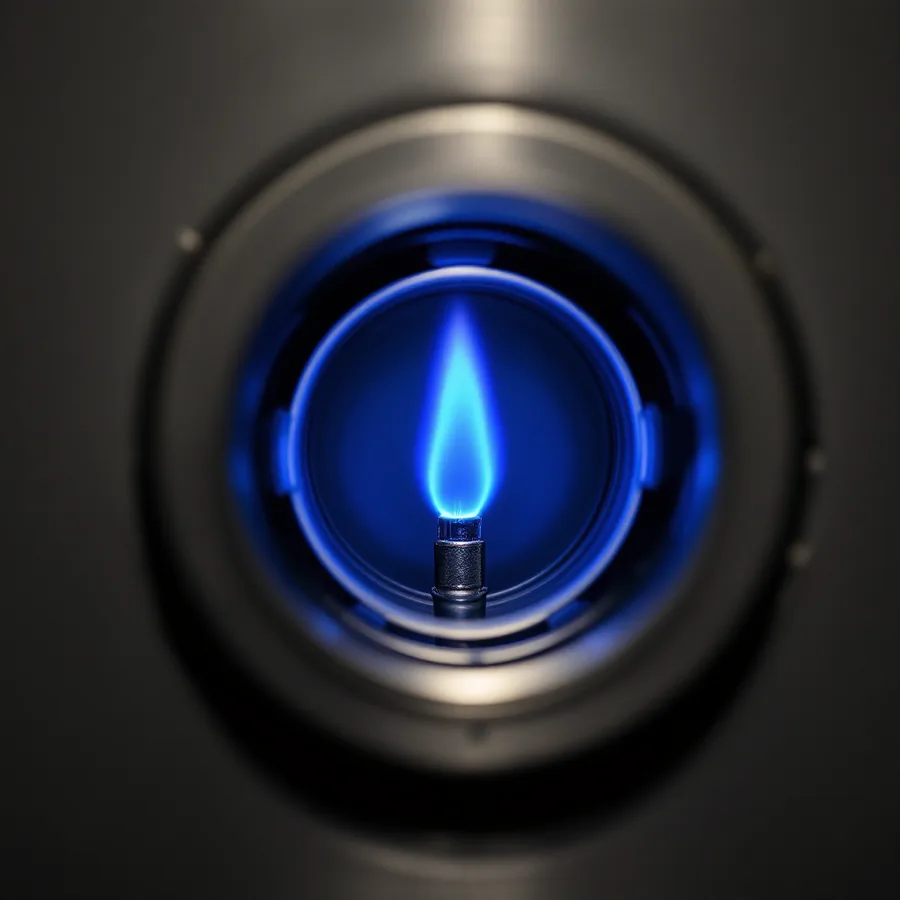
On older heaters a small standing flame at the base, visible through a window; on newer ones an electronic igniter and a status light that blinks a code. If the pilot is out, relight it following the instructions printed on the unit — they differ by model, and the printed sequence is the one to use. If it lights and stays lit, you are done. If it lights and goes out the moment you release the control, stop: that is the next item.
The thermocouple, or the flame sensor
A small probe sitting in the pilot flame that tells the gas valve the flame is there. When it fails, the valve shuts the gas as a safety measure and the pilot will not stay lit. It is an inexpensive part and a short job for a technician; it is also the single most common gas water heater repair, and the one most often mis-sold as a new gas valve.
The gas valve and the thermostat
The box on the front of the heater with the control knob. If the pilot stays lit but the main burner never comes on when the water is cold, the valve or the thermostat inside it has failed. This is a technician's part on a gas appliance, and the honest question is whether the tank's age justifies it.
The vent and the air supply
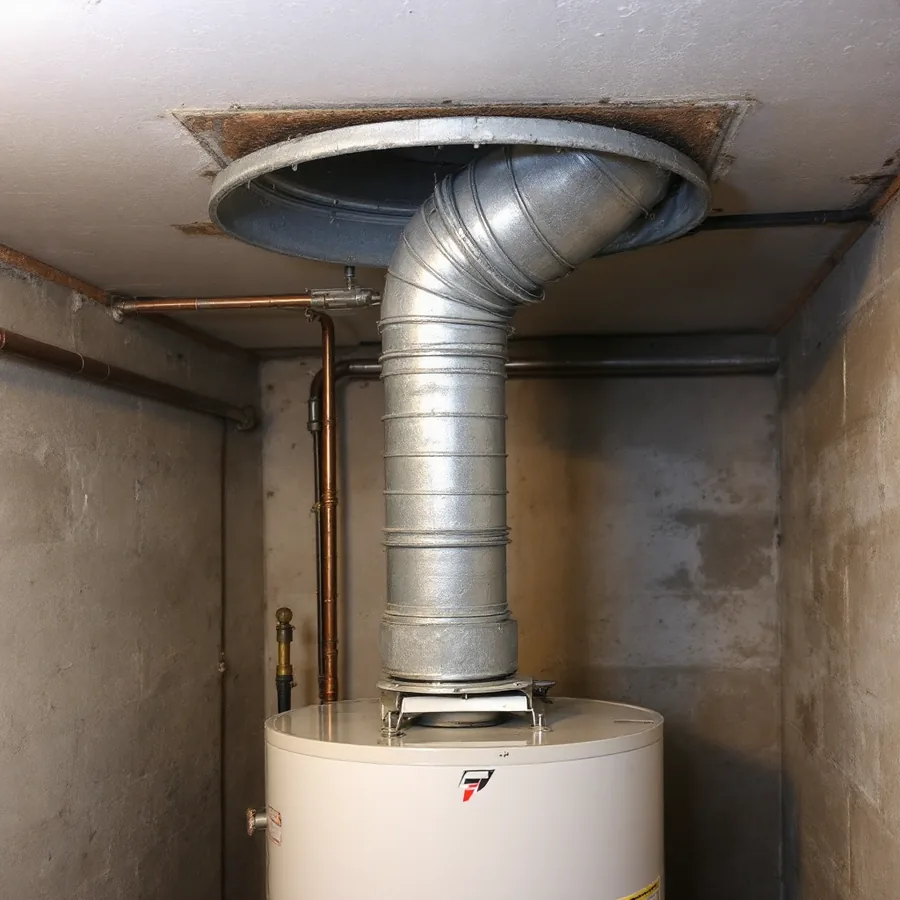
A gas heater that lights and then shuts down, or produces a burning smell, may be starved of air or backdrafting. A blocked flue, a closet with no air opening, a dryer in the same space pulling air — each can trip the heater's own safety cut-off. Look for a blocked vent and a sooty burner compartment; both are reasons to stop using the heater until it is looked at.
The gas supply itself
A valve on the supply pipe, usually a quarter-turn lever, that is closed when the handle is across the pipe. Other work in the house sometimes leaves it closed. If it is open and there is still no gas, the utility or the meter is the question, not the heater.
Electric
Electric heater, no hot water: the reset button and the two elements
An electric heater is two heating elements, two thermostats and one safety button, all behind two panels, all at 240 volts.
The breaker
A double-width breaker at the panel dedicated to the heater. Switch it fully off, then on. A breaker that trips again is not a nuisance to be reset repeatedly; it is a grounded element or a wiring fault, and it is telling you to stop.
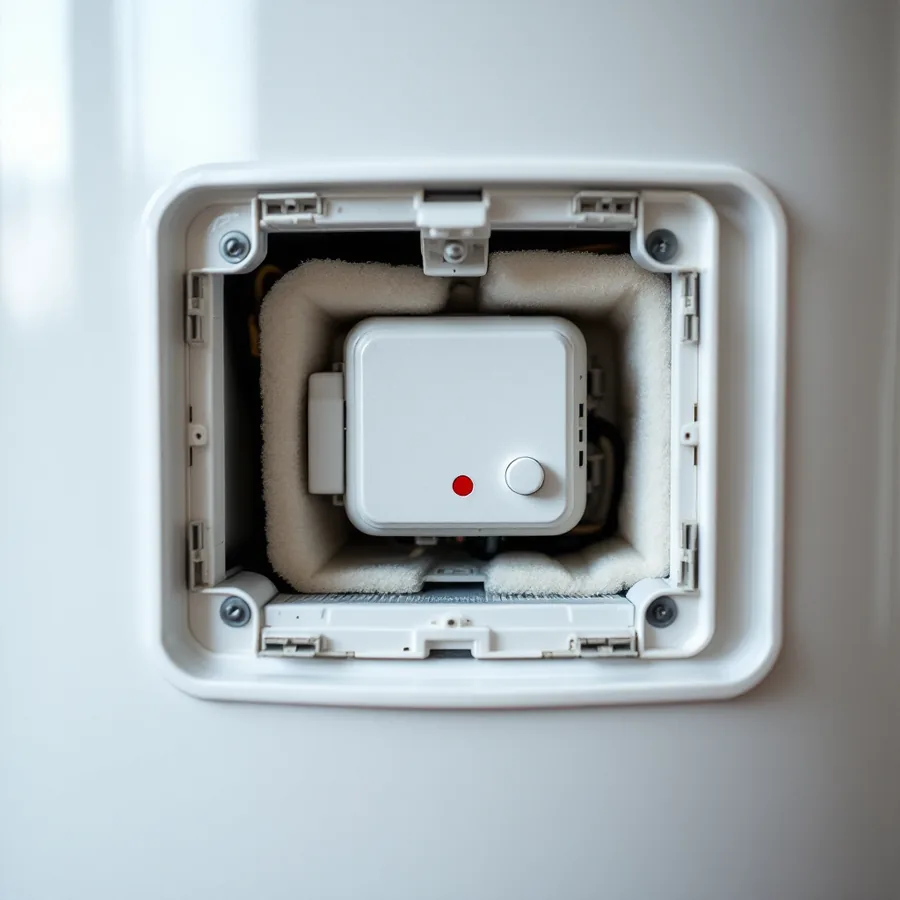
The high-limit reset
Behind the upper access panel, a red button on the upper thermostat. It trips when the water gets dangerously hot. With the breaker off, remove the panel and press it; if it clicks, it had tripped, and the question is why. A stuck thermostat or a grounded element will overheat the tank again, and the reset will trip again within a day or two. Twice is the signal to have it looked at rather than reset a third time.
The two elements
An upper element that heats the top of the tank first, and a lower one that does most of the work. When the lower element fails, the classic symptom is a little hot water then cold: the upper element has heated its share and the rest of the tank never gets there. When the upper fails, there is no hot water at all, because the upper thermostat never hands over to the lower. Testing an element is a multimeter with the power off; replacing one means draining the tank. Both are routine for a technician and neither is a good first project with 240 volts a few inches from water.
The two thermostats
One behind each panel, each controlling its element. They fail less often than elements, and when they do the symptom is usually the same as an element failure, which is why a technician tests both before replacing either. A quote for elements and thermostats together, with no test, is worth a question.
Warm, Never Hot
Lukewarm, or it runs out fast: what that pattern means
The heater is working and losing. Which way it loses tells you the cause.
Warm but never hot
On an electric heater, the lower element. On a gas heater, a thermostat set low, or a burner that is being insulated from the water by a bed of sediment on the tank bottom. Check the setting first and wait a full heating cycle before deciding anything; a heater judged ten minutes after the setting was changed will always look broken.
Hot at first, then cold within minutes
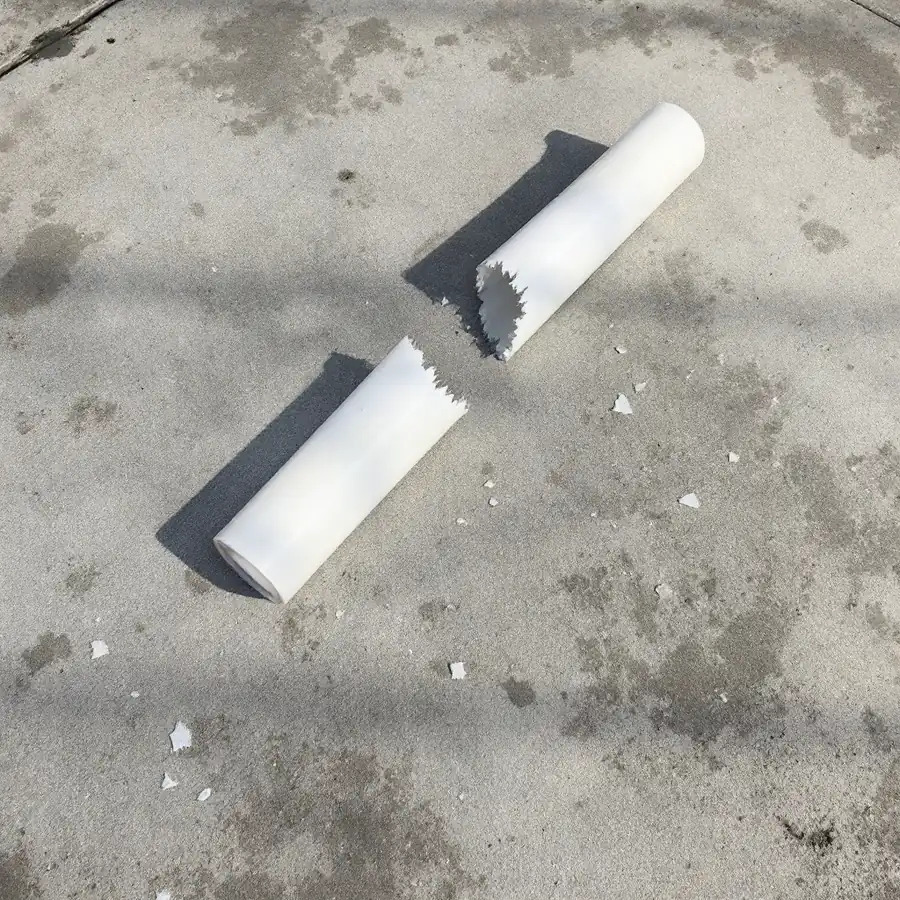
The dip tube. A plastic pipe carries incoming cold water to the bottom of the tank so that hot water is drawn from the top. When it breaks, cold water enters at the top and mixes with the hot immediately, and the shower goes cold long before the tank is empty. It is a cheap part and a drain-down, and small white plastic flakes in the aerators of your taps are the tell.
It used to last longer
Sediment. Minerals from the water settle on the tank bottom, taking up volume and, on a gas heater, insulating the burner from the water. The tank holds less usable hot water every year it goes unflushed, and it works harder to heat what it holds. Whether to flush it now is the subject of its own section, because on an old tank the answer is not automatically yes.
It never lasted long enough
Then it is not a fault. A tank sized for two people and now serving five is doing what it was built to do. The fix is a larger tank, a tankless unit, or a schedule, and none of those is a repair.
Work It Out
What your heater is telling you
Three questions, nothing sent anywhere. The second one is gas or electric, because the first five minutes are completely different machines.
Our fee for an introduction is identical whether the answer is a reset button or a replacement, which is why this tool has a row called “your five minutes” at all.
The Setting
The thermostat: two federal agencies, two numbers, one valve
The most-adjusted control on the heater is also the subject of a genuine disagreement between two federal agencies. Both are right, and the way to satisfy both is a part most houses do not have.
What CPSC says, and why
The Consumer Product Safety Commission “urges all users to lower their water heaters to 120 degrees Fahrenheit” — because “Most adults will suffer third-degree burns if exposed to 150 degree water for two seconds”, and because the majority of scald injuries are to the elderly and children under five. At 120°F the same burn takes minutes rather than seconds. That is the number printed on most water heater dials as the recommended setting, and it is the reason.
What CDC says, and why
The Centers for Disease Control's guidance on controlling Legionella in building water systems gives the bacterium's favourable growth range as 77–113°F, and its recommendations are “Store hot water at temperatures above 140°F (60°C)” and “Ensure hot water in circulation does not fall below 120°F (49°C).” A tank held at 120°F has a bottom layer, where the cold water enters, that sits inside the growth range for a good part of every cycle. That guidance is written for buildings with managed water systems rather than for a single house, and it is an orientation rather than a rule for a home — but the biology does not check the address.
The part that satisfies both
CDC again: “Install thermostatic mixing valves as close as possible to fixtures. This will prevent scalding while permitting circulating hot water temperatures above 120°F (49°C).” A thermostatic mixing valve on the heater's outlet, or at the fixtures, lets the tank store water hot enough to control bacteria while delivering water at the taps cool enough not to burn anyone. It is a modest part and a short job, and it is the honest answer to a question that most pages resolve by simply not mentioning one of the two agencies.
What to do if you are not adding a valve
Then the setting is a judgment between two risks, and the household decides it: children or elderly relatives push it toward 120°F; a house on well water, or one with someone whose immune system is compromised, pushes it up. What the setting should not be is whatever the previous owner left it at. Check it with a thermometer at a tap after two hours without hot water use, which is CPSC's own method.
Sounds
Noises: what popping, rumbling and humming each mean
A water heater has three sounds, and one of them is not the heater.
| Sound | When | Usually | What to do |
|---|---|---|---|
| Popping, crackling, rumbling | While a gas burner is running | Water trapped under a layer of sediment on the tank bottom flashing to steam and escaping | A flush, if the tank is young enough for a flush to be wise. On an old tank, it is a warning that the bottom has been overheating under the sediment for years |
| Humming, sizzling | While an electric element is on | Scale on the element, or a loose element vibrating in its port | Element cleaned or replaced; a quarter-turn tightening if it is loose. A technician's job at 240 volts |
| A bang when a tap closes | Instantly, when any fixture shuts | Water hammer in the supply pipes: moving water stopped suddenly | Not the heater. Arrestors at the fixture or a check of the house pressure, which may also be why the relief valve drips |
| Ticking, creaking | As the tank heats or cools | Metal expanding and contracting, pipes moving in their straps | Nothing. It is the sound of a tank being a tank |
Smells
Smells: rotten eggs, and what it is not
Two smells reach this page, and the first thing to establish is which one you have.
If it smells of gas anywhere near the heater
Leave the house, do not operate switches or anything that sparks, and call the gas utility from outside. This page has nothing further to offer on that case, and neither does any other page; it is the utility's emergency line.
If the hot tap smells of rotten eggs and the cold does not
That is the tank, and it is unpleasant rather than dangerous. Sulphate-reducing bacteria in the water react with the magnesium anode rod inside the tank and produce hydrogen sulphide. It is commonest on well water and after a tank has stood unused. The fix is usually replacing the magnesium anode with an aluminium-zinc one, sometimes with a sanitising of the tank, and it is the reason the anode rod has its own section below.
If both taps smell
Then it is the water supply, not the heater, and the heater is innocent. A well test or a call to the utility is the next step.
Maintenance
Flushing and draining: what the thirty thousand searches actually need
The most-searched maintenance task on the heater, and the one where the honest answer includes a case for not doing it.
What flushing does
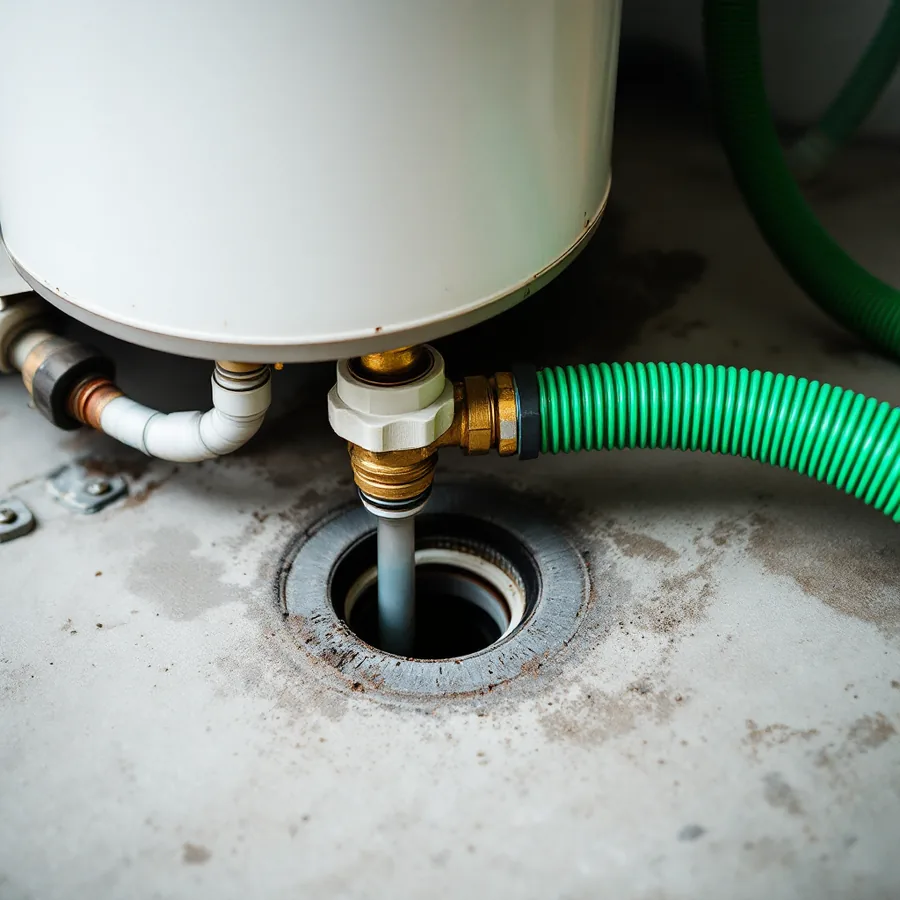
Opens the drain valve at the bottom of the tank with a garden hose attached and lets the incoming cold water push settled sediment out through it. Sediment is minerals from the water, and it collects on the tank bottom where, on a gas heater, it insulates the burner from the water it is trying to heat. Less sediment means a quieter tank, more usable hot water, and less fuel to heat it.
How often, honestly
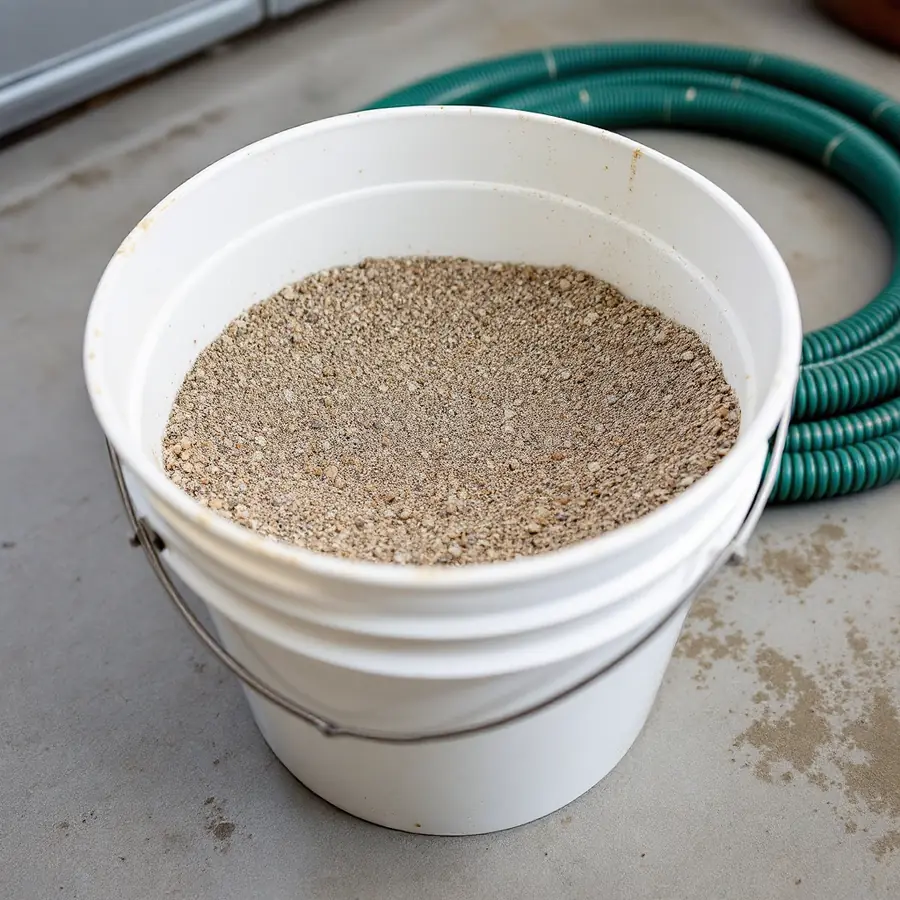
It depends on the water. Hard water fills a tank with sediment in a year; soft water may take five. The usual advice is once a year, and the better advice is to flush once, look at what comes out, and set your own interval from that. Clear water after a minute means the interval can be longer; a bucket of sand means shorter.
How long it takes, and what to do first
Twenty minutes to an hour, most of it waiting for the tank to drain through a small valve. Before opening the drain: switch the heater off (gas to pilot, electric at the breaker), close the cold supply, and open a hot tap upstairs to let air in. Water leaves faster with the tank vented and cooler if the heater was off for a couple of hours first. Leave the pressure relief valve alone.
When not to flush
Two cases. An old tank that has never been flushed: the sediment may be holding a corroded bottom together, and disturbing it can start the leak that was being held shut. And a plastic drain valve that has never been opened: many of them will not seal again afterwards, and a flush ends with a new brass drain valve. Neither is a reason never to flush; both are reasons to know the tank's age and to have a valve on hand before opening the old one.
Cleaning, as distinct from flushing
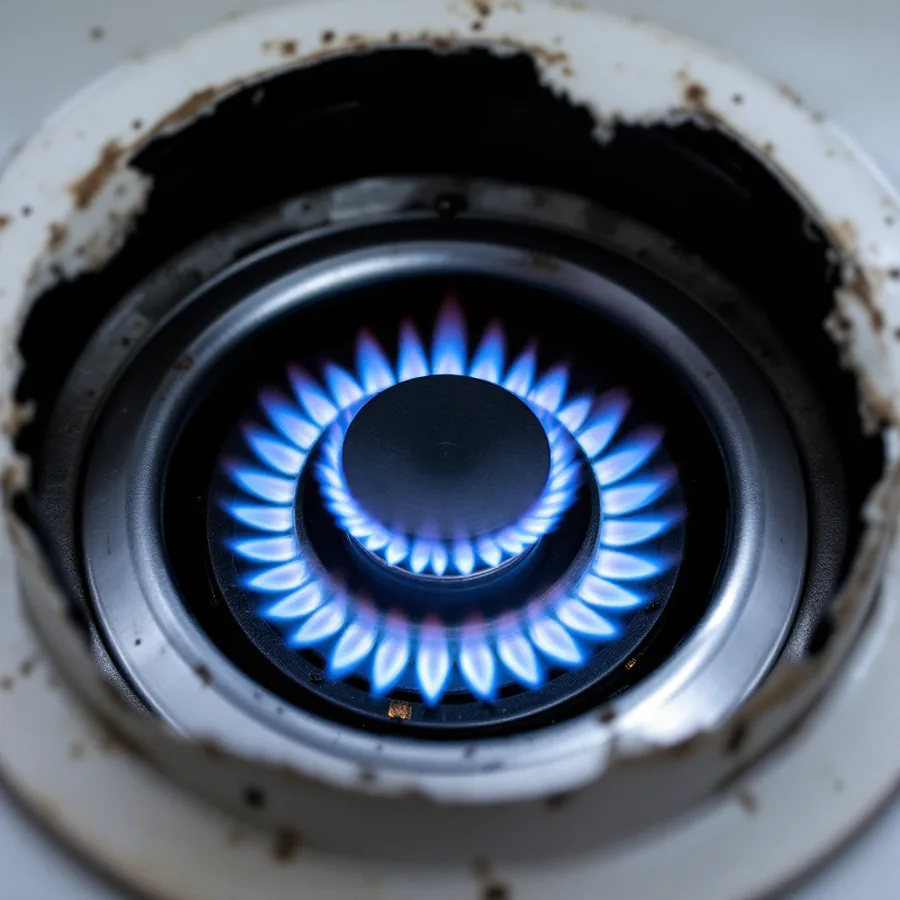
People searching for how to clean a water heater usually mean flushing. The other meaning — cleaning the burner compartment and the flame arrestor screen on a gas heater — is a vacuum and a soft brush with the gas off, and it is worth doing when a burner that used to be blue has gone lazy and yellow.
The Part Nobody Checks
The anode rod: the only part that extends the tank's life
Every water heater has one, almost no owner has seen one, and it is the reason tanks last twelve years instead of five.
What it is
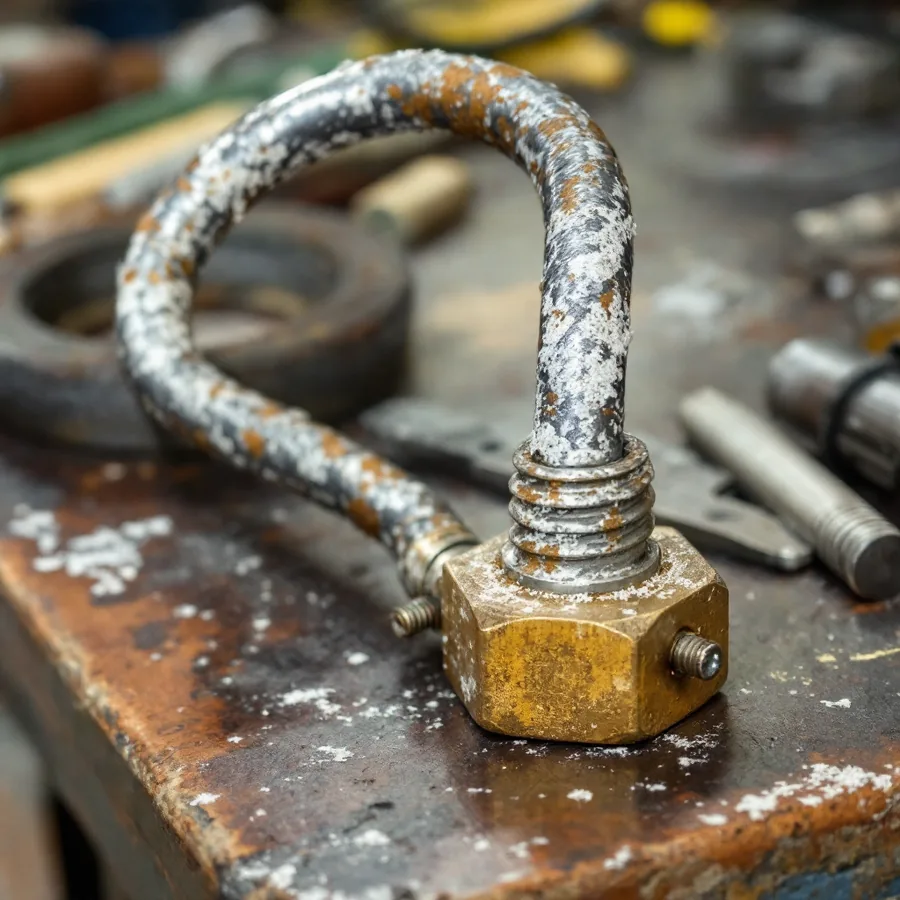
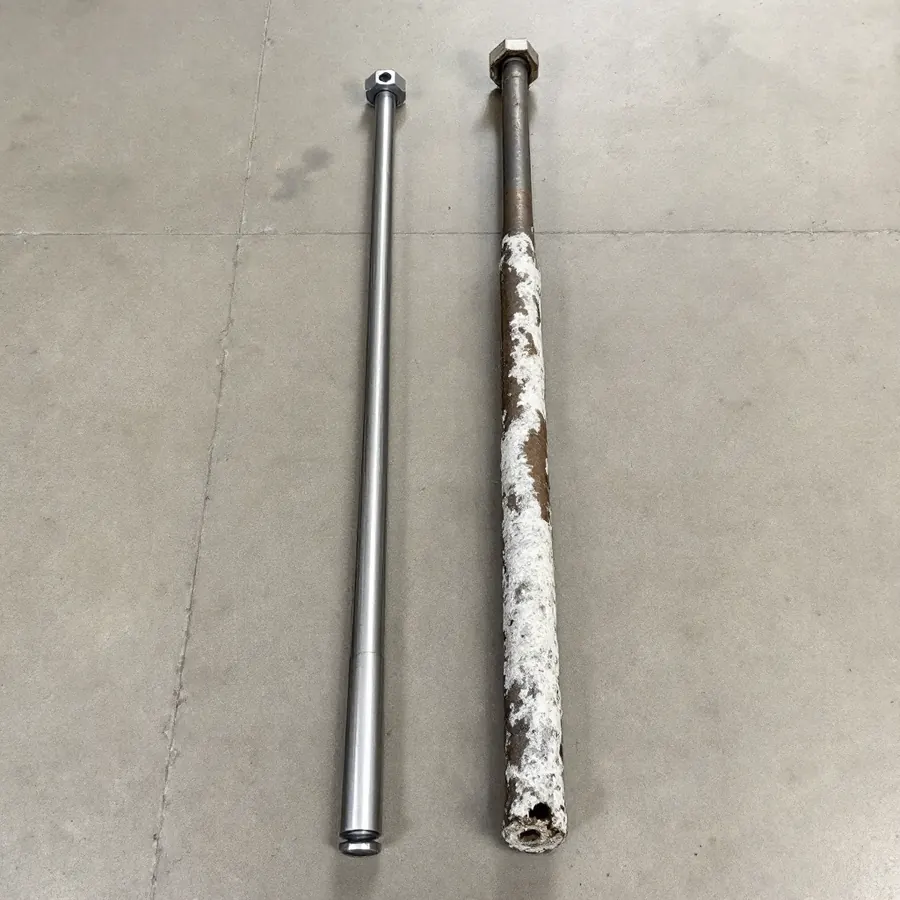
A rod of magnesium or aluminium hanging inside the tank from a hex head on top. It corrodes in preference to the steel of the tank — that is its whole purpose — and while it lasts, the tank does not rust. When it is used up, the steel takes over and the tank's remaining life is counted in years, not decades. A tank leaking from the bottom is a tank whose anode was consumed some time ago.
Why nobody checks it
It needs the water off and the pressure released to pull, the hex head is often seized, and on many installations there is not enough headroom above the tank to lift a four-foot rod out. So it is not checked. Segmented rods exist for low headroom, and a technician can inspect one in a few minutes on a service visit if it is asked for, which it rarely is.
When to replace it
When the rod is more wire than rod. On a tank in its middle years a new anode is the cheapest life extension in plumbing. On a tank already leaking, it is too late, and inspecting it tells you nothing you do not know. If the hot water smells of rotten eggs, the smell section above explains why the replacement is a different alloy.
The Small Parts
The relief valve, the drain valve and the pan
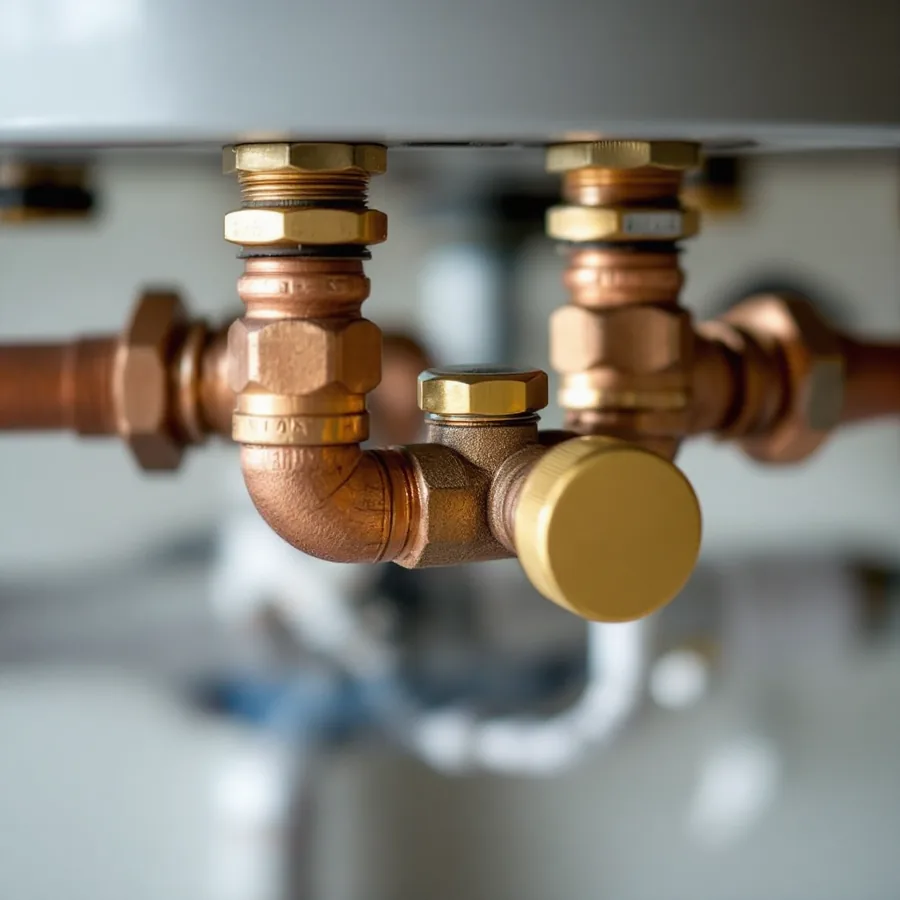
Three parts that cost little, fail in predictable ways, and appear on this page as parts and on the leaking heater page as places water comes from.
The temperature-and-pressure relief valve
Part way up the side, with a lever. It opens if the tank overheats or over-pressurises, and it is tested by lifting the lever briefly with a bucket under the discharge pipe: a burst of water and a clean re-seat means it works. A valve that does not open, or does not stop, is replaced. One that discharges on its own is a symptom of pressure or temperature, and the leaking page covers why a new valve does not fix that.
The drain valve
At the bottom, plastic on most tanks, brass on better ones. It weeps after a few years or after its first use, and it is replaced with a brass ball-type valve. It is the cheapest repair on the heater and the most common thing mistaken for a tank leak.
The pan
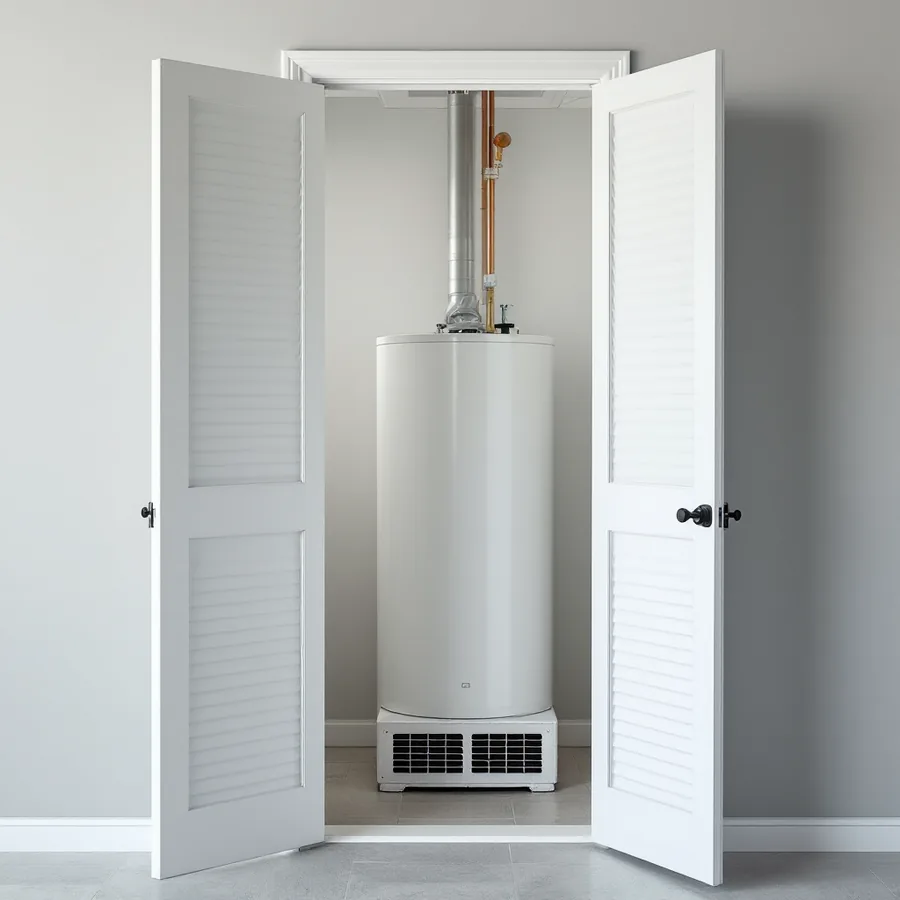
A shallow tray under the heater with a drain line to somewhere real. Required by most codes on a new installation over a finished space, and worth adding to an old one in a closet above living space. A pan with standing water and a dry floor is the pan working; a pan with no drain line is a pan that was never finished.
The Decision
Repair or replace: where the line actually is
Most of the parts on this page are worth replacing on a tank with life left. The question is which tanks those are.
Repair, at any age
A thermocouple, a reset, a relit pilot, a drain valve, a relief valve, a dip tube. Small parts on a tank that is otherwise sound. Even on an older tank these buy real time for little money, provided the tank itself is not leaking.
Repair, if the tank is young
Elements and thermostats, a gas valve, an anode. Worthwhile on a tank in its first decade; a judgment on one in its second, because the parts are a larger share of a replacement and the next fault is closer.
Replace
A tank leaking from its body, at any age. A tank past its expected life with any fault beyond a reset. A tank whose repair quote approaches half a replacement. ENERGY STAR's advice applies precisely here: “Plan ahead for your next water heater replacement and you will have time to research and select the best technology for your situation before it's an emergency.” A heater that has started needing parts is a heater whose replacement should be being priced calmly now rather than urgently later, and the choice between a standard tank, a heat pump water heater and a tankless unit is one nobody makes well with no hot water. What moves that number is on the cost section below and, line by line, on the replacement cost page.
Money
What it costs, and what moves the number
No national averages, by policy. What is being priced when a heater is repaired, so that a quote can be read.
- The visit is most of a small repair. A thermocouple, a reset, a relight, a drain valve: the part is a fraction of the invoice and the trip is the rest. After hours multiplies the trip, not the part.
- Draining the tank is the labor. Elements, dip tubes, anodes and drain valves all need the tank drained, which is time rather than skill and is priced as time.
- A gas valve is the largest part on the heater. It is also the one where the tank's age most changes the answer, because it approaches the cost of a replacement's equipment on an older unit.
- A diagnostic fee should buy a diagnosis. A place and a part, in writing. If the visit ends in a quote for a whole unit with no failed part named, the fee bought a sales call.
Before Anyone Comes
What to ask before anyone comes
Four questions that separate a company that diagnosed from one that quoted.
| Ask | What it tests | A weak answer |
|---|---|---|
| Which part failed, and how did you test it? | Whether a diagnosis happened. Elements and thermostats are tested with a meter; a thermocouple by whether the pilot holds. | “It’s old, you need a new one.” |
| What is the thermostat set to, and should we add a mixing valve? | Whether they know the two federal numbers and the part that reconciles them. | “Just leave it at 120.” |
| How is the anode, and how much sediment came out? | Whether the visit included the two things that decide how long the tank has left. | “We don’t usually check that.” |
| If you are recommending replacement, what is the failed part and why is it not worth replacing? | Whether replacement is a conclusion or a starting point. | A price before a part. |
What we do, and what we do not
We are not a plumber and we do not sell water heaters. We are paid a fixed fee for an introduction — the same for a thermocouple and a new tank — which is why this page spends its first section on the half of the problem that needs nobody. When you want somebody to look at the heater, we connect you with independent licensed and insured plumbing companies. Who pays us and how is on our about page, and the rest of what we publish starts from the home page.
Straight Answers
Water heater repair questions, answered
Why is my hot water heater not working?
Start with the five things that need nobody: the breaker or pilot, the high-limit reset button behind the upper panel on an electric unit, the gas control and supply valve on a gas unit, the thermostat setting, and the cold-water shut-off on top of the tank. If those are all in order, the remaining causes are a part: a thermocouple or gas valve on gas, an element or thermostat on electric.
How do I reset my water heater?
Electric: switch the heater's breaker off, remove the upper access panel, press the red high-limit button on the upper thermostat, replace the panel, restore the breaker. If it trips again within a day or two, the tank is overheating because of a stuck thermostat or a grounded element, and that is a technician. Gas: there is no reset button; relight the pilot following the instructions printed on the unit.
Why is my hot water only lukewarm?
On an electric heater, usually the lower element, which does most of the heating. On gas, a low thermostat setting or sediment insulating the burner from the water. If the water is hot at first and then cold within minutes, that is the dip tube rather than the element.
What temperature should a water heater be set to?
Two federal agencies give two numbers. CPSC urges 120 degrees to prevent scalds, noting that 150-degree water causes third-degree burns in two seconds. CDC's Legionella guidance, written for building water systems, recommends storing hot water above 140 degrees because the bacterium grows between 77 and 113. CDC's own reconciliation is a thermostatic mixing valve, which lets the tank run hot while the taps deliver water that will not burn.
How often should I flush my water heater?
It depends on the water. Once a year is the usual advice; the better method is to flush once, look at what comes out, and set your own interval. Do not flush a tank that is old and has never been flushed without knowing that the sediment may be holding a corroded bottom together, and have a brass drain valve on hand, because plastic ones often will not seal again.
Why is my water heater making a popping noise?
On a gas heater, water trapped under a layer of sediment is flashing to steam and escaping. On a young tank it is a flush; on an old one it is a warning that the bottom has been overheating under the sediment. A hum on an electric heater is scale on an element. A bang when a tap closes is water hammer in the pipes, not the heater.
Is it worth repairing an old water heater?
Small parts — a thermocouple, a drain valve, a relief valve, a dip tube — are worth it at almost any age on a tank that is not leaking. Elements, thermostats and a gas valve are a judgment on a tank in its second decade. A tank leaking from its body is replaced, and ENERGY STAR's advice is to plan that replacement before it is an emergency.
Where This Comes From
Sources
- The 120-degree recommendation and burn times — U.S. Consumer Product Safety Commission, Publication 5098, Avoiding Tap Water Scalds.
- Legionella growth range, storage and circulation temperatures, mixing valves — Centers for Disease Control and Prevention, Controlling Legionella in Potable Water Systems.
- Planning a replacement before it is an emergency — ENERGY STAR, heat pump water heaters.
- Certified water heaters — ENERGY STAR, water heaters.
- Household leaks and water use — EPA WaterSense, statistics and facts.
- Mould after a leak, and the 24 to 48 hour window — EPA, A Brief Guide to Mold, Moisture and Your Home.
Our editorial standards explain how we source and check what we publish. Every quotation on this page is taken from the federal page linked beside it, and we publish no price averages. We are a referral service rather than a plumber. Last updated .
Before you call anyone
The flat-fee match — we are paid for the introduction, not for the size of your job
Most plumbing advice is written by the company that wants to do the work. That is not a failing of the people who read it; it is a defect in who is talking: the diagnosis, the estimate and the invoice come from one party, and no amount of care on your side fixes that.
We are built the other way round. We do not repair, install or sell anything, so the payment reaches us when you are connected to a licensed, insured plumbing company — the same amount whether you need a two-dollar flapper or a new water heater. Nobody here has a reason to talk you into the larger number. You can check that rather than take it on trust: how we make money is written down, and this site keeps telling readers when not to buy. Why does not everyone work this way? Because a flat fee leaves money on the table every time the job turns out to be big.
Waiting is the one thing that actually costs money. A water heater that is leaking from the tank does not get better and does not wait for a convenient week; the water it lets go finds the floor, the drywall and whatever is stored below. A drain that backs up once backs up again, and the second time it is sewage. And if it turns out to be a flapper or a reset button, say so on the call. We will tell you, and that call earns us nothing.
Not for you if: you want a price over the phone — nobody honest gives one without seeing the pipe; you need a guarantee of arrival within the hour — we cannot promise that for a company we do not run; the building is commercial; or you would rather do it yourself, in which case the pages on this site are written so that you can.